dailynewsnblog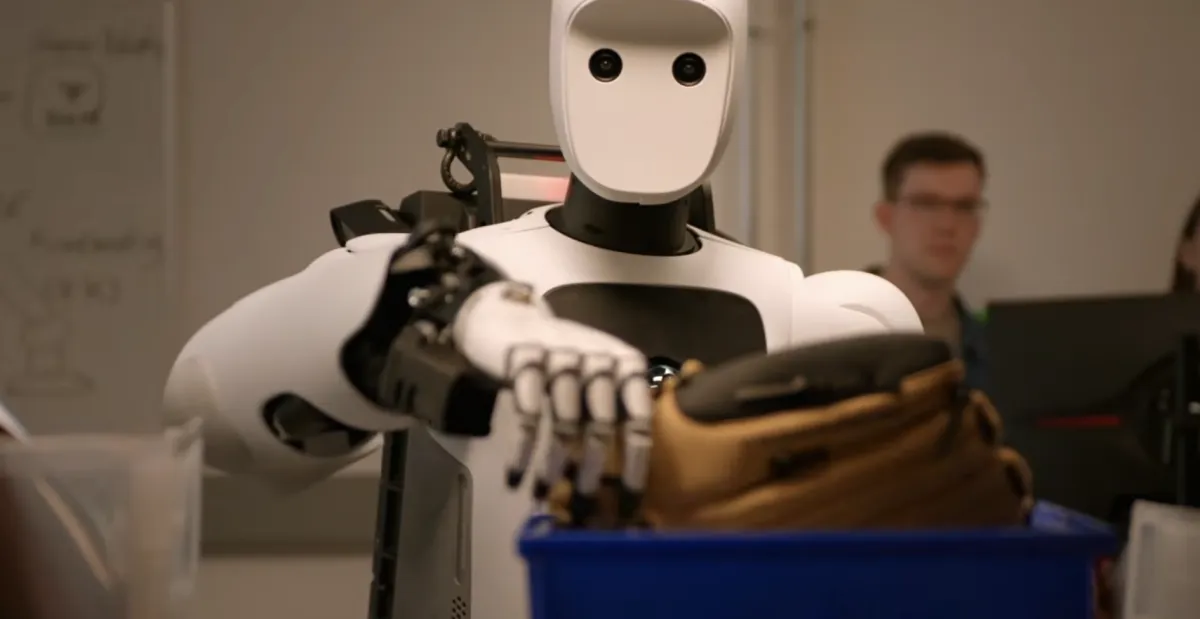
Google DeepMind says the latest version of its Gemini Robotics AI model can “control entire humanoid robots.” While the previous model focused on controlling a humanoid robot’s upper body, Gemini Robotics 2 now supports “whole-body motions” ranging from its feet to fingertips, according to an announcement on Thursday.
The new model will allow humanoid robots to perform a wider range of actions, as it allows them to walk, crouch, stretch, and manipulate objects. Videos shared by Google show how Apptronik’s Apollo 2 robot can bend over to pick up a watering can, as well as find and take specific items off a shelf.
Though Google DeepMind notes that its robots “have more to advance in movement speed,” it adds that this update “is an important step towards the skills needed to complete more complex, real-world tasks that require whole-body coordination.”
Additionally, Gemini Robotics 2 supports better dexterity, as it can now control more complex, five-fingered hands. That enables robots to perform tasks like sealing a Ziploc, tying a trash bag, or unscrewing a lightbulb.
Google DeepMind is updating Gemini Robotics ER (embodied reasoning) as well, a vision-language model that helps robots to analyze their surroundings, process instructions, and perform multi-step tasks. Gemini Robotics ER 2 is better at completing tasks over an extended period of time and “now understands when tasks begin and end.”
Google DeepMind says this update also allows multiple robots of different types to work together and complete tasks, with one video showing how Apollo 2 instructs Google’s dual-arm robot to put tools inside a bin while cleaning the garage.
The company notes Gemini Robotics ER 2 is its “safest robotics model to date,” as it can “better detect when humans are nearby, trigger safety tool calls and bring the robot to a safe stop if someone approaches too closely.”
Meanwhile, Google DeepMind has brought improvements to its Gemini Robotics On-Device Model, which can run locally on a robot without an internet connection. This model can now adapt to new embodiments faster, including those with “drastically different shapes, sensors and degrees of freedom.”