dailynewsnblog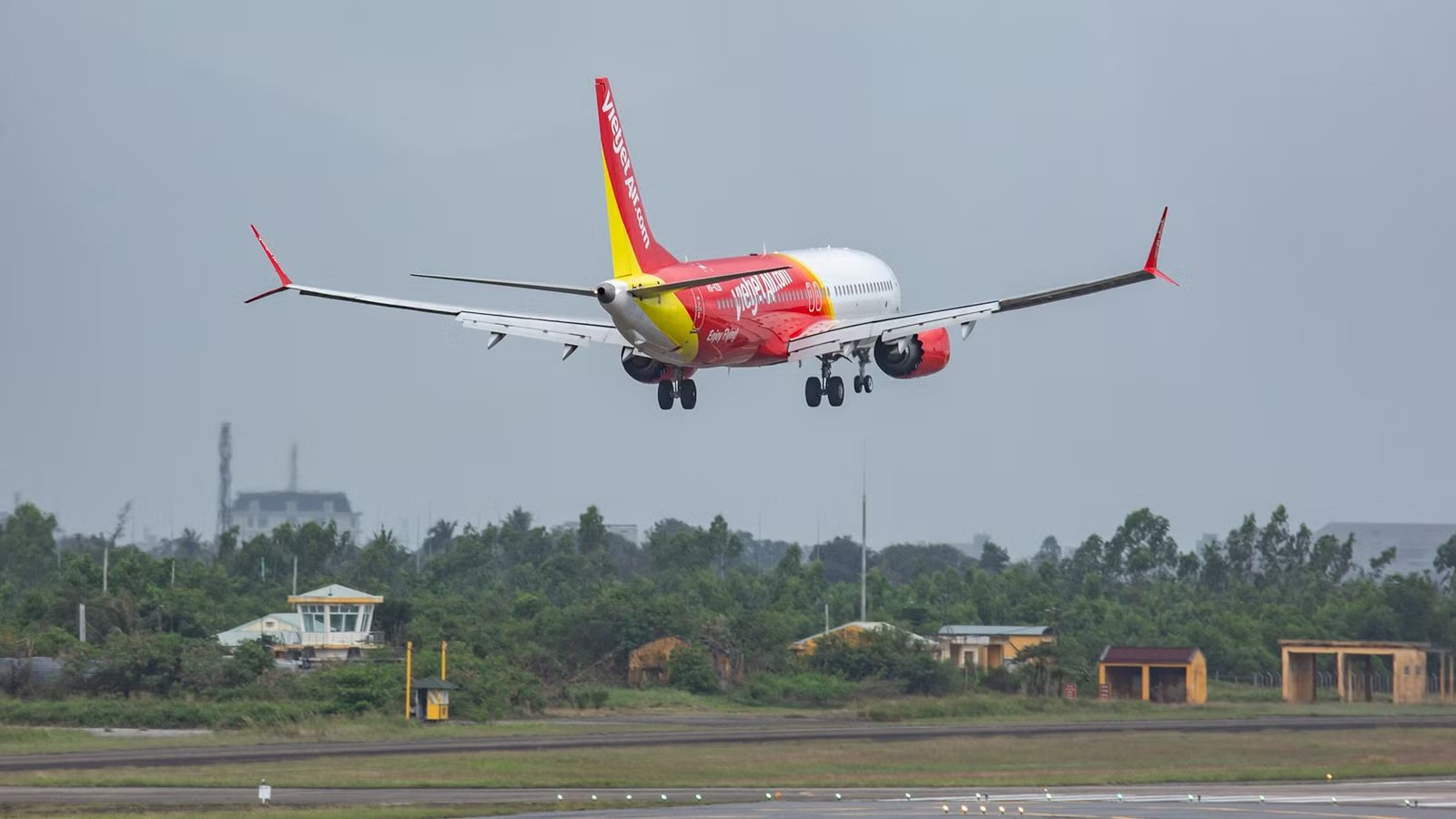
Vietnamese VietJet has applied for regulatory approval to begin domestic flight operations down under. The airline, which is one of the largest in Vietnam and already has subsidiaries in Thailand and Kazakhstan, is planning to launch low-cost flights in Australia, which may finally see the Qantas-Virgin duopoly broken and the largest shake-up in Australian aviation in more than a decade.
The airline has reportedly secured slots at the country’s busiest airport, Sydney (SYD), with seven daily return flights and is now signalling plans to launch domestic flights with a fleet of ten Boeing 737 MAX aircraft. Should this come to fruition, the airline is hoping to be flying within Australia by next year. With this exciting development, Simple Flying decided to look at the top ten domestic routes in Australia and where VietJet’s Australian subsidiary could eventually fly.
A New Low-Cost Carrier For Australia

While it remains unclear which operating name VietJet may use for its subsidiary in Australia, what we do know is that the parent company has applied to the Civil Aviation Safety Authority of Australia (known as CASA) for its own air operator’s certificate ( AOC). Once this is obtained, the airline would be allowed to establish a locally incorporated subsidiary. The proposal includes ten MAX planes that would be the backbone of the airline’s Australian ambitions.
What makes this attempt different from the likes of Bonza and REX, which ultimately failed to break the domestic duopoly in Australia held by Qantas and Virgin Australia, is that VietJet is a large international airline, with deep pockets and ambitious aircraft orders. It can take up to 12 months for an airline to obtain an AOC for Australia, so it could be by the middle of next year that Australia has a new airline on the horizon.
As reported by many Australian media outlets, the airline is proposing to start flying within what is known as the ‘Golden Triangle’, one of the most heavily operated flight routes in the world. Services are expected to be between Brisbane Airport (BNE), Sydney, and Melbourne Airport (MEL). With slots in Sydney already allocated, this would allow a total of seven round trips from SYD per day.
Where Might VietJet Fly In Australia?

With Western Sydney Airport (WSI) about to come online, this is the biggest area of growth that could be under the microscope for many Australian operators. While VietJet has made no initial plans to serve the airport, the ability for airlines to operate without curfew, with plenty of available slots, could be ripe for the picking of an airline newcomer.
The most popular route in Australia, using data from Cirium, an online aviation analytics company, shows that more than 3.2 million travelers flew between Sydney and Melbourne in 2025. This was followed by Melbourne to the Gold Coast (OOL), with just over two million annual passengers. Other routes within the top five include Sydney to Gold Coast, Sydney to Brisbane, and Melbourne to Brisbane.

While VietJet thus far has only signalled its plans to serve Brisbane, Sydney and Melbourne, it would be expected that the airline would also be looking at other potential routes and markets to eventually expand its Australian domestic operations. Below is data from Cirium for 2025 passenger numbers on the top five domestic routes:
From | To | 2025 Round-Trip Passengers |
|---|---|---|
Sydney (SYD) | Melbourne (MEL) | 3,222,342 |
Melbourne (MEL) | Gold Coast (OOL) | 2,011,705 |
Sydney (SYD) | Gold Coast (OOL) | 1,992,373 |
Sydney (SYD) | Brisbane (BNE) | 1,579,085 |
Melbourne (MEL) | Brisbane (BNE) | 1,413,507 |
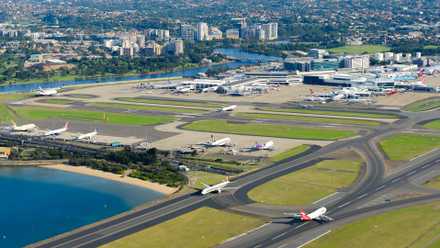
Is Sydney Airport Really Getting A New Airline With 7 Daily Flights This Year?
A foreign-owned domestic carrier in Sydney could shake up Australia’s aviation industry, challenging the longstanding Qantas-Virgin duopoly.
Further Expansion Could Lead VietJet To Adelaide And Hobart

Continuing to crystal ball here, digging further into flight data for Australia shows that more than a million passengers flew between Melbourne and Hobart (HBA) in 2025, proving that there is plenty of room for a newcomer on such a route. In excess of 900,000 passengers took off between Brisbane and Cairns (CNS), while 840,000 travelers flew between Melbourne and Adelaide (ADL).
It goes without saying that not only would VietJet be looking to grow its domestic operations, but also feed into its international services already operating from Brisbane, Melbourne, Perth International Airport (PER), and Sydney. This could allow domestic travelers to tap into the airline’s international network from the four major airports, all on one ticket.
The industry is excitedly awaiting VietJet’s next move on this exciting development, and a third major Australian airline could finally be on the cards.