dailynewsnblog
Speaking to reporters on Monday, Bessent accused the prime minister of dusting off his 2025 campaign playbook by attacking the Trump administration and turning down what he framed as a favourable deal for Canada.
Prime Minister Mark Carney is putting his own political interests over the needs of the Canadian people by walking away from negotiations on a new trade agreement, says U.S. Treasury Secretary Scott Bessent.
Speaking to reporters on Monday, Bessent accused the prime minister of dusting off his 2025 campaign playbook by attacking the Trump administration and turning down what he framed as a favourable deal for Canada.
“Unfortunately, Prime Minister Carney rose to power on an anti-American, anti-Trump platform. I believe he was more than 20 points behind, and you know he seems to have gone back to his old playbook,” he said, referring to the Liberal party’s reversal fortunes in early 2025.
“And I think one has to ask oneself: Is he trying to benefit himself, the Liberal Party, or the Canadian people because they were offered a very good job.”
The comments come as U.S. President Donald Trump posted a series of fiery missives on social media vowing to increase tariffs, accusing Canada of shortchanging the U.S. and taking personal shots at Carney and Ontario Premier Doug Ford.
Posting on Truth Social on Monday, Trump threatened to hike tariffs on all vehicles, auto parts and steel from Canada to 50 per cent on Jan. 1. In a later post, he threatened Canadian energy flowing through the United States.
He also accused Canada — without presenting evidence — as being “among the worst nations in the world to deal with.”
“Build in the U.S. and there are ZERO TARIFFS. Canada will be treated like a State no longer!” Trump posted.
“Canada has been ripping off the United States of America for years. Their ridiculously high tariffs on our Farmers and farm products has made life impossible for these great American Patriots.”
The United States Department of Agriculture says the Canada-U.S.-Mexico Agreement, known as CUSMA, provides for “tariff- and quota-free trade for almost all agricultural products traded between the United States and Canada, while offering broader market opportunities for U.S. exports to Canada of dairy, poultry and egg products.”
It notes those provisions were also in the North American Free Trade Agreement, which CUSMA replaced.
“They feel entitled, and yet, WE DON’T NEED CANADA, THEY NEED US!” Trump posted.
Canadian exports to the United States represented 72 per cent of all exports in 2025, down four percentage points from the year before.
In the first six months of 2026, that number fell further to 68 per cent, while non-U.S. exports rose as Canada moved to diversify its trade away from its largest trading partner south of the border.
Later Monday, Trump took to Truth Social again this time threatening Canadian energy, and returning to calling Carney “governor.”
Trump also attacked Ontario Premier Doug Ford, who earlier in the day told an Ontario radio talk show program that Trump could “kiss my ass” and said Ontario should leverage energy and critical minerals in trade negotiations.
Trump took a personal shot at Ford in his post, referencing his late brother former Toronto Mayor Rob Ford.
Asked by reporters to respond to the taunts, Ford brushed off the comments, saying he had “skin like an alligator” and called Trump “a loser.”
The latest barbs come three days after trade talks broke down in Washington and Canada accused the U.S. of negotiating in bad faith. As a result, new 50 per cent tariffs took effect Saturday on a range of Canadian goods, including honey, hockey sticks, flower bulbs and a long list of alcoholic beverages.
The new threat of tariffs for Jan. 1 would build on existing tariffs on the auto and steel sector, and are separate from the tariffs applied on Saturday.
In the immediate aftermath, Trump said Canada wanted all the benefits of being a state without actual being one.
Asked Monday if Trump still believed Canada should be the 51st state, Bessent said the president “would like Canada to come to the table and negotiate in good faith.”
“They were offered quite a good deal last week, they chose to reject it,” he said.
Carney said Canada will only go back to the negotiating table on a trade deal once the United States changes its attitude.
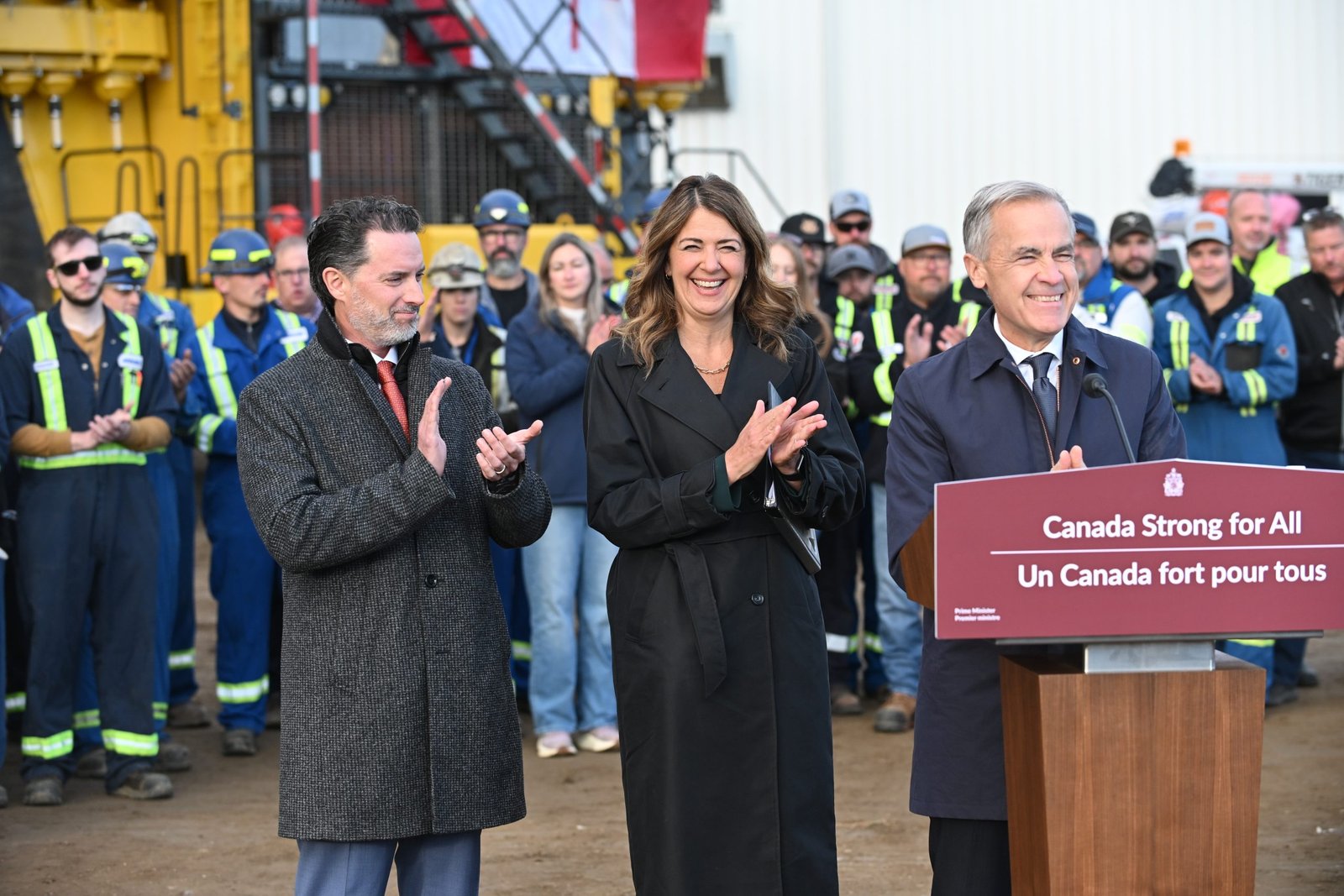
Carney held a news conference in Lévis, Que., where he announced an $11-billion contract to build six new icebreakers for the Canadian Coast Guard, emphasizing they would be built with Canadian steel.
“When the Americans go to the negotiation table first, with the right attitude toward our industries and a true partnership, of course we’ll come to the negotiating table,” Carney told reporters.
“An attitude at the negotiation table that Canada is a subsidiary of the United States, that Canadian industry is going to be disadvantaged relative to American industry, that we are going to set up terms so that over time Canadian industry is going to face constant headwinds, that’s not something we’re going to accept.
“And that’s before you get to constraints on our ability to do what the rest of the world wants, which is to sign trade deals with Canada. And that’s before the fundamental issues on culture.”
Georganne Burke, senior vice-president of the Pathways Group and chapter lead for Republicans Overseas in Canada, said Carney is simply playing politics and worried that he’s planning on using the latest breakdown in talks to further “consolidate power,” such as campaigning against Trump in the upcoming byelections.
She pointed out that he’s delayed Canada’s dollar-for-dollar tariffs until Sept. 8 because it allows Carney to keep his keep up the tough on Trump messaging in the run-up to the Aug. 31 byelections, where the Liberals need to win at least one of the three seats up for grabs to retain their majority.
It also allows Premier Ford to do the same before three provincial byelections on Sept. 3, she added.
“I watched the prime minister’s statement last week, and it was incredibly smooth and very rehearsed. He had answers to almost all of the questions,” she said of Carney’s comments on Saturday.
“This was not something that happened overnight. They knew what they were doing. They knew what they were planning, and the last minute they backed out of the deal.”
Burke also accused Carney of making up excuses to justify walking away from negotiations, saying the Americans weren’t calling for the elimination of French content rules or a veto over future Canadian trade agreements.
She said the Americans wanted Canada to loosen requirements for U.S. streamers to boost the discoverability of French-language and domestically-produced content. U.S. Trade Representative Jamieson Greer said this was the demand from the Americans in an interview with a U.S. news channel on Monday.
Burke claimed the White House didn’t want to restrict who Canada dealt with but was only calling for the inclusion of language found in NAFTA that restricted signatories from entering into trade agreements with non-market economies, namely China.
“It smells to me like a strategy rather on the Canadians’ part rather than an actual effort to negotiate a trade deal,” she said.
with files from the Canadian Press