dailynewsnblog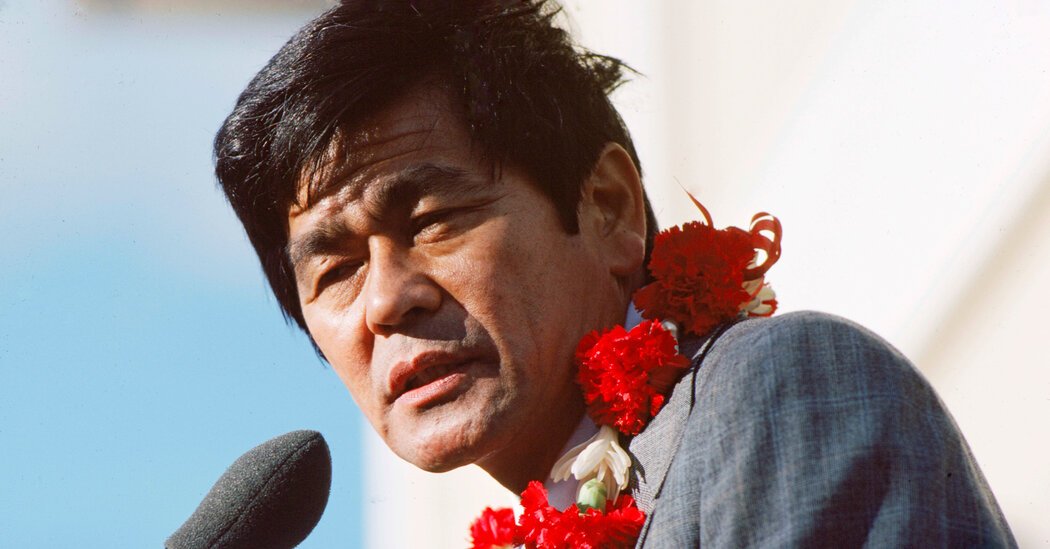
George R. Ariyoshi, a Honolulu-born Japanese American politician who shattered voting traditions in the nation’s only state with an Asian plurality, becoming Hawaii’s — and America’s — first governor of Asian descent, died on Sunday at his home in Honolulu. He was 100.
His death was confirmed by his son, Ryozo Ariyoshi.
The son of a Japanese sumo wrestler and seaman who jumped ship in Honolulu in 1919, Mr. Ariyoshi, a tall, trim, soft-spoken Democrat with a craggy face, served a record three terms as Hawaii’s governor, from 1974 to 1986. He was known for trying to limit explosive population growth in Hawaii, the nation’s 50th state, and for diversifying an economy heavily dependent on tourism.
Mr. Ariyoshi grew up in downtown Honolulu during the Depression — far from the serene, resort-lined Waikiki beaches familiar to visitors — and in the tough western district of Kalihi, where roosters were raised for cockfights, lepers were triaged before being sent to the island of Molokai and Asian boys were sometimes bullied and learned to fight. His parents spoke little English.
Coming of age as World War II ended, Mr. Ariyoshi went to college and law school in Michigan, became a lawyer in Honolulu and in 1954 won a seat in the territorial House of Representatives. The emergence of Japanese Americans and other Asian ethnic minorities, and of labor unions, made Democrats the chief political power in Hawaii that year, after decades of white and Republican government control.
Four years later, Mr. Ariyoshi was elected to the territorial Senate, and after Hawaii achieved statehood in 1959, he became the powerful Senate majority leader and a protégé of John A. Burns, the leader of Hawaii’s Democratic Party, who was elected governor in 1962. In 1970, Mr. Burns, running for a third term, chose Mr. Ariyoshi as his lieutenant governor.
Mr. Burns won, but, incapacitated by terminal cancer, he turned over his administration to Mr. Ariyoshi in October 1973 and died in 1975 at 66. As acting governor, Mr. Ariyoshi served out more than a year remaining in his predecessor’s term, continuing Mr. Burns’s expansive development policies by attracting foreign investment and promoting Hawaii’s “spirit of aloha” marketing campaigns.
In 1974, Mr. Ariyoshi was elected governor in his own right. His three terms in that office constituted a record unlikely to be broken, since two-term limits were imposed near the end of his tenure.
When he took office, nearly three decades after Japanese planes attacked Pearl Harbor, Hawaii had undergone startling change from its paradisiacal prewar days. Jet planes from across the world disgorged three million tourists a year on an archipelago of 882,000 residents. On any given day, 60,000 visitors occupied high-rise hotels that sprouted like toadstools. Tourism was a $1 billion business, vastly exceeding once-important sugar cane and pineapple exports.
Fifteen years after statehood, Hawaii’s population had jumped 25 percent, creating one of the nation’s most expensive housing markets on crowded Oahu. Native Hawaiians were at the bottom of the economic scale, but Japanese Americans were near the top, owning many golf courses, hotels and restaurants. They made up 32 percent of the population and held dominant political power: three of four seats in Congress, majorities in both houses of the State Legislature, and the governorship.
Mr. Ariyoshi led Hawaii through its first post-statehood recession, in the mid-1970s. He wrestled with public employee strikes that cut services; built housing, schools and transportation facilities to ease population congestion on Oahu; and diversified the economy by attracting technology, military spending, agriculture and ocean thermal energy conversion.
He promoted tourism, which remained Hawaii’s largest industry. But he tried to limit state population growth, which put heavy strains on job markets and government services. His proposal to limit immigration from the mainland was ignored, and a move to set one-year residency requirements for public employment was ruled unconstitutional.
Mr. Ariyoshi was narrowly re-elected in 1978 and 1982, surviving challenges by his chief rival, Frank Fasi, the Democratic mayor of Honolulu, who lost primary elections in three gubernatorial races. Feuding between the two peaked in 1976, when the governor named a special prosecutor to investigate bribery charges against the mayor. Mr. Fasi was indicted, but the case crumbled when a contractor refused to testify for the prosecution.
Barred from running for a fourth term, Mr. Ariyoshi retired from politics in 1986 with the distinction of never having lost an election. He was succeeded by his lieutenant governor, John D. Waihee III, who became the first native Hawaiian governor and served two terms.
George Ryoichi Ariyoshi was born over a soybean-curd shop in Honolulu on March 12, 1926, one of six children of Ryozo and Mitsue (Yoshikawa) Ariyoshi. His father, after working as a stevedore, operated rice, beer and tofu shops before settling into dry cleaning. George’s mother was born in Japan and was taken to Hawaii by her parents, who went to work on a plantation.
George spoke English in public schools and with friends but grew up in a Japanese-speaking household. “They didn’t speak English ever,” he said of his parents in an interview with PBS Hawaii in 2012. “Almost not at all. And so, when they went to P.T.A. meetings, for example, they would say only, ‘My boy good boy? Bad boy?’”
But he credited his parents with shaping his cultural values and said he was always mindful of his father’s admonition to preserve his honor. “The word is a Japanese word; it’s ‘haji’ — shame,” he said, and quoted his father as saying: “Don’t bring shame on your friends, your family, to anybody. Be honorable in everything that you do.”
Besides public schools, George was also enrolled at a Japanese school, where he improved his linguistic skills but was targeted by an older bully. He reported the incidents to his parents, who quickly took him out and placed him in another Japanese school.
During World War II, he attended McKinley High School in Honolulu. He recalled blackouts and nighttime curfews that limited social gatherings, including prom dances, to afternoons. He was president of his senior class and graduated in 1944.
Drafted in the war’s last stages, he served after the war as a Japanese interpreter for military intelligence in occupied Japan.
After his discharge, he enrolled at the University of Hawaii but transferred to Michigan State University on the G.I. Bill. He graduated with a degree in history and political science in 1949. He earned a law degree from the University of Michigan in 1952 and began private practice in Honolulu the next year.
He married Jean Miya Hayashi in 1955. She survives him, along with their son, Ryozo; their other children, Lynn Miye and Donn Ryoji; a brother, Jimmy Saiji Ariyoshi; two sisters, Helen Inase and June Otake; four grandchildren; and three great-grandchildren.
After his political career, Mr. Ariyoshi resumed practicing law and held many corporate and nonprofit directorships, and he was president of the Pacific Basin Development Council and chairman of the research-oriented East-West Center. President Bill Clinton named him to an advisory committee for trade policy.
Mr. Ariyoshi wrote an autobiography, “With Obligation to All” (1997), and two other books: “Hawaii: The Past 50 Years, the Next 50 Years” (2009) and “Hawaii’s Future” (2020).
When Mr. Ariyoshi became a lawyer, his father was his first case. He learned to his amazement that his father had jumped ship, entered Hawaii illegally and, fearing deportation, had never sought citizenship.
Mr. Ariyoshi studied the McCarren-Walter Act of 1952, which codified immigration laws, and learned that immigrants able to prove continuous residence since 1924 were entitled to permanent-resident status.
He found the proofs and got his father off the hook. “Oh, he was very happy,” Mr. Ariyoshi told PBS. “He never went anywhere. Even when I graduated from Michigan State, he never came, because he was concerned that if he got on the airplane, he may be identified and picked up.”
Ash Wu and Charlotte Dulany contributed reporting.