dailynewsnblog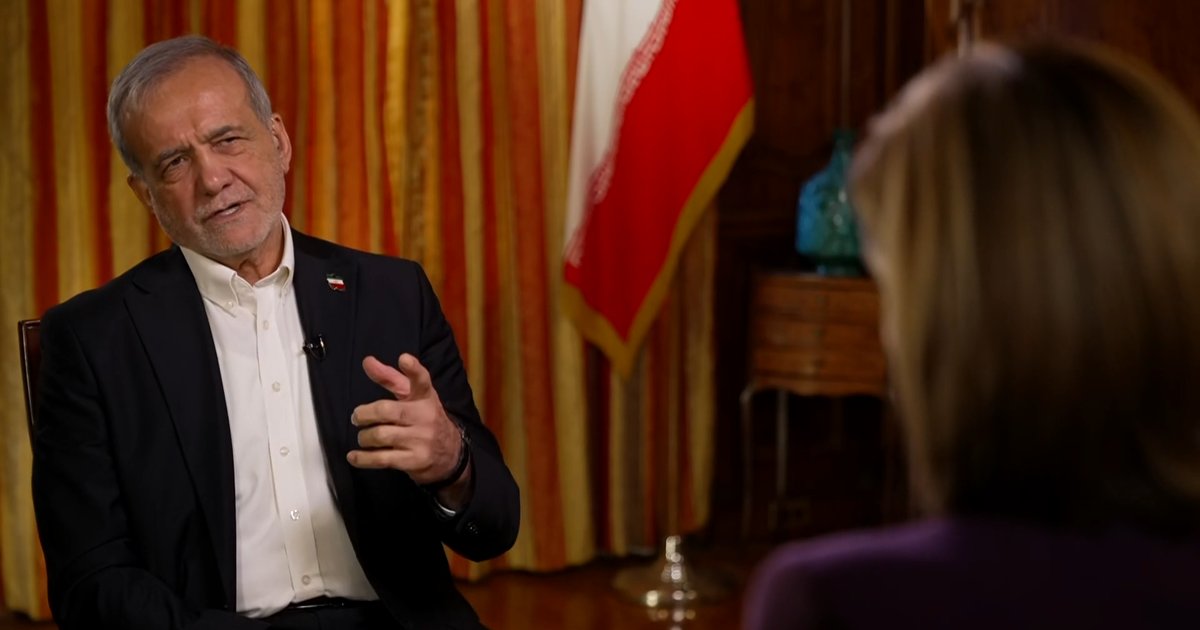
On this “Face the Nation with Margaret Brennan” broadcast, moderated by Margaret Brennan:
- Iranian President Masoud Pezeshkian
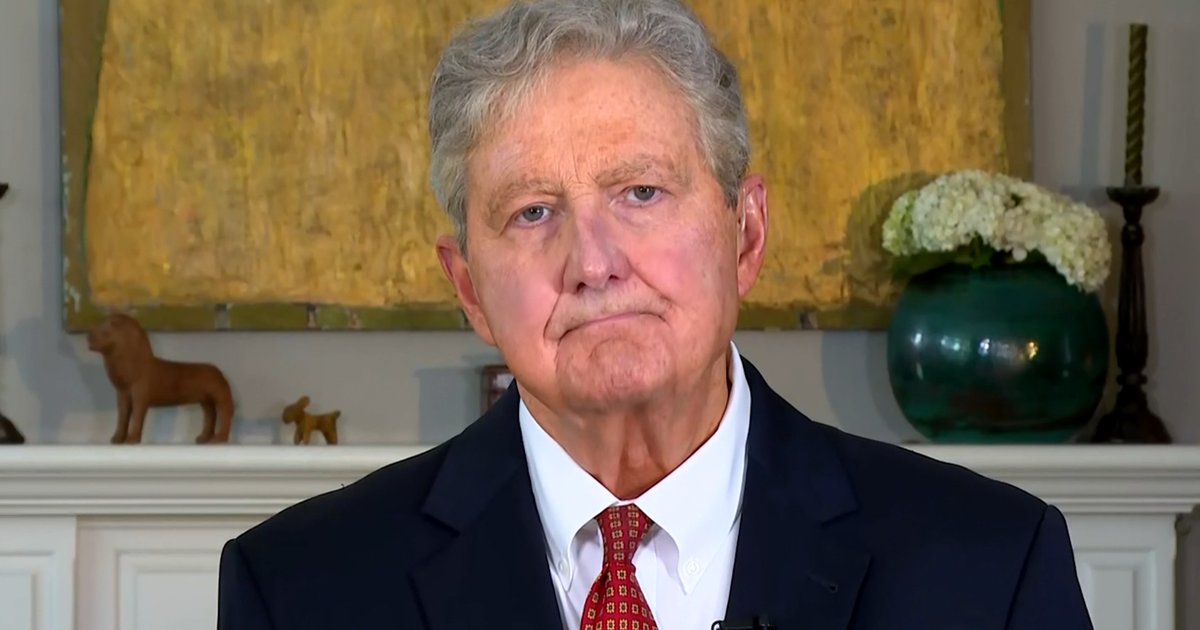
- Sen. John Kennedy, Republican of Louisiana
- Rep. Jim Himes, Democrat of Connecticut
- Alexander Yui, Taiwan’s representative to the U.S.,
Click here to browse full transcripts from 2026 of “Face the Nation with Margaret Brennan.”
MARGARET BRENNAN: I’m Margaret Brennan in Washington.
And this week on Face the Nation: President Trump turns his focus to the midterm elections following a week of high-stake summits with foreign allies and adversaries. The president spent much of last week striding the world stage without ever leaving the U.S., first delivering a stark warning to Iran in his speech to the United Nations General Assembly.
(Begin VT)
DONALD TRUMP (President of the United States): Will a deal be made with Iran, or do I annihilate the Islamic Republic, and do it quickly?
(End VT)
MARGARET BRENNAN: So what is the status of that potential deal?
In a network exclusive, we will hear from Iranian President Masoud Pezeshkian on his country’s latest offer to reopen the Strait of Hormuz end the conflict.
Then: Chinese President Xi Jinping’s state visit to Washington drew no shortage of pomp and circumstance. But, behind it all, serious tensions remain, chief among them the status of Taiwan. We will check in with the territory’s representative to the U.S., Ambassador Alexander Yui.
Plus, with midterm elections just weeks away, Republicans are scrambling to save their majority in both houses. We will ask Louisiana Republican Senator John Kennedy about the outlook for the GOP and Connecticut Democratic Congressman Jim Himes on his party’s plan to govern if it does take the majority.
It’s all just ahead on Face the Nation.
Good morning, and welcome to Face the Nation.
With just weeks to go before the midterm elections, President Trump is facing challenges on multiple fronts, persistent voter concerns about the economy, rising prices for consumers, and growing questions about his strategy in the war with Iran.
Adding to those pressures is an ongoing confrontation with the White House press corps. The major television networks resumed coverage of the president’s daily activities after a federal judge ordered the White House to restore access to outlets that had been banned, that only after Chinese President Xi Jinping’s state visit was already under way. The administration continued to limit CNN’s participation in the television pool yesterday.
Regarding the war, President Trump told reporters yesterday he had rejected the latest offer to end it presented by Iranian officials during meetings in New York. But will he keep diplomacy alive or resume strikes? The Pentagon’s public casualty count rose again last week, bringing the number of U.S. military deaths to 19.
The Iran conflict is where we begin this morning, a rare network exclusive interview with the leader of a country at war with the United States. We sat down with President Masoud Pezeshkian New York on Friday, and we began by asking him about Iran’s latest proposal, built on what was outlined in the memorandum of understanding signed by both sides in June.
(Begin VT)
MASOUD PEZESHKIAN (Iranian President) (through translator): Now, in fact, there is a framework along the same path, with the same objectives that were established.
Ultimately, the requests that were included in that memorandum and MOU have now been broken down into stages so that we can proceed according to those stages. If the United States agrees to proceed in that way, everything will return to the way it was before, because, right now, it’s the United States that has blocked our way.
And, naturally, Iran has also blocked the way from its side. These are things that both sides need to open up first. Then we can sit down at the negotiating table and discuss other issues at hand.
MARGARET BRENNAN: If President Trump accepts this proposal, can you guarantee your military will abide by it?
PRESIDENT MASOUD PEZESHKIAN (through translator): Obviously, we will abide by whatever we commit to.
MARGARET BRENNAN: Well, President Trump said he was open to meeting with you when you were here. That didn’t happen. Would you be willing – if you want direct communication, would you be willing to speak directly with him, to meet with him?
PRESIDENT MASOUD PEZESHKIAN (through translator): Now the atmosphere of distrust that has developed between Iran and the United States is because we have had several rounds of talks with the United States.
Basically, we need to determine now what exactly we want to reach an understanding on. If we don’t abide by what we have written down as necessary, can we really resolve it through dialogue? We wrote it down and signed it. It’s clear.
The first thing that needs to happen is that the distrust created by this war has to be overcome.
MARGARET BRENNAN: Mm-hmm.
PRESIDENT MASOUD PEZESHKIAN (through translator): We need to abide by what we have written down.
The United States needs to show that it does not intend to overthrow our government or our administration. Put yourself in our position. Imagine someone came and martyred your supreme leader, and then not abide by everything you had agreed upon. What would be your reaction? It’s not something that can be resolved that simply.
MARGARET BRENNAN: So, the offer that you are making for diplomacy, is it now to begin talks about putting limits on Iran’s nuclear program, but not fully abandoning that program?
PRESIDENT MASOUD PEZESHKIAN (through translator): Of course, we agree. We had already reached an understanding on this in our previous talks.
They struck it down. We’re not supposed to develop nuclear weapons. Within the framework of the NPT and the other existing frameworks, all of these issues are matters that can be agreed upon. Unfortunately, they are disregarding the rights that international law grants to all countries.
MARGARET BRENNAN: Under international law, including the Non-Proliferation Treaty your country signed, though, inspectors would be allowed in from the U.N. Will you allow them in now to settle those concerns?
PRESIDENT MASOUD PEZESHKIAN (through translator): That is absolutely correct. According to those very international laws, when there are nuclear centers under the inspections and auspices of the IAEA within the NPT framework, no country has the legal right to attack those nuclear centers and sites.
But America and Israel carried out the act of attacking them. Now the agency itself, rather than its strong condemnation, showed absolutely no reaction. Why is it that centers and sites that were completely under their unprecedented surveillance and inspections regime – perhaps they had the most surveillance on those centers.
We had no deviation from that framework. Why did they attack it in the first place?
MARGARET BRENNAN: Well, the IAEA said they were not being given full access. U.N. inspectors weren’t being allowed in. They said they couldn’t guarantee the peaceful nature of your program, and say now you have 440 kilograms of 60 percent enriched uranium.
So they want to be able to verify that that won’t be made into a weapon. Will your country allow in weapons inspectors now?
PRESIDENT MASOUD PEZESHKIAN (through translator): That is absolutely correct.
This occurred after America chose to tear up the JCPOA. Iran waited for one year in order for the European counterparts to live up to their commitments within the JCPOA. They failed to do so. Iran left the JCPOA and continued on the path that it saw fit.
Now, if they want to come in and have inspections, we can reach accords and agreements vis-a-vis that specific topic within the negotiations, not for them now to come and inspect those existing frameworks again.
(End VT)
MARGARET BRENNAN: And we will hear more from President Pezeshkian later this hour.
But we turn now to Republican Louisiana Senator John Kennedy.
Good morning to you, Senator.
Senator, the president seems to be dangling some interest in diplomacy. The U.S. president also seems to be somewhat interested. But “The Wall Street Journal” is also reporting President Trump has a secret plan to restart the bombing campaign in Iran after the midterm elections. That’s 37 days from now.
Is that renewed bombing something you support?
SENATOR JOHN KENNEDY (R-Louisiana): Well, I don’t know. I haven’t seen the classified intelligence.
Iran – Iran made an offer recently to the president. It was not a serious offer. The president’s not Bambi’s baby brother. He turned it down. We need to continue doing what we’re doing, the sanctions, the blockade.
The truth is, if you’re fair-minded at all, Iran is a sucking chest wound, and the world is safer for it. Its public and private sector is held together with duct tape and spit. Now, there’s – there’s just one problem. The strait is at least partially closed. And it’s affected the price of oil.
And oil’s in everything, including gasoline. And – and it’s painful as – as hell. And we’ve got to either figure out a way to – to settle this thing, to get the strait open, or to escalate. I would not send in troops. We could send in troops and we could open the strait. But once you send them in…
MARGARET BRENNAN: Yes.
SENATOR JOHN KENNEDY: … you’ve got to leave them there. And that creates a whole new host of problems.
MARGARET BRENNAN: Well, and the broader question of, to what end, since the president has said, you know, Iran is about to capitulate any day now.
But when we look at the politics of this out in Iowa and Michigan, we’ve seen Republican candidates who are going to be on the ballot in November call for an end to the Iran war. In the Senate, we’ve seen 14 votes to date objecting to it. Two passed. I mean, I know those are symbolic.
But this is reflective of frustration within your own party here. Should the president be more aware of public opinion?
SENATOR JOHN KENNEDY: Well, look, here’s – none of this is advanced calculus.
Here’s – I have – I have – I have been to just about every battleground state helping my mates. Here’s what I have learned. When – when moms and dads lie down to sleep at night and can’t – they’re not lying there worried about whether the football coaches are happy or whether the press is biased or the other things that we’ve been talking about. They’re worried about the cost of living.
MARGARET BRENNAN: Yes.
SENATOR JOHN KENNEDY: And – and they’re a little worried about Iran, because they don’t understand why, but they know the two are inextricably linked. And we’ve got to be straight up and address those things.
Here’s my prediction for the midterms, Margaret. The experts will be wrong. They almost always are. None – none of these guys have ever run a campaign in their natural lives. It’s going to be close. It would help if the president would stay focused on cost of living. And I would like to see him give a nationwide address.
MARGARET BRENNAN: Yes.
SENATOR JOHN KENNEDY: Or let Rubio and General Caine do it. And explain why we went into Iran, why we’re winning, and how we’re going to get out.
MARGARET BRENNAN: Yes, you’ve been making that recommendation for some time. You did it last time you were with us over the summer. The White House has not to date. But…
SENATOR JOHN KENNEDY: Well – well – well, the – the – the president doesn’t take orders from me. He barely takes suggestions. But I’m pretty persistent, and I’m going to keep recommending it.
MARGARET BRENNAN: Mm-hmm.
I want to ask you about something else the executive branch just did without Congress. On Friday, the White House informed congressional leaders that he, the president, unilaterally canceled nearly $1 billion in congressionally approved funds and did it without Congress’ consent.
You sit on Appropriations. The chair of that committee, Susan Collins, said this was the latest attempt to undermine Congress’ constitutional power of the purse and that this is a clear violation of the law. She wants to take action against these illegal actions.
Do you share her concern? Are you going to join her effort?
SENATOR JOHN KENNEDY: I love – I love Susan like a taco, but she’s wrong.
First, Congress didn’t approve this stuff. When Congress appropriates money, we do it in broad categories, for example – I’m making this up – $250 million to improve relations with sub-Sahara Africa. And then the money goes to the bureaucracy. And, a lot of times, the bureaucracy wastes it. Spending porn is what I call it.
That’s how we ended up with millions of dollars for circumcisions in – in Zambia and electric buses in Rwanda.
MARGARET BRENNAN: So you’re OK with this?
SENATOR JOHN KENNEDY: What – what the president – yes, I’m fine with it.
What – what – if you read what – what Russ Vought wants to actually cut, what he wants – what he wants to cut is aid to NGOs who support illegal immigration. And he also wants to cut some money that the bureaucracy has decided to give to help pay down, not our debt, but foreign debt. This stuff is spending porn.
Congress didn’t approve it. Now, Susan is worried about them doing this to the NIH grants. I don’t think they ought to do it to the NIH grants. But this is spending porn that they’re cutting.
MARGARET BRENNAN: Yes.
SENATOR JOHN KENNEDY: And Congress ought to be – Congress ought to get up off its ice-cold lazy butt and cut it itself. But since we’re not…
MARGARET BRENNAN: Yes.
SENATOR JOHN KENNEDY: … I’m glad – I’m glad that Russ Vought’s doing it.
MARGARET BRENNAN: You’re talking about concern about wasteful spending.
SENATOR JOHN KENNEDY: Yes.
MARGARET BRENNAN: You were very sharp in your questioning of then- Secretary Kristi Noem in regard to some ads that DHS had been running using taxpayer money to bolster her public image.
Our viewers are going to see a 30-second commercial on this program. It’s on all major networks. It’s on the cable networks as well. It prominently features President Trump. And there’s a voice praising him as – quote – “the toughest, most resilient person I ever met.”
And at the end, it says “Paid for by the U.S. government.”
Is that the best use of taxpayer money?
SENATOR JOHN KENNEDY: Well, first, as to Secretary Noem, what she did was master class dumb. She spent $220 million on commercials about her, and I called her out on it. Number two…
MARGARET BRENNAN: This looks like a commercial about President Trump.
SENATOR JOHN KENNEDY: I don’t – I – I was just going to say, Margaret, I don’t think any public official, including President Trump or Kristi Noem or John Kennedy, should spend public money on – on private ads for themselves.
Now, the White House sees it differently, but I don’t – I think there ought to be a rule that you can’t – well, there probably is a rule. You can’t spend public money to promote yourself. I’m going to – I may end up with a sombrero on my head, but I also think that we ought to have a rule that no politician…
MARGARET BRENNAN: Yes.
SENATOR JOHN KENNEDY: … can have a building named after him while he’s alive. I think that would settle a lot of this controversy.
MARGARET BRENNAN: Yes.
SENATOR JOHN KENNEDY: We have that rule in Louisiana, and it works pretty well.
MARGARET BRENNAN: Well, we’ll watch, Senator, if you introduce that.
Thank you for your time this morning.
Face the Nation will be back in a minute. Stay with us.
(ANNOUNCEMENTS)
MARGARET BRENNAN: And we’re back now with Connecticut Democratic Congressman Jim Himes.
Congressman, you sit on the House Intelligence Committee. We are 37 days out from the midterm races. I know you received a classified briefing on foreign threats. And you released a statement saying that the U.S. intelligence community assessed no adversary had interfered or attempted to interfere with infrastructure or vote-counting.
Why did you think it was important to make that statement if nothing changed?
REPRESENTATIVE JIM HIMES (D-Connecticut): Yes.
Well, Margaret, we know that the president, as he careens on – and I overheard you talking about the Strait of Hormuz and gasoline prices and everything. As the president careens towards a very substantial loss in the election, we know that he’s going to deny its legitimacy.
And I say we know it because he always does that when an election goes against him. By the way, he does it when an election doesn’t go against him. In 2016, of course, he famously claimed to have won the popular vote. So this is coming. This is coming.
And the only question is, how prepared are we for it? And, you know, we could spend two hours on the various scenarios that Donald Trump is going to do to claim that the election is corrupted, you know, that he’s going to say that there’s illegal aliens voting in Michigan and Florida.
My little piece of this is – and we saw a preview of this in his July speech to the nation – he is quite possibly going to claim that the Iranians have taken control of the voting machinery in Florida or in North Carolina or that the Russians or the Chinese.
And as the guy who has access to that information, I’m making sure, to the extent that I can, that people understand what the history is, and that in real time, I will have some insight as to whether what the president says in that moment is true.
MARGARET BRENNAN: You have that assurance from U.S. officials that they will provide you that real-time intelligence?
REPRESENTATIVE JIM HIMES: Well, the answer, of course, is, yes, I have received that assurance. Do I believe it?
MARGARET BRENNAN: Right.
REPRESENTATIVE JIM HIMES: You know, it was really interesting listening to you talk to Senator Kennedy, who, in his very veiled and folksy way, was – was breaking with the president in pretty substantial ways.
As he said, he may end up with a picture with a sombrero on his head. You know, look, it’s one of the attributes of this administration in this second version of his presidency is that, if you go against the president, you get fired.
MARGARET BRENNAN: Yes.
REPRESENTATIVE JIM HIMES: So, yes, I have received those assurances. They only partly make me comfortable.
MARGARET BRENNAN: Well, we will watch for that. You said no interference. Influence campaigns, of course, are also something that I understand we’ll have to be tracking.
You heard from President…
REPRESENTATIVE JIM HIMES: Influence is very different. It’s important that people understand the distinction. You know, interference is messing around with the actual machinery or the vote tallies.
MARGARET BRENNAN: Yes.
REPRESENTATIVE JIM HIMES: Influence happens all the time, people buying, you know, Facebook pages opposing some candidate. That happens.
MARGARET BRENNAN: Yes, understood. Thank you for making that distinction.
You heard President Pezeshkian at the top of this program dangle this chance at diplomacy. President Trump openly speculated at the United Nations that Iran’s waiting on a deal until after the midterms. What do you think, if anything, would change after November that could affect how the executive negotiates?
REPRESENTATIVE JIM HIMES: Yes.
You know, it’s funny. I read the transcript of your interview with the president of Iran, and it was a whole lot of words. There were some interesting nuggets in it about…
MARGARET BRENNAN: Yes.
REPRESENTATIVE JIM HIMES: … you know, no, we’re not – we’re not inviting the president to Iran, and, no, we’re not – there was interesting stuff in there.
But make no mistake, right, two things are true. The president’s threat to annihilate Iran is nonsensical. You know, he’s been trying that for six months now. And he’s not wrong. We sank their navy. We destroyed a lot of their planes. But, you know, the Iranians have for six months sustained the very worst that we and the Israelis can throw at them.
You know, unless the president wants to start sort of killing civilians in cities, we’ve shown what we can do, and the Iranians have shown that they can sustain that. More interestingly – and you ask about this in the context of the election – look, the Iranians now, in some sense, control what happens on Election Day.
Why do I say that? Because if the Iranian regime – and this is why they’re not negotiating before the election – if the Iranian regime wants to make sure that Mike Lawler loses in New York 17 or that Ashley Hinson is not a senator in the Midwest, they will call their friends, the Houthis, and say, fire five missiles at five ships, or they’ll fire a couple of missiles or drones at ships in the Strait of Hormuz, oil goes up to $120 a barrel.
MARGARET BRENNAN: Yes.
REPRESENTATIVE JIM HIMES: Diesel, already at record highs, goes to $8 a gallon. And guess what? Mike Lawler and Ashley Hinson lose their elections, right?
And so the Iranians are not stupid people. They’ve been negotiating literally for thousands of years. And they understand that they now have a massive impact on what happens in November, simply because they control the flow of oil and fertilizer and other stuff out of the strait.
So, do you think they’re giving up that position before the election? Of course they’re not.
MARGARET BRENNAN: Well, a lot of what they asked for, the president had already agreed to back in June in that MOU that – that failed.
But I want to ask you about another big meeting this week. And that was in Washington between Xi and Trump. The White House said afterwards that the countries would set up a bilateral communications channel for artificial intelligence incidents. Do you consider this in any way a step forward?
REPRESENTATIVE JIM HIMES: Yes, of course it’s a step forward.
I mean, it’s not something that came out of the – the pageantry of the last five days, right? Scott Bessent had set this up weeks before the – the actual visit of President Xi occurred.
And, look, I – you know, we all know, because we can read and watch TV, that nothing significant came out of this. But, you know, look, when you have a situation as important as the relationships between Beijing and Washington, simply talking is – is a win, in and of itself.
So, again, we all know that nothing terribly meaningful came out of this conversation. And, look, Xi himself is waiting for 37 days, when he will now face a president of the United States who has been rebuked by his own people, who will be in a much weaker position of political leadership than he is today.
So, you know, President Xi wasn’t going to make a commitment, any more than the Iranian regime was. But, like I said, let’s not be too harsh. Any time we’re talking to the Chinese and stopping misunderstandings and making incremental progress on things like AI or not starting another trade war, you know, it’s a valuable couple of days.
MARGARET BRENNAN: Congressman Himes, always good to have you with us. Thanks for your time today.
Face the Nation will be back in a moment. Stay with us.
(ANNOUNCEMENTS)
MARGARET BRENNAN: We will be right back with a lot more of our interview with Iranian President Masoud Pezeshkian and Taiwan’s representative to the U.S.
Stay with us.
(ANNOUNCEMENTS)
MARGARET BRENNAN: Welcome back to “FACE THE NATION.” Here’s more of our conversation with the president of Iran, Masoud Pezeshkian.
(BEGIN VT)
MARGARET BRENNAN: There is now a new supreme leader. How often do you consult with him and what decisions has he made?
MASOUD PEZESHKIAN (Iranian President) (through translator): You see, thus far I’ve met with the supreme leader two occasions. We’ve had encounters.
MARGARET BRENNAN: What did you ask him for? Did you ask his permission to come here to America?
MASOUD PEZESHKIAN (through translator): Well, see, coming to America doesn’t necessarily require a permission as you put it. You inform them that we are coming. Our trips are a volition (ph) of the government.
MARGARET BRENNAN: You said you met twice with the supreme leader. You – you’re a doctor by training. You’re a physician. What did you make of his recovery from the injuries he sustained in the U.S./Israeli strikes that killed his father and his family?
MASOUD PEZESHKIAN (through translator): There’s no specific ongoing health issues or challenges. On the last occasion when we met for seven plus hours, of course we were not used to being in seated positions for those many hours. We changed angles and positions, we crossed our legs and so on. But, of course, he was healthy enough to be able to withstand those hours of that situation. From a medical standpoint, he’s completely healthy. Hear this from me as a physician and accept it. He has no issues.
MARGARET BRENNAN: But the supreme leader you said was able to conduct this meeting. He – has his legs and his face recovered?
MASOUD PEZESHKIAN (through translator): Yes.
MARGARET BRENNAN: He was able to sit on the ground and –
MASOUD PEZESHKIAN (through translator): Yes.
MARGARET BRENNAN: Did he advise you on this diplomacy? Does he want a deal with the United States?
MASOUD PEZESHKIAN (through translator): Everything that we spoke of and about and had discussions about were shaped through coordination. There is a team that has been put in place Iran consisting of six members of various organizations, security forces, parliamentary representatives, government agencies, and they sit and conduct talks, consultation about decision- making processes and reach any decision throughs coordination. This is taking place comfortably in our country.
MARGARET BRENNAN: Your oil exports are blockaded. Your foreign accounts are frozen for Iran. Inflation has skyrocketed, Iran’s economy is under so many sanctions. You ran on trying to improve the economy for everyday people. At what point does all of this financial pain become too much and you have to make concessions to the United States?
MASOUD PEZESHKIAN (through translator): The imposed sanctions, if they block access to food and medication, who are they truly targeting? The sick, the elderly, the indignant, the downtrodden? They claim that they’re proponents of human rights. They think about humanity. If they’re at war with us or non-civilians, what business do these people have with civilians? All the U.S. is committing is a war crime.
What we do in our country we know. For the news that you’re distributing and the reports that you share, it’s not a true reflection of reality. Right now our people are living with dignity. They are enduring hardship.
MARGARET BRENNAN: But, respectfully, the world powers, not just the United States, are saying they could lift some of those sanctions if only Iran chooses, your government chooses to go in a different direction and give up any ambition to have a nuclear weapon. That’s the cost.
MASOUD PEZESHKIAN (through translator): Look –
MARGARET BRENNAN: So, are we at that point where those concessions need to be made, where Iran says, I will not, in the future –
MASOUD PEZESHKIAN (through translator): You –
MARGARET BRENNAN: Pursue a weapon and allow in inspectors and give up (INAUDIBLE).
MASOUD PEZESHKIAN (through translator): Are you aware of the previous conversations that we’ve conducted? When did we ever say that we are seeking nuclear weapons? They have martyred a supreme leader that, according to his clerical decree –
MARGARET BRENNAN: Iran has always said they’re not seeing a nuclear weapon. Intelligence agencies –
MASOUD PEZESHKIAN (through translator): Developing nuclear weapons is haram (ph). From a standpoint of belief, not from a legal perspective. Even if some individuals in Iran may have the incentive to developing nuclear weapons, religiously speaking, they are not allowed to pursue that path. America came and killed it. We were sitting and talking and we had reached an agreement. Why did they attack? America’s intention is not to resolve the issue. America’s intention is to overthrow our administration. Israel says it in their own speech. What they’re doing is neutralizing the government, not negotiating.
MARGARET BRENNAN: But your job is to improve the lives for the Iranian people.
MASOUD PEZESHKIAN (through translator): Yes, we are doing everything humanly possible, but not through bullying and coercion intended to force us into submission. We’re already negotiating. Why are they concurrently attacking us? According to what lodge do they have the right to do so? We’re negotiating. Why did they attack us? What sin did we commit for them to attack us.
MARGARET BRENNAN: Because the U.N. human rights council says there are grounds to believe that U.S. airstrikes were responsible for hitting that girl’s school in Minab that killed some of the children that you have referred to here. That very same report, though, says Iran’s guilty of crimes against humanity for violent crackdowns on your own people, on your own protests. Do you accept all of those findings?
MASOUD PEZESHKIAN (through translator): The speech given by Mr. Trump, your own president, in which he admitted to arming instigators to take to the streets, have you heard of it or not heard of it? When they caused sanctions, when they cause social upheavals, problems and sanctions, poverty grows in one place. They may hire these people, and they’ve armed some of them. More than 500 security and military forces in a demonstration. Apparently they say it was a simple demonstration. In what demonstration 500 security and military forces get murdered?
They were attempting a coup. When that coup attempt failed, they imposed the 40-day war. It’s the same people who are in the streets. Those people who are in this way, if these people are really seeking human rights, in Gaza, with the support of the U.S., they have killed 70,000 people and displaced hundreds of thousands of people. They’re doing this in Lebanon. Where is human rights? What is the awakened consciousness of the world doing?
MARGARET BRENNAN: You said publicly you apologize You said, “we are ashamed before the people. We are obligated to assist all of those who are harmed in those incidents.”
MASOUD PEZESHKIAN (through translator): Yes.
MARGARET BRENNAN: You saw what happened in your own country as wrong. That’s the way that sounds. How those protesters were treated.
MASOUD PEZESHKIAN (through translator): The issue is how we should have dealt with this. If we had handled it correctly, perhaps we would not have allowed those who had taken up arms to come to the streets. Because in the midst of all off this, some innocent people were killed. There were people who were genuinely protesting. But those who were carrying weapons in the streets had mixed in with them and they started the fighting, began destroying things and killed members of the military. These were no longer ordinary people. And it was in the course of all of this ultimately a problem occurred that should not have occurred.
MARGARET BRENNAN: There are two Americans determined to be wrongfully detained in Iran. One of them is a journalist in Evin Prison. His name is Reza Valizadeh. Why not release the Americans as a sign of goodwill towards the United States, to rebuild the trust you say that is lost?
MASOUD PEZESHKIAN (through translator): Do you think by setting them free we can rebuild trust? Do you think the United States of America is genuinely interested in solving problems with us? Why then does it bomb us in the middle of negotiations? Why does it come and kill our scientists, officials and people?
MARGARET BRENNAN: Why not test it?
MASOUD PEZESHKIAN (through translator): Test it? We’ve done it.
MARGARET BRENNAN: Make a gesture to the president.
MASOUD PEZESHKIAN (through translator): We have done it. Before that, the United States had several of these prisoners, and we released them. The understands was that they would release our money. We did our part. Several of people that they had asked for were released. The money came from South Korea. Qatar was supposed to transfer it to us. When we did our part, The United States did not follow through. We tested it but it didn’t work. The United States gets what it wants and then it doesn’t honor its commitment. That’s the situation we have today. In other words, we gave our money, we did what the United States asked us to do, but the United States did not do what it was supposed to do. Even now we remain committed. We don’t want to fight. But certainly if they strike us, we will defend ourselves.
MARGARET BRENNAN: Mr. President, I’m told we are out of time. But just to ask you again, would you meet with President Trump? Would you take the extraordinary measure of inviting him to Iran? Something to bring this to a conclusion.
MASOUD PEZESHKIAN (through translator): Look, first of all, you know what the situation is like in Iran. What they have done to us, to our people, has made people extremely upset. Imagine if someone came into your country and assassinated your president. Some of your top officials and your scientists. If you were in our position, what would do you?
And yet here we are. We’re still talking. We’re still engaging in dialogue. And we’re still making our demands within the framework of international law. We’re not asking for anything more than that. We’re not seeking war. War was imposed on us. They martyred some of the best people in our country. We have put things in writing. We’re signed agreements. We’ve made commitments. Let them implement what they agreed to so that we can have confidence that this process can work. Let them abide by what was written and then we can sit down closely and resume negotiations.
MARGARET BRENNAN: There are threats against President Trump and his family from Iran as well. But how do you move on? How do you get to a deal?
MASOUD PEZESHKIAN (through translator): Look, look, if in Iran, think if something happens to the family. We, in the government, do not want to dominate. If we intended to do so, we wouldn’t be sitting at the negotiating table. We wouldn’t have sat together. The fact that some people are saying these things is coming from indignation. They’re deeply upset.
The supreme lead is not simply a leader of the government, the president or a politician. There are tens of millions, perhaps hundreds of millions of people in the region who believe in and follow our leader. They martyred our leader. You saw what they did in Iraq and Pakistan. This is a matter of faith.
So, based on that faith, people can’t accept what was done. Hypothetically speaking, let’s say in Iran they want to assassinate. From the standpoint of the government, if that was were what we intended to do, we would not be sitting at the negotiating table.
MARGARET BRENNAN: But you’re saying it’s too politically difficult to meet with the president now?
MASOUD PEZESHKIAN (through translator): Until trust is restored. As long as they don’t cease doing what they’re imposing on us every day, it’s difficult to trust them. Every day they increase the sanctions against us. Every day they threaten us. Every day they strike us. And they don’t honor what they’ve put in writing.
So, if they engage if talks, will they actually follow through? They don’t honor what they’ve signed. How can we believe that if we talk the problem would get resolved?
(END VT)
MARGARET BRENNAN: For the full interview and transcript, you can find it on our website, facethenation.com, or watch it on our YouTube channel.
We’ll be right back.
(ANNOUNCEMENTS)
MARGARET BRENNAN: We’re joined now by the Taiwan representative to the United States, Ambassador Alexander Yui.
Good have you back here, Ambassador.
AMBASSADOR ALEXANDER YUI (Tiawan’s Representative to the United States): Thank you. Nice to be back, Margaret.
MARGARET BRENNAN: You were here in May after President Trump visited Beijing.
AMBASSADOR ALEXANDER YUI: Yes.
MARGARET BRENNAN: And we discussed that the two leaders did at length discuss Taiwan according to President Trump at that time.
AMBASSADOR ALEXANDER YUI: Yes, they did. Exactly (ph).
MARGARET BRENNAN: When it came to this meeting this past week, President Trump said Taiwan did come up with Xi but, quote, “we didn’t spend a lot of time talking about Taiwan.”
Do you have any sense what context there was? How Taiwan was discussed? Have you been given any readout?
AMBASSADOR ALEXANDER YUI: Well, I mean, you have heard many people comment on, including President Trump, comment on the question of Taiwan. He made it, you know, very clear himself that it was mentioned. But it was not the main topic of discussion. As a matter of fact, during the released statements by both sides on the deliverables or the achievements, Taiwan does not figure in neither side of the papers. So –
MARGARET BRENNAN: China did say this issue was foundational.
AMBASSADOR ALEXANDER YUI: Well, it was foundational, but there was no reaction from the U.S. side, which I think, again, during May, president – or General Secretary Xi gave an earful of Taiwan to President Trump when he was in Beijing. But during his – this trip, the United States made it very clear that no change in position towards Taiwan. And I think they made it clear during, and before and after the visit.
Right before the visit, Secretary Rubio met with the foreign ministers of Japan and Korea in UNGA in New York and they made it very clear they supported peace, stability with Taiwan Straits. No coercion. No status quo. And even supported Taiwan’s meaningful participation in the international organizations. As well as many other countries too in UNGA. But – so, Taiwan is – there’s no change in Taiwan’s position for the United States.
MARGARET BRENNAN: In May, President Trump said he wanted to speak with your president, President Lai. Did that call ever take place?
AMBASSADOR ALEXANDER YUI: Well, I’ll say that the communications between the two sides, between Taiwan and the United States, is open, is regular, and very, very close at different levels. And I’ll just leave it at that.
MARGARET BRENNAN: But not at the presidential level, which could be provocative to Xi Jinping?
AMBASSADOR ALEXANDER YUI: Well, I’ll just say that all communications are quite regular and quite open.
MARGARET BRENNAN: I want to ask you about the state of play with Taiwan and the tension with Beijing. The unclassified U.S. intelligence community assessment says “Chinese leaders do not currently plan to execute an invasion of Taiwan in 2027.” But it also says “Beijing will continue setting the conditions for eventual unification short of conflict.”
What do you need from the U.S. to deter Xi Jinping?
AMBASSADOR ALEXANDER YUI: Well, this comes back all the way to the mentions of the United States, President Xi – Donald Trump and the secretary general of China, Xi Jinping, during their visits – during his visit where both mentioned that the historical factors between World War II or the war of Japanese invasion of China during the late ’30s –
MARGARET BRENNAN: Right.
AMBASSADOR ALEXANDER YUI: Which President Trump highlighted the historical actions, the heroic actions of the United States Flying Tigers, but Secretary General Xi wanted to mention that it was the – made a reference that it was the Chinese Communist Party that fought World War II or fought the Japanese.
MARGARET BRENNAN: And that’s not correct.
AMBASSADOR ALEXANDER YUI: That’s not correct. Let me show you this. This is the Flying Tigers using our flag. This is our crest. This is the bloodshed by which every American pilot, when they flew on missions on the Flying Tigers for (ph) the war, from there, the back of their – of their jacket to show if they’re down, the people of – the Chinese people can help them.
MARGARET BRENNAN: That’s what that – those words say?
AMBASSADOR ALEXANDER YUI: Yes.
MARGARET BRENNAN: If this pilot goes down, he is an American.
AMBASSADOR ALEXANDER YUI: It says, this foreigner is here to help us in the war effort. Please help them, you know.
MARGARET BRENNAN: And the point you were making, as I understand it, is that the Chinese Communist Party was not running China during World War II.
AMBASSADOR ALEXANDER YUI: Well –
MARGARET BRENNAN: It was actually the very same party that eventually –
AMBASSADOR ALEXANDER YUI: Exactly.
MARGARET BRENNAN: Left the mainland and set up a government in Taiwan.
AMBASSADOR ALEXANDER YUI: The communist regime did not exist until 1949. During the war they were guerillas, barely having been skirmishes against Japanese of any.
But – and then, after they became a People’s Republic in ’49, a few years afterwards they were fighting and killing American soldiers in the Korean War. So, let’s put that into perspective.
MARGARET BRENNAN: Was that offensive to people in Taiwan with they heard the president of the United States not correct Xi Jinping but accept that claim?
AMBASSADOR ALEXANDER YUI: No, no. The – President Trump was correct in saying that the Chinese and the Americans fought valiantly in the war. But that was in the context that it was – the Republic of China government fighting alongside the American.
MARGARET BRENNAN: Right. Not the government led by Xi Jinping.
AMBASSADOR ALEXANDER YUI: Not Xi Jinping.
But also the perspective that now, because of that, is making reference that China and the United States has to fight the new militaries, implying Japan and other countries, for example –
MARGARET BRENNAN: Right.
AMBASSADOR ALEXANDER YUI:, The Philippines or even Taiwan being aggressive, that therefore there’s – we should – that the United States shouldn’t sell arms to Taiwan or other –
MARGARET BRENNAN: Exactly.
AMBASSADOR ALEXANDER YUI: And that’s – that’s messing – again, twisting the facts because it is the People’s Republic of China who is being the aggressor. Who are the ones who are creating all this tension in the region before (INAUDIBLE) in the Asian Pacific. And now Japan is, after currently, they’re not the aggressors.
MARGARET BRENNAN: Right.
AMBASSADOR ALEXANDER YUI: And they are the – and then PRC is trying to drive a wedge between the United States and its partners and allies, which are Japan and Taiwan.
MARGARET BRENNAN: Yes. But to bring you back to where we started here, what does Taiwan need from the United States because one of the things that President Trump referred to as a bargaining chip was this $14 billion weapons package –
AMBASSADOR ALEXANDER YUI: Exactly.
MARGARET BRENNAN: That still has not been delivered to your country despite initial indications it would be.
AMBASSADOR ALEXANDER YUI: Well, it’s just not – this purchase or this sale actually is peace through strength is the best way to avoid any conflict. The notion that China will not attack Taiwan is on the basis that Taiwan is strong, is, you know, that we are – we’re well prepared to fence any – fence off against any Chinese aggression.
MARGARET BRENNAN: And there’s more than $1 billion in additional aid that we heard Republican senators –
AMBASSADOR ALEXANDER YUI: Yes.
MARGARET BRENNAN: Including Tillis, Murkowski, McConnel and Cornyn say they want to know why the Trump administration’s not delivering it.
AMBASSADOR ALEXANDER YUI: Exactly. Therefore we want to share our burden of defense or share our burden of doing better, of being better defender ourselves and, therefore, we need – and we’re increasing our defense budget and we need to procure arms as necessary. And United States has been our main supplier of selling weapons to Taiwan. We hope that we can get that weapons in as soon as possible.
MARGARET BRENNAN: Taiwan is also a huge supplier of computer chips the rest of the world. Ninety percent of the highest level computer chips. And Mike Gallagher, the former congressman who helped set up the select committee on the Chinese Communist Party, wrote an op-ed in “The Journal” arguing, “the biggest threat to humanity is not rogue A.I., but rather A.I.-controlled by China.” He refers to Taiwan as, “the single point of failure in the most important technology the Communist Party wants to dominate.”
How do you shore up defense of those critical industries?
AMBASSADOR ALEXANDER YUI: Well, that’s why Taiwan matters to the United States and to the world. It’s not just on the security side, which is part of the first island chain in the Asia-Pacific. But also, Taiwan has been the relevant partner in terms of technology, in terms of semiconductors especially. And the United States is creating this huge wave of artificial intelligence development, you know, now superintelligence, this huge wave. And Taiwan is the one making the surf boards – you know, the semiconductors, the A.I. stacks, the servers that people will ride on this huge wave. So, it’s interdependency symbiotic relationship between the United States, Taiwan. And that makes Taiwan very relevant and why it should be protected.
MARGARET BRENNAN: Ambassador, thank you for coming on and explaining the centrality of Taiwan to all of this.
We’ll be right back in a moment.
AMBASSADOR ALEXANDER YUI: Thank you very much.
(ANNOUNCEMENTS)
MARGARET BRENNAN: That’s it for us today. Thank you all for watching. Until next week. For “FACE THE NATION,” I’m Margaret Brennan.
(COMMERCIAL BREAK)