dailynewsnblog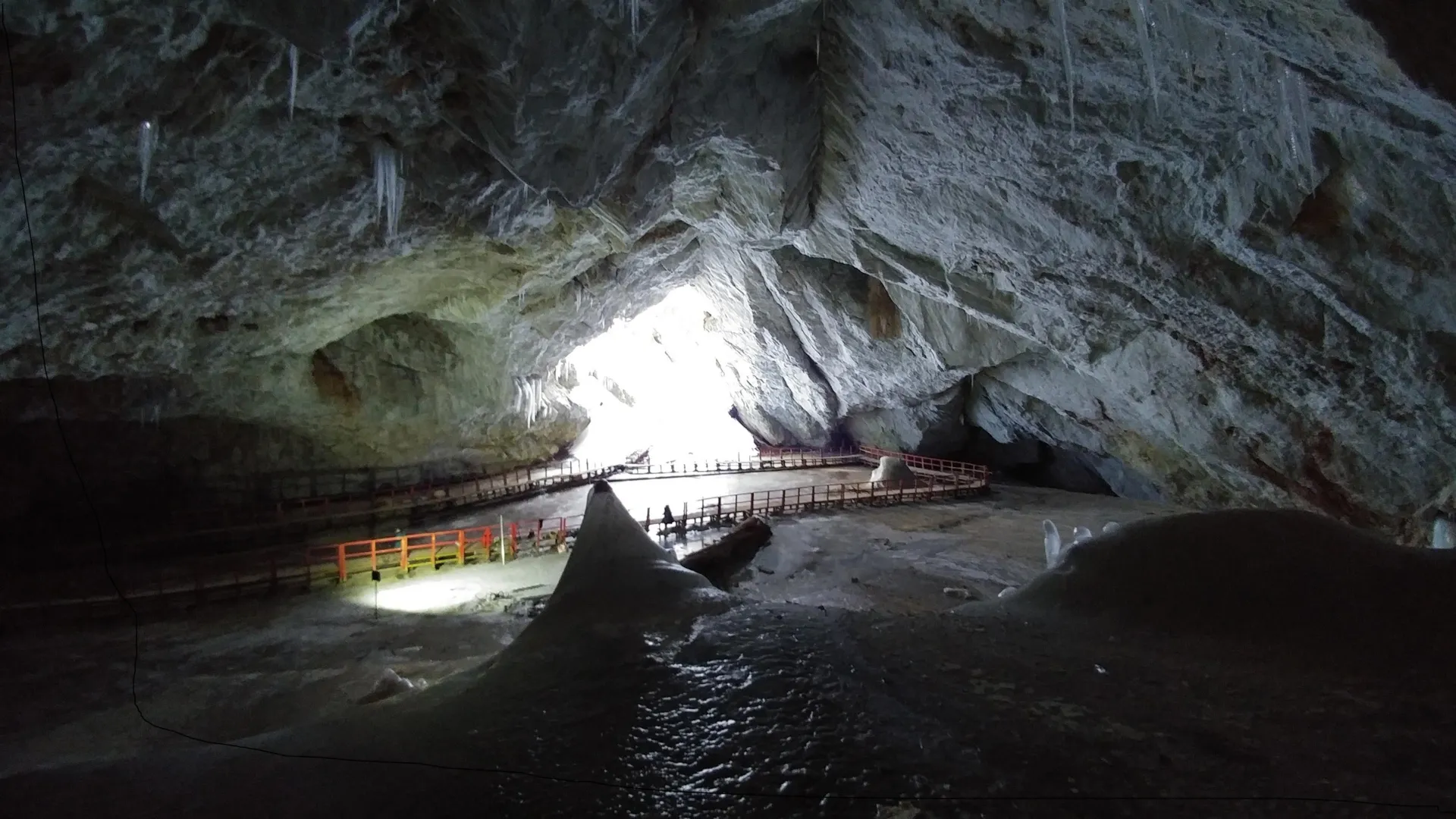
Bacteria are remarkably adaptable, thriving in some of the harshest places on Earth, from boiling hot springs to deep freezes far below zero. Ice caves are one such extreme habitat, home to diverse microorganisms that scientists are only beginning to understand. These frozen environments may contain vast stores of genetic material that have gone largely unexplored.
In Romania, researchers recently examined a bacterial strain that had been trapped in a 5,000-year-old layer of ice inside an underground cave. By analyzing its antibiotic resistance profile, they discovered that this ancient microbe may help scientists better understand how antibiotic resistance develops and spreads naturally. The findings were published in Frontiers in Microbiology.
“The Psychrobacter SC65A.3 bacterial strain isolated from Scarisoara Ice Cave, despite its ancient origin, shows resistance to multiple modern antibiotics and carries over 100 resistance-related genes,” said author Dr. Cristina Purcarea, a senior scientist at the Institute of Biology Bucharest of the Romanian Academy. “But it can also inhibit the growth of several major antibiotic-resistant ‘superbugs’ and showed important enzymatic activities with important biotechnological potential.”
How Ancient Microbes Resist Modern Drugs
Psychrobacter SC65A.3 belongs to a group of cold-adapted bacteria known as Psychrobacter. While some members of this genus can cause infections in people or animals, they are also considered promising for biotechnology applications. Until now, however, little was known about how these bacteria respond to antibiotics. “Studying microbes such as Psychrobacter SC65A.3 retrieved from millennia-old cave ice deposits reveals how antibiotic resistance evolved naturally in the environment, long before modern antibiotics were ever used,” Purcarea explained.
To retrieve the organism, the team drilled a 25-meter ice core from a section of the cave called the Great Hall, capturing a frozen record spanning 13,000 years. To prevent contamination, ice samples were sealed in sterile bags and transported in frozen conditions back to the laboratory. There, scientists isolated bacterial strains and sequenced their genomes to identify genes responsible for surviving extreme cold, as well as genes linked to antimicrobial resistance and activity.
The researchers then tested SC65A.3 against 28 antibiotics across 10 different classes. These drugs are commonly prescribed or reserved for serious bacterial infections. Some had already been associated with known resistance genes or mutations, allowing the team to compare predicted resistance mechanisms with actual laboratory results. “The 10 antibiotics we found resistance to are widely used in oral and injectable therapies used to treat a range of serious bacterial infections in clinical practice,” Purcarea noted. Among them were rifampicin, vancomycin, and ciprofloxacin, medications used to treat conditions such as tuberculosis, colitis, and UTIs.
SC65A.3 is the first Psychrobacter strain found to resist certain antibiotics, including trimethoprim, clindamycin, and metronidazole. These drugs are typically used to treat UTIs and infections affecting the lungs, skin, bloodstream, and reproductive system. The strain’s resistance profile suggests that bacteria adapted to cold environments could serve as reservoirs of resistance genes, which are segments of DNA that enable survival when exposed to antibiotics.
Melting Ice and the Spread of Resistance Genes
This discovery presents both potential risks and opportunities. “If melting ice releases these microbes, these genes could spread to modern bacteria, adding to the global challenge of antibiotic resistance,” Purcarea said. “On the other hand, they produce unique enzymes and antimicrobial compounds that could inspire new antibiotics, industrial enzymes, and other biotechnological innovations.”
Genetic analysis of Psychrobacter SC65A.3 revealed nearly 600 genes with unknown functions, pointing to a largely untapped resource for uncovering new biological processes. The team also identified 11 genes that may have the ability to kill or inhibit bacteria, fungi, and even viruses.
As antibiotic resistance continues to rise worldwide, insights from ancient microbes are becoming increasingly valuable. Studying genomes preserved in ice helps scientists trace how resistance emerged and spread long before modern medicine existed. “These ancient bacteria are essential for science and medicine,” Purcarea concluded, “but careful handling and safety measures in the lab are essential to mitigate the risk of uncontrolled spread.”