dailynewsnblog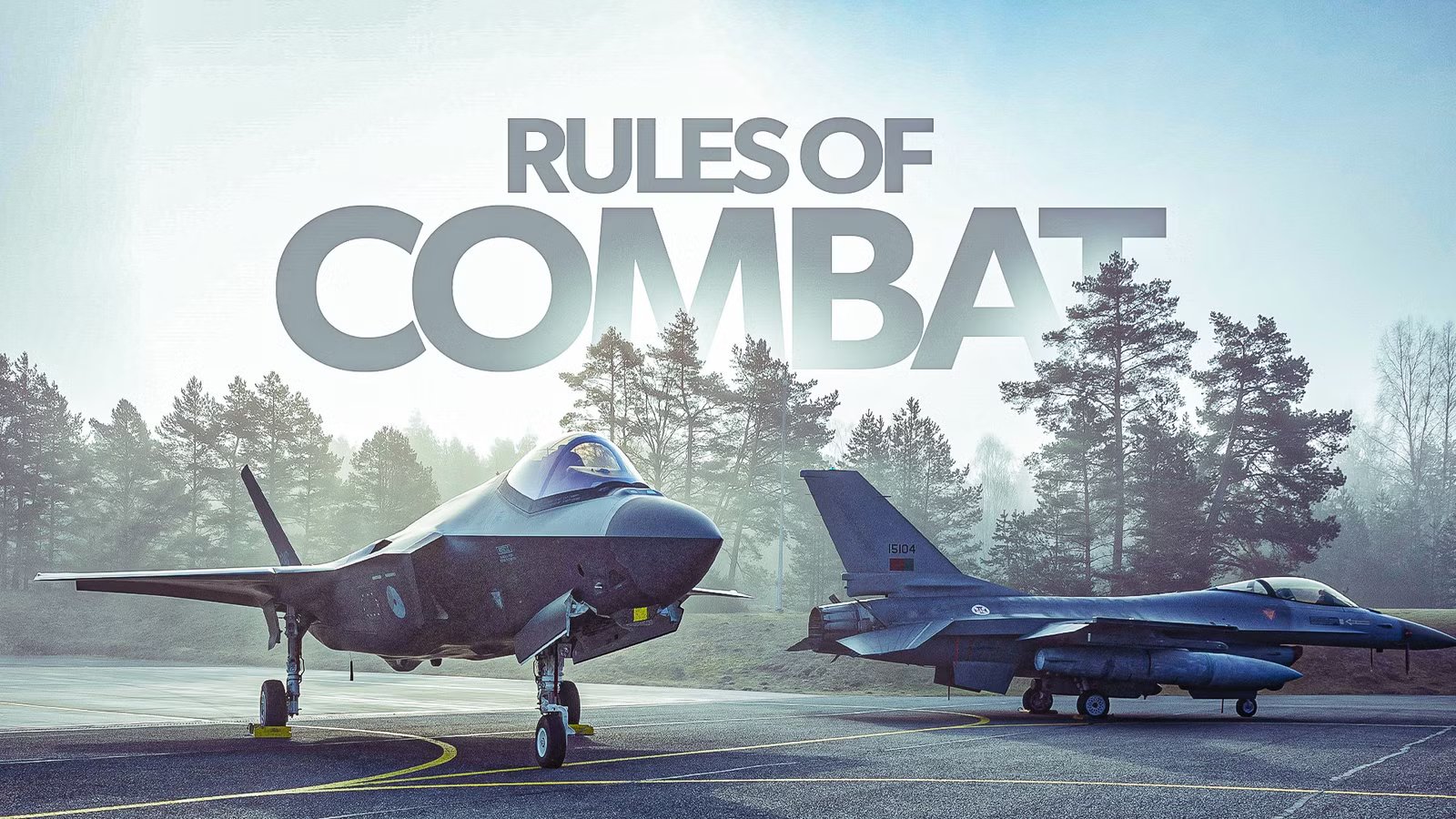
The future of air warfare is being shaped by two radically different realities at the same time. On one side are stealth aircraft such as the Lockheed Martin F-35 Lightning II and the Northrop Grumman B-21 Raider, flying command centers built around sensor fusion, artificial intelligence, and network-centric warfare. On the other hand, there are improvised cheap kamikaze UAVs, and piston-powered trainers engaging enemy drones with rifles over the skies of Ukraine. Together, they reveal how modern air combat is evolving into a conflict defined not only by technology but also by economics, survivability, and scale.
This article explores the full spectrum of that transformation, from the F-35’s combat-proven suppression of Iranian air defenses during Operation Midnight Hammer to the emergence of Collaborative Combat Aircraft and Ukraine’s remarkably low-cost drone hunters. It also examines why the Pentagon is increasingly focused on balancing exquisite stealth platforms with cheaper autonomous systems capable of surviving prolonged attritional warfare. As previously explored by Simple Flying, the Lightning II has evolved far beyond a traditional fighter aircraft into the backbone of a new networked approach to warfare. However, despite the complexity, the future battlefield may ultimately depend as much on affordable mass and sustainable operations as on raw technological superiority.
The F-35: A $2.1 Trillion Quarterback In The Sky

The aircraft that embodies the pinnacle of modern air combat technology is the Lockheed Martin F-35 Lightning II. As Simple Flying has previously outlined, the F-35 functions less as a traditional fighter jet and more as a “quarterback in the sky” by gathering, fusing, and distributing battlespace data to every other platform in the joint force.
Its AN/APG-81 AESA radar, Distributed Aperture System (DAS), and Electro-Optical Targeting System (EOTS) together give pilots a 360-degree real-time picture of the battlespace that no adversary can currently match, while the helmet-mounted display system (HMDS) — priced at $400,000 per unit, with some estimates reaching $700,000 — projects flight parameters, sensor feeds, and targeting data directly onto the visor, allowing pilots to effectively “look through” the aircraft’s fuselage.
The program’s staggering scope speaks to the depth of America’s commitment. With over 1,800 suppliers across 45 US states and a projected 94-year lifecycle cost of approximately $2.1 trillion, the Lightning II is an aircraft that encompasses an industrial system. The Department of Defense projects sustainment and lifetime maintenance costs alone at $1.58 trillion, while each airframe carries a unit flyaway cost ranging from roughly $80 million to over $110 million, depending on the variant. And yet, as we have explored in our analysis of the F-35’s long gestation, that investment has delivered real operational advantages — not least the ability to penetrate the most sophisticated air defense environments on the planet. As reported by F35.com, following the aircraft’s combat debut over Iran, Col. Charles Fallon, commander of the 388th Fighter Wing, said:
The effectiveness of this strike validated all the capabilities of the F-35 we’ve been talking about for years.
The 2026 conflict proved the point definitively. During Operation Midnight Hammer on June 22, 2025, F-35A jets from the 388th Fighter Wing flew hundreds of miles deep into Iranian airspace to suppress surface-to-air missile sites, the so-called “kicking down the door” mission, using their stealth and sensor fusion to destroy enemy air defenses while remaining undetected. The F-35s then escorted seven B-2 Spirit stealth bombers to their targets before becoming the last aircraft to exit Iranian airspace. Those bombers delivered Massive Ordnance Penetrator (MOP) bunker-buster bombs, each weighing 30,000 lbs (13,608 kg), against the Fordow, Natanz, and Isfahan nuclear facilities, an outcome that would have been impossible without the F-35’s SEAD mission clearing the path.
The B-21 Raider: Stealth, Nodes, And The Bomber Of Tomorrow

If the B-2 Spirit Bomber represents the current generation’s apex as a strategic stealth bomber, the Northrop Grumman B-21 Raider is its successor. Smaller than the Spirit, with a wingspan estimated at 20–25% shorter and an official payload capacity of 30,000 lbs (13,608 kg) versus the B-2’s 40,000 lbs (18,144 kg), the B-21 is nonetheless a generational leap. Where the B-2 was a 1980s design optimized for penetrating Soviet radar networks, the Raider is a 2020s platform engineered to survive dense sensor networks, including infrared satellites, AI-enabled air defenses, and cyber warfare environments that did not exist when its predecessor was designed.
Catch what other flight trackers miss
Emergency squawks, holds, NOTAMs — live signals, no signup.
Open tracker
Catch what other flight trackers miss
Emergency squawks, holds, NOTAMs — live signals, no signup.
Open tracker
Crucially, the B-21 is built as a super-advanced network node, unlike previous-generation bombers. Its open mission systems architecture allows rapid software upgrades, which the B-2 famously struggled with due to tightly integrated hardware and software. Also, its electronic warfare suite is reportedly derived from the F-35’s ASQ-239 system. The Raider features GPS-denied navigation capability for contested electromagnetic environments and is powered by two engines believed to be derivatives of the F135 high-bypass turbofan that powers the F-35, halving maintenance complexity compared to the B-2’s four-engine configuration while extending range by an estimated 500 nautical miles (926 kilometers).
|
B-2 Spirit vs. B-21 Raider: Key Specifications Compared |
||
|
Specification |
B-2 Spirit |
B-21 Raider |
|
First Flight |
1989 |
2023 |
|
Engines |
4× F118-GE-100 |
2× (F135-derived, classified) |
|
Payload |
40,000 lbs (18,144 kg) |
30,000 lbs (13,608 kg) |
|
Stealth |
Reduced radar cross-section |
All-aspect multispectral stealth |
|
Architecture |
Closed, legacy integration |
Open mission systems, plug-and-play |
|
Drone Control |
No |
Yes (battle management node) |
|
GPS-Denied Nav |
Limited |
Full capability |
Perhaps most significantly for the future of air warfare, the B-21 is designed to serve as a command-and-control center for drone wingmen by deploying unmanned systems into contested airspace while remaining at safer standoff distances. As Simple Flying has previously noted, US Strategic Command (STRATCOM) is actively pushing for the future fleet to grow from 100 to 145 units; this alone underscores how relevant the Raider will be in future scenarios.

6 Aircraft That Represent The Future Of Air Combat
Discover six aircraft redefining modern air warfare, from stealth fighters to missile trucks, shaping the balance of air power in 2026 and beyond.
The MQ-9 Reaper: Persistent Strike And The High Cost Of Attrition

Between elite stealth aircraft and improvised counter-drone platforms lies another category of modern warfare: persistent unmanned strike capability. With a maximum endurance exceeding 27 hours, a service ceiling of 50,000 ft (15,240 meters), and a payload capacity of up to 3,800 lbs (1,724 kg) across nine hardpoints, the General Atomics MQ-9 Reaper can carry AGM-114 Hellfire missiles, GBU-12 Paveway II laser-guided bombs, and AIM-92 Stinger air-to-air missiles. It became synonymous with the Global War on Terror. Beyond its loitering ability and weapons, its ability to relay live ISR data via satellite, and prosecute time-sensitive targets on demand made it the signature weapon of America’s counterterrorism campaigns across the Middle East and North Africa.
During the 2026 Iran Crisis, multiple Reapers were reportedly lost to layered missile defenses and electronic warfare systems, highlighting the risks faced by relatively slow and non-stealthy drones in high-intensity conflict. The Pentagon reportedly spent approximately $4 billion on missile-defense interceptors in the first week of the Iran conflict alone before pivoting toward lower-cost Ukrainian interceptor-drone designs, a data point that speaks volumes about the sustainability of high-cost platforms in high-intensity hostility. The economics are equally revealing. A fully equipped MQ-9 system, including ground stations and support infrastructure, can exceed $60 million in total procurement cost.
By contrast, many Iranian-made one-way attack drones, including variants of the Shahed family, cost only tens of thousands of dollars. The disparity created a devastating cost-exchange problem: expensive interceptors and high-value systems were being used to counter relatively disposable threats.
|
The Cost-Exchange Problem: Interceptor vs. Target |
||
|
Platform / Weapon |
Approximate Unit Cost |
Primary Role |
|
MQ-9 Reaper (full system) |
~$64 million |
ISR / Precision Strike |
|
Patriot PAC-3 Interceptor |
~$4 million per missile |
Ballistic / Cruise Missile Defense |
|
Iranian Shahed-136 Drone |
~$20,000–$50,000 |
One-Way Attack (Kamikaze) |
|
Russian Orlan-10 Drone |
~$87,000–$120,000 |
Reconnaissance |
|
Ukrainian Merops AS-3 Interceptor |
~$3,000 |
Counter-Drone Intercept |
|
Yak-52 (per flight hour) |
A few hundred dollars |
Visual-Range Drone Intercept |
This imbalance became especially apparent as Patriot missile batteries intercepted waves of comparatively cheap drones and rockets. A single Patriot interceptor can cost millions of dollars, while many Iranian loitering munitions cost less than a luxury sedan. The strategic implications are enormous: even successful missile defense can become financially unsustainable during prolonged saturation attacks. Moreover, modern warfare continues to demonstrate a lesson first learned in the early age of military aviation: no airspace remains completely secure once the attacker can impose enough pressure at enough scale. Winning tactically may still mean losing economically.
Collaborative Combat Aircraft: Loyal Wingmen And The Uncrewed Future

The escalating cost imbalance exposed by modern drone warfare is one of the primary reasons the US Air Force is investing heavily in Collaborative Combat Aircraft (CCA), also known as the “Loyal Wingman” concept. The logic is straightforward: sending a $100 million stealth fighter into heavily defended airspace for every mission is increasingly unsustainable in an era defined by mass-produced drones, distributed sensors, and saturation attacks. Instead, future air combat will likely depend on mixtures of crewed and uncrewed systems operating together as flexible, layered formations.
The integration pathway is already underway. The latest F-35 production batches will be equipped to control multiple CCAs from the cockpit, allowing a single human pilot to direct a small unmanned fleet mid-mission, thus effectively becoming a flight lead for both crewed and uncrewed assets simultaneously. Looking further ahead, the B-21 Raider is expected to serve as a battle management node for these systems — an aerial command post directing drone wingmen into the most dangerous areas of contested airspace while the bomber remains at standoff range. The DARPA Air Dominance Initiative and the Air Force’s NGAD program envision a future in which the ratio of unmanned to manned platforms in any given mission package is measured not in ones and twos, but in tens.
This doctrinal shift away from purely manned air combat is, ironically, one of the threads connecting the Pentagon’s most sophisticated programs to the improvised platforms flying over Ukraine. Both philosophies acknowledge that placing human lives inside expensive airframes at the point of maximum danger is no longer always the optimal approach.

The World’s Largest Air Forces By Number Of Fighter Jets
This guide ranks the world’s largest fighter forces in 2026
Ukraine’s WWI Paradox: The Yak-52 Drone Hunter

While the Pentagon pursues AI-enabled drone wingmen costing millions of dollars, Ukraine arrived at a remarkably similar doctrinal conclusion from the opposite direction entirely that dates back to the tactics first used during WW1: survivability and sustainability matter more than technological elegance alone. Faced with relentless waves of low-cost Russian reconnaissance and kamikaze drones, Ukrainian forces increasingly turned toward improvised airborne counter-drone platforms that could operate cheaply, repeatedly, and with minimal logistical burden.
And then there is the Yakovlev Yak-52. First flown in 1976 and produced in Romania between 1977 and 1998, the Yak-52 is a two-seat all-metal Soviet aerobatic trainer powered by a 360-hp (268-kW) Vedeneyev M-14P nine-cylinder radial piston engine, with a maximum speed of approximately 186 mph (300 km/h). It was designed to teach Soviet DOSAAF students how to fly, not to fight. It costs a few hundred dollars per flight hour to operate. A Dutch volunteer foundation, Protect Ukraine, purchased one in the United Kingdom for €78,000 — roughly the cost of a single AIM-9 Sidewinder missile.
The tactic is elementary and deliberate. Footage from a Russian drone over Odesa in April 2024 showed a Yak-52 pilot circling the UAV with the canopy open while a rear-seat gunner engaged it with an automatic rifle. The scene was essentially identical to aerial combat over the Western Front in 1914, when observers fired pistols and rifles at enemy aircraft before purpose-built gun mounts were available. Yet by the summer of 2024, images had emerged of Ukrainian Yak-52s adorned with kill markings recording the destruction of Russian Orlan-10 and ZALA 421-16E reconnaissance drones, each valued by RUSI at between $87,000 and $120,000.
An even more striking example emerged with the Antonov An-28. Originally a Soviet-era light twin-turboprop designed for short-haul passenger and cargo routes from rough, unimproved airstrips, the An-28 entered a very different role when Ukrainian volunteers mounted a six-barrel M134 Minigun — a Gatling-type rotary cannon capable of firing 3,000 rounds per minute — through its side door, adding infrared cameras and night-vision goggles for a crew composed entirely of civilian volunteers. Ground-based radar cues the aircraft toward active Shahed drone swarms; the crew acquires targets in the infrared; the gunner fires short bursts over unpopulated terrain. By February 2026, the aircraft had 114 confirmed kill markings on its fuselage.
By late April 2026, the tally had risen to 222 gun kills — plus a new capability: wing-mounted pylons carrying air-launched interceptor drones, including the Ukrainian-made SkyFall P1-Sun, a modular 3D-printed airframe reaching 280 mph (451 km/h), and the Merops AS-3 Surveyor, an explosive-warhead proximity interceptor.
The New Air-Warfare Spectrum

What emerges from the air wars of 2024–2026 is not the replacement of sophisticated systems by improvised ones, nor the obsolescence of stealth aircraft in the age of drones. Rather, modern warfare is producing a spectrum of solutions operating simultaneously at radically different technological and economic levels. At one end are platforms such as the Northrop Grumman B-21 Raider and the F-35 Lightning II — aircraft built around stealth, software integration, sensor fusion, and network-centric combat. At the other are piston-engine trainers, modified turboprops, civilian volunteers, and low-cost interceptor drones assembled under wartime pressure.
The critical lesson is that both ends of this spectrum are proving necessary. High-end stealth platforms remain indispensable for penetrating sophisticated air-defense environments, conducting strategic strikes, and coordinating complex battlespace operations. Yet the wars in Ukraine and the Middle East have also demonstrated that low-cost drones, saturation attacks, and attritional pressure can rapidly impose unsustainable financial burdens even on advanced militaries equipped with Patriot batteries and fifth-generation aircraft.
This reality is reshaping doctrine across the world. Future air forces are increasingly likely to rely on layered combinations of exquisite stealth assets, autonomous loyal wingmen, disposable interceptors, improvised counter-drone systems, and economically sustainable defensive networks rather than a single dominant platform. In that sense, a B-21 Raider coordinating autonomous drone formations and a Yak-52 pilot firing at reconnaissance UAVs through an open canopy are not contradictions at all. They are parallel responses to the same strategic reality: modern air warfare is becoming simultaneously more advanced, more distributed, and far more economically unforgiving than many planners anticipated.