dailynewsnblog
Good morning. It’s been another week of brinkmanship via Truth Social and ceasefires broken before they’ve been announced.
While US president Donald Trump claims an agreement with Iran could happen soon, for those living in the Middle East it does not feel like peace is anywhere near. People have seen more bombs dropped in Lebanon this week; and the death toll continues to rise, national economies falter, and displacement abounds.
For those in the region, it means that having your bag packed, ready to flee by bus, car or even on foot to a safer place – maybe for a few days, perhaps indefinitely – has become a fact of life.
Emma Graham-Harrison spent over a decade reporting from Kabul, Beijing and Madrid before basing herself in Jerusalem last May as our chief Middle East correspondent. I spoke to her as she waited to board her flight to Zurich, where she’s been nominated for an award for her reporting from Gaza. We talked about what it’s like for people living in a region that faces constant instability while the world watches on, and other times looks away. But first, the headlines.
Five big stories
-
UK politics | Andy Burnham has signalled he would begin transforming the broken social care system this year if he became prime minister, he has said in an interview with the Guardian, accusing Westminster of “flinching away” from tackling difficult policy problems.
-
Environment | Humanity can raise living standards, reduce inequality and keep global heating within a 2C rise, according to a sweeping vision for planetary survival.
-
Ukraine | The Ukrainian president, Volodymyr Zelenskyy, has called for face-to-face negotiations in a public letter addressed directly to the Russian president, Vladimir Putin.
-
England news | The poorest and most nature-deprived communities in England will be further left behind in their access to green spaces if proposed changes to planning laws go ahead, a report finds.
-
UK news | Andrew Mountbatten-Windsor received private income from subletting three cottages on his Windsor Royal Lodge estate while paying a “peppercorn rent” to the crown estate, a report into royal property arrangements has revealed.
In depth: ‘This is not a ceasefire. It’s a never-ending auction over our lives and our blood’
As the week draws to a close, Donald Trump has insisted once again Iran is “pretty close” to signing a peace agreement with the US, which would see the strait of Hormuz, the narrow maritime passage through which about 20% of the world’s oil and liquefied natural gas passes, reopen.
But many would be forgiven for thinking it doesn’t feel like peace is coming. This week saw Israel make its deepest incursion into Lebanon in more than 26 years, with Israeli strikes killing at least nine people, and hundreds of thousands forced to flee their homes in the south of the country. The strikes complicated diplomatic efforts between Washington and Tehran. On Thursday, the Israeli defence minister, Israel Katz, said the military will continue its ground operations there, just hours after Israel and Lebanon agreed to implement a US-backed ceasefire to end hostilities. Later the leader of Hezbollah rejected the ceasefire too, demanding a complete Israeli withdrawal from Lebanon.
It’s a territorial escalation for sure, says Emma, which has delighted far-right elements in Netanyahu’s coalition government, who have called for the annexation of southern Lebanon, as well as Gaza and the West Bank.
But while Trump is scaling back, aware of the war’s unpopularity domestically and the impact of rising inflation and oil prices, analysts inside Israel believe Netanyahu is now seeking to broaden the conflict for his own strategic ends.
Does Israel desire a broader conflict?
“This war began looking incredibly impressive for the US and Israel,” Emma tells me – but in her view, the totally predictable blocking of the strait of Hormuz has stalled it – leaving little indication of what success might look like.
Emma says: “Many Israelis believe the election will be a test of whether Netanyahu can convince voters that he has achieved security gains since 7 October 2023, [when Hamas killed 1,200 Israelis and injured many more] that outweigh the failings that left so many Israelis vulnerable to Hamas attacks on that day.”
Since the start of the war in Iran, thousands of Israelis have been injured and 23 have been killed in missile strikes from Iran and Lebanon, figures up to April from Israel’s ambulance service say.
Even at the start of the war, Emma wrote about how senior Israeli defence figures believed it was wishful thinking that Israel and the US could achieve regime change in Iran. With that ostensible goal never likely to be achieved, whether Iran held on to its enriched uranium stores would be the true measure of whether the war was a success or failure.
“Now the war is in stalemate, and the thing that was most critical for Israel, the nuclear proliferation programme, doesn’t seem to be on the table in negotiations. It looks very much like it’s going to be a failure,” says Emma.
But what could be on Netanyahu’s mind are the upcoming elections in Israel’s Knesset, which my First Edition colleague Michael Segalov explained in great detail a few weeks ago.
“In that context returning to war in Lebanon – and Gaza – is absolutely a political and electoral strategy,” she adds.
An ongoing catastrophe in Gaza and global disinterest
Despite a US-brokered “ceasefire” coming into force last October, Emma explains that over 900 people have been killed in Gaza by continued Israeli bombardment since then.
And over one in 10 of the 2.3 million prewar population have been killed or injured since Israel began its war on Gaza, devastating the strip in what a UN commission has declared a genocide. Now those who remain are crammed on to a sliver of land along the coast, which we can see on the map above, while Israeli troops push back the agreed “yellow line” in order to seize even more territory.
“Israel controls at least 60% of Gaza, which is now a wasteland. They’ve demolished almost everything in the area and almost no Palestinians can live there,” says Emma.
“Part of the so-called ceasefire deal was supposed to be a lot more aid going in, but there still isn’t enough. There are severe shortages of clean water, medical supplies, food. A lot of people are still going hungry.”
Israel, which has repeatedly weaponised access to food and other basic supplies, says sufficient aid reaches Gaza. Last summer a bar on food shipments caused a famine.
“It’s an ongoing humanitarian catastrophe,” says Emma. “That’s in addition to the combat actions killing on average over 100 people each month, which in most parts of the world would be considered an active war zone.”
Yet there is little interest from the White House, despite Trump’s well-rehearsed obsession with winning the Nobel peace prize. “[Special envoy] Steve Witkoff and [Trump’s son-in-law] Jared Kushner have reportedly been taken off Gaza to focus on Iran because its more of a priority for Trump. It’s unpopular at home, and has had a damaging effect on the cost of living in the US,” says Emma.
EU leaders are expected to rebuke Netanyahu for his continued expansion in Gaza and Lebanon at a forthcoming Brussels summit but, says Emma, he has a long history of shaking off criticism, and the EU has yet to use any of its considerable economic and political leverage – it is Israel’s biggest trading partner.
The situation in Gaza does not seem to be a priority for governments around the world which are more concerned about the impact of the war in Iran on higher oil prices and inflation. “We see plenty of condemnation but very little practical steps that mean an improvement for people in Gaza who are living in this terrible limbo.”
Living day to day in Iran and Lebanon
Indeed, people are living in limbo across the region, says Emma.
“Undeniably many Iranians really hate their government – we saw that in January, then they came out in protest and were killed in very large numbers trying to get rid of it,”
But that doesn’t mean they have faith that the war will bring about a better alternative.
“Equally, they don’t believe – and history provides plenty of evidence for this – that liberation is going to come through a western bombing campaign.” Iranians need only recall the decades-long conflict and political turmoil prompted by the US-led coalition’s disastrous invasion of neighbouring Iraq.
“If you’re in Tehran, particularly if you’re anti-government, you’ve probably lost friends in January, you’re living under some bombardment, which is pretty terrifying because there aren’t air raid shelters, and you’re staring down more war, or at the worst, collapse into a failed state,” says Emma.
“You can see why people are very worried and very frightened.”
Iranians have told the Guardian they feel abandoned by foreign powers, enduring the fallout out of the war, which has damaged an already faltering economy and strengthened the oppressive regime.
“I feel humiliated,” Amir, a business owner from Mashhad, told one of our reporters recently. He had once desperately hoped for US intervention, but he now finds himself questioning that. “This is not a ceasefire. It’s a never-ending auction between the US and the Islamic Republic over our lives and our blood.”
The situation is similar in Lebanon, Emma tells me. “Large sections of the population do not support Hezbollah. But Israel is bombing Beirut, occupying the south and demolishing whole villages, which Human Rights groups say should be investigated as war crimes; there’s no belief that this is going to bring them freedom or prosperity.”
Alongside the immediate threat to personal safety, there’s the economic impact – which always hits women, minorities and poorer people the hardest – as well as the psychological drag of uncertainty.
“In Lebanon, there’s the difficulty of planning summer visits for families when international travel shuts down. And obviously, hanging over them, are generational memories of the horrors of the civil war in the 80s, and the 2006 war with Israel.”
Will elections bring about any meaningful change?
With upcoming elections in the US and Israel, some may be tempted to look for a glimmer of hope in the months ahead. Emma fears that might be misplaced. Israel’s leading opposition contender does not seem to differ meaningfully from Netanyahu politically; meanwhile, it is hard to predict how Trump will react to the midterms – whether they offer humiliation or celebration for him.
What is known is the impact on the people who have to live through this day to day, with a bag packed.
Emma says that across Lebanon, Iran and Gaza, many people are asking the same question: why western democracies are allowing Israel to trample over international law that protects civilians. “And particularly when it comes to European countries, why they are so vocal and committed about holding Russia to account for targeting civilians and destruction of civilian infrastructure in Ukraine, but are almost silent about similar violations when they are the targets.”
We want to hear from you
Yesterday I was at the opening night of the Design and Disability exhibition at V&A Dundee, and I’d like to hear from you about your experiences of in/accessible spaces before I write about it next week.
To get in touch hit reply or email first.edition@theguardian.com
What else we’ve been reading
-
From Argentina’s Messi to Cape Verde’s Laros Duarte, our sports desk have made an amazing guide to all 1,248 players at the 2026 World Cup. Patrick
-
I‘m a huge admirer of Dave Grimstead, whose entirely volunteer-run cold case unit, takes the time and persistence to unravel the stories of lost and missing people and, crucially, to support their families too. Libby
-
The one and only Alexis Petridis has reflected on 50 years of punk on the half century anniversary of the first ever Sex Pistols gig. Patrick
-
This manifesto for an equal, sustainable world, from the likes of Thomas Pinketty and Cornelia Mohren, is an infusion of optimism. Libby
-
And, as World Cup fever takes hold, Michael Hann ranks the top 20 songs about football. Patrick
Sport
Tennis | Poland’s Maja Chwalinska became the first qualifier to play in a French Open final after defeating the No 25 seed, Diana Shnaider.
Cricket | Ollie Robinson admitted that just a few months ago he “thought I was never playing for England again” after he produced an extraordinary comeback performance on the first day of the Test summer.
Football | Khaldoon al-Mubarak has revealed Pep Guardiola “quit 100 times” as Manchester City manager, with the chair comparing the empty threats to The Boy Who Cried Wolf, one of Aesop’s Fables.
The front pages
“Burnham: I won’t flinch from need to fix the broken social care system”, is the Guardian’s top story today.
The Times has “Andrew cashed in with Windsor cottage sub-lets”, a story also featured by the Telegraph, which writes “Andrew cashed in with secret rent deals”, while the Mirror’s take is “What a cheek”. The Mail says “Beatrice and Eugenie have lived at Palaces rent-free for years”.
Elsewhere, the FT has “AI revenues must surge 100-fold for SpaceX to achieve $1.78tn valuation”. The i Paper runs with “Revealed: King’s private concerns over Trump state visit to UK”, the Express says “Kate shares in mum’s joy” and Metro has “Fifa sucking fans dry”.
Something for the weekend
Our critics’ roundup of the best things to watch, read, play and listen to right now
Film
Savage House | ★★★☆☆
Black-belt performances from Claire Foy and Richard E Grant put some vim and vigour into this haranguingly one-note and unidirectional period romp of the raucously bewigged and be-poxed 18th century. It’s written and directed by American film-maker Peter Glanz, who gives us candlelit interiors like a knockoff Barry Lyndon, and periodic deafening orchestral stabs with a touch of Amadeus, as furious people in costume storm down corridors. Grant and Foy play Sir Chauncey and Lady Savage, who are living in a vast crumbling country estate. It’s all a bit strenuous but Foy and Grant are such class acts that they make this watchable. Peter Bradshaw
Music
Lizzo: Bitch | ★★☆☆☆
Bitch, Lizzo’s fifth album, lands at a deeply peculiar juncture in her career. Given that the public apparently don’t want her going rock, nor rapping in the style of her 2013 debut Lizzobangers, nor indeed making the kind of music they were buying in their millions three years ago, the question of what they actually do want has presumably hung heavy over its making. Lizzo hasn’t come up with a definitive answer. Bitch tries a bit of everything, this scatter-gun approach makes it a disjointed listen. There’s something oddly subdued about its tone and the lyrics often seem equivocal. What’s definitely lacking is a pop smash, the kind of thing that Lizzo once seemed to be able to write to order. Alexis Petridis
TV
Cape Fear | ★★★★★
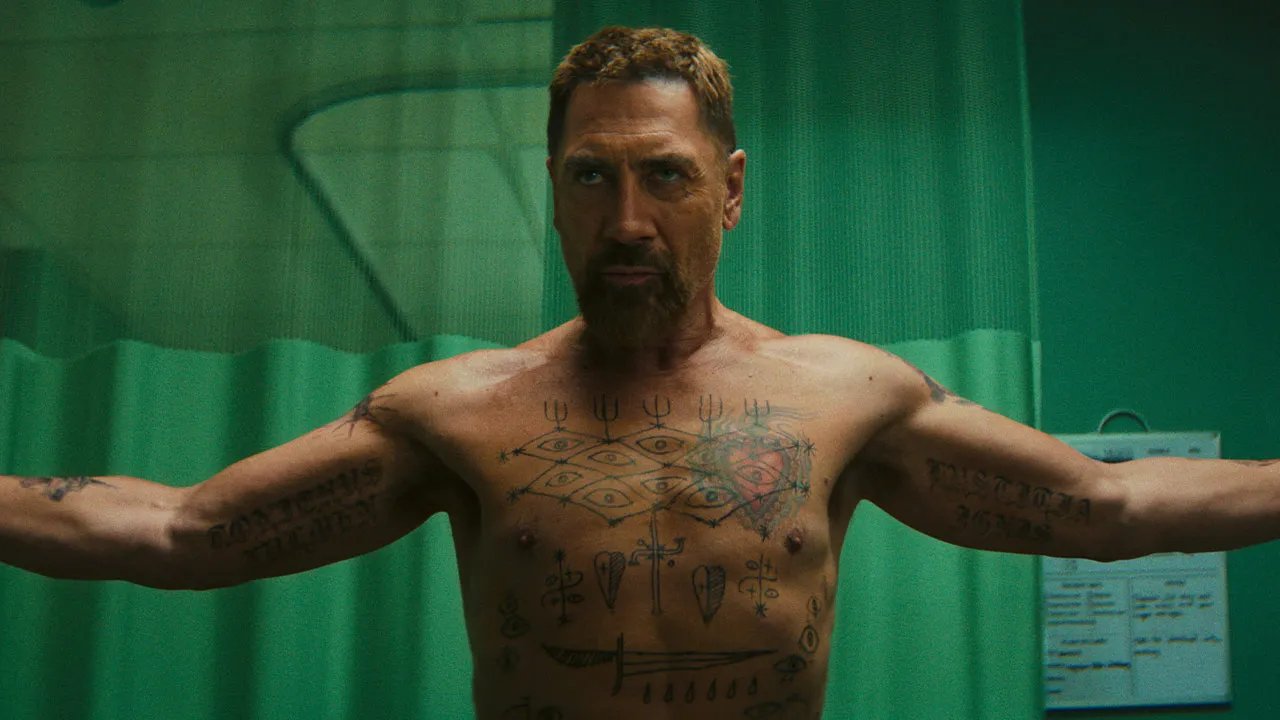
Welcome to the latest screen incarnation of John D MacDonald’s taut psychological thriller, published in 1957 as The Executioners and now adapted for the third time under the title Cape Fear. Nick Antosca’s 10-part series matches our new sophistications and probes every single modern weakness, fear and pressure point. It is a wild ride. The new Cape Fear stars Amy Adams and Patrick Wilson as lawyers Anna and Tom Bowden and Javier Bardem having the absolute time of his life as Max Cady. It is a masterclass in tension, in taking things right to the edge of credulity and it never forgets the power of the jump scare. Lucy Mangan
Books
Wimmy Road Boyz by Sufiyaan Salam
Sufiyaan Salam’s high-octane debut novel is written largely in gen Z lowercase – and you’re in for a ride. The Boyz are British Pakistani friends in their early 20s. The eponymous Wimmy Road reflects the deteriorating mood of the characters. Violence simmers, then overflows. Nothing about Wimmy Road Boyz is subtle: Salam lays his cards on the table. But despite the foreshadowing work, when he finally hits the brakes on the narrative, the effect is immediate, a raw shock. A literary performance like no other, this coming-of-age meets state-of-the-nation novel tears through Britain’s social fabric to examine toxic masculinity, community and youth culture. Sana Goyal
Today in Focus: The Latest
Is the Israel-Lebanon ceasefire over before it began?
Israel and Lebanon have agreed to implement a ceasefire to end hostilities as the US attempts to overcome one of the largest barriers to reaching a broader deal to end the war with Iran. But the Israel-Lebanon ceasefire is dependent on a complete halt of fire from Hezbollah, and the evacuation of all its fighters in southern Lebanon. Lucy Hough speaks to Beirut-based reporter William Christou.
Cartoon of the day | Ben Jennings
The Upside
A bit of good news to remind you that the world’s not all bad
The Guardian’s Alternatives series has been brilliant at showing us all another way to live. This time, Chloé Farand is writing about an alternative to fossil fuel based fertilisers that are made using recycled urine. With swathes of the world’s chemical fertiliser supplies clogged up in the strait of Hormuz, VunaNexus, the Swiss startup behind the technology, is betting that this can be a solution in a fossil fuel-free world.
Sign up here for a weekly roundup of The Upside, sent to you every Sunday
Bored at work?
And finally, the Guardian’s puzzles are here to keep you entertained throughout the day. Until tomorrow.