dailynewsnblog
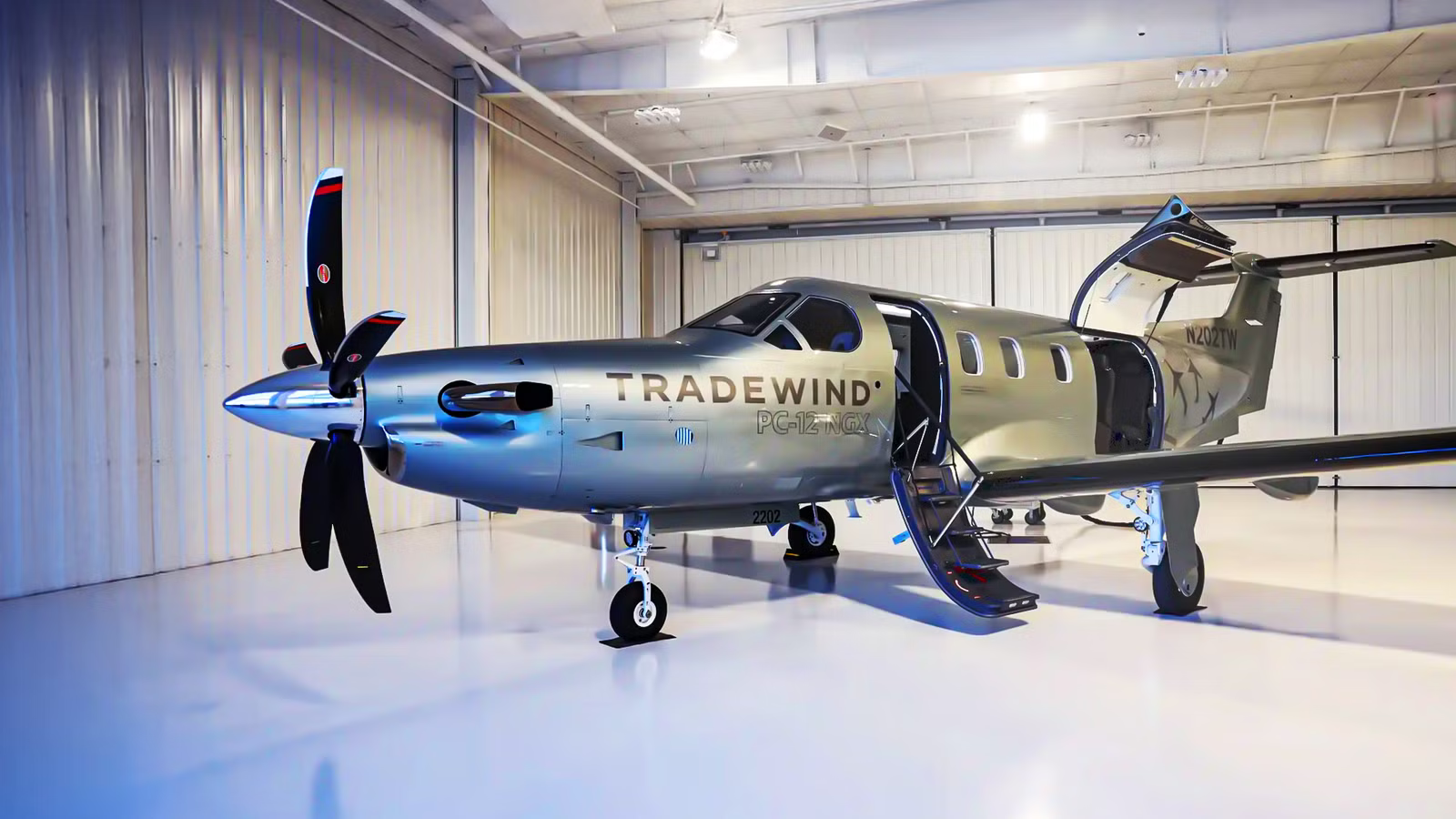
A twin-engine business jet is what many picture when they imagine private flying, but single-engine turboprops have a well-deserved and growing reputation as an ideal means of independent ownership of a fast private plane. The cost advantage behind the reputation is real: a Daher TBM 960, Pilatus PC-12 NGX, or Piper M600 SLS burns far less fuel than the lightest light jet. Thus, an owner who flies short trips should pay a fraction of a jet’s price for each hour.
So, just how much cheaper are these turboprops to own and fly? Jaken Aviation, an aircraft finance broker, puts the typical single-engine turboprop fuel burn at roughly 55 to 75 gallons per hour (208 to 284 L/h) of Jet A, against 120 to 200 gallons per hour (454 to 757 L/h) for light jets. The operating report for the TBM 960 on GlobalAir.com lists $1,515 per flight hour based on 275 flight hours a year and an annual all-in budget of $416,643.
The Pilatus PC-12 NGX stands apart as the ultimate multirole utility vehicle in the single-engine turboprop class. The maker claims the PC-12 NGX runs 30% to 60% below twin-engine turboprops and jets. The defining advantage of the PC-12 is its oversize rear cargo door paired with robust landing gear. That lets it operate safely from unpaved, short dirt strips where many other aircraft cannot go.
The Fuel Gap Is Real But Far From The Only Appeal

The PC-12 NGX offers an enormous cabin volume along with its top-of-class cargo space. It rivals midsize jets in payload, making it the favorite for operators who prioritize comfort, heavy payload capacity, or regional cargo transport. While it is slower than some turboprops, its versatility and high residual value compensate for the lower cruise speed.
By contrast, a Daher TBM 960 sits at the other end of the turboprop spectrum, specializing in speed and cost efficiency. It delivers near-jet speeds while retaining a low price-per-hour. The TBM 960 is equipped with an advanced digital engine control system that drastically reduces pilot workload during critical phases of flight. It fits the niche for owner-pilots who want fast cross-countries without the fuel burden of a jet, though its cabin is significantly tighter than a PC-12’s sprawling interior.
Specification | TBM 960 | PC-12 NGX | M600 SLS | Citation M2 |
|---|---|---|---|---|
Engine | 1 Pratt & Whitney Canada PT6E-66XT turboprop | 1 Pratt & Whitney Canada PT6E-67XP turboprop | 1 Pratt & Whitney Canada PT6A-42A turboprop | 2 Williams FJ44 turbofans |
Cruise Speed | 330 knots (611 km/h) | 290 knots (537 km/h) | 274 knots (507 km/h) | 404 knots (748 km/h) |
Maximum Range | 1,730 nautical miles (3,204 km) | 1,803 nautical miles (3,339 km) | 1,658 nautical miles (3,071 km) | 1,550 nautical miles (2,871 km) |
Maximum Operating Altitude | 31,000 feet (9,449 meters) | 30,000 feet (9,144 meters) | 30,000 feet (9,144 meters) | 41,000 feet (12,497 meters) |
Reported Fuel Burn | 57 gallons per hour (216 L/h) | 69 gallons per hour (261 L/h) | 37 to 46 gallons per hour (140 to 174 L/h) | 121 gallons per hour (458 L/h) |
The Piper M600 SLS offers automated safety systems with accessible ownership prices. One of the main selling points of the M600 is its standard-equipped emergency autoland technology. The plane is designed to automatically fly itself and land if the pilot becomes incapacitated. It is also the cheapest in this group to buy and fly. That is chiefly because it burns considerably less fuel than its competitors; however, the airframe is smaller than the Pilatus.
The Cessna Citation M2 offers a light-jet counterpoint. The Citation M2’s primary advantage is its ability to fly at 41,000 feet, letting it cruise well above turbulent weather and adverse headwinds. It can achieve higher cruise speeds, but at a steep cost. The dual Williams turbofans burn nearly double or triple the fuel of the turboprops, and the aircraft cannot access smaller, convenient community airfields.
What Delivery Data Say About Today’s GA Market

General Aviation Manufacturers Association’s second-quarter report counts 289 turboprops shipped in the first half of 2026, up 7.8% from 268. Single-engine models dominate the category, accounting for 531 of the 594 turboprops shipped in 2025. According to GAMA’s year-end report, the PC-12 shipped roughly 45% of its 2025 total of 82 in the final quarter, and the TBM 960 shipped more than 40% of its total of 51 in the same period.
Still, business jets continue to outsell turboprops, and a single-engine jet now competes for the same economical buyer. Bizjets outsell the single-engine turboprop segment in raw unit volume, but both categories command highly robust, stable markets. GAMA says manufacturers delivered 854 bizjets globally compared to a total of 594 turboprops.
Two reports will settle the question. GAMA’s third-quarter figures will show whether the second-quarter jump in single-engine turboprop shipments, from 105 to 139, was the start of a trend. The year-end report, which arrived in February of 2025, will show whether Pilatus and Daher again deliver their strongest quarter in the fall, and whether the full-year total beats 2025.
Utility Per Sortie Matters As Much As Cost Per Mile

Roughly 80% of private flights are under two hours. A jet must climb rapidly to over 35,000 feet to reach its optimal fuel efficiency. On a short 300-to-500 nautical mile trip, a jet spends most of its time climbing and descending, burning immense amounts of fuel. A high-performance single-engine turboprop burns roughly 50 to 90 gallons per hour. A comparable light jet burns 200 to 300 gallons per hour.
This gap translates to over $200,000 in annual fuel savings for a typical 200-hour flight schedule. Light jets are notorious for forcing a compromise between range and passengers. If you fill a light jet’s fuel tanks to maximize range, you can often carry only two or three passengers before hitting the maximum takeoff weight. Turboprops are structural heavy-lifters.
Jets also require long, pristine, paved runways to accelerate and stop safely. This severely restricts where light jets can land. Models like the Pilatus PC-12 can routinely land on unpaved dirt, gravel, or grass strips. For remote operations, corporate facilities, or recreational trips, turboprops give access to thousands of smaller airports jets can’t reach.
A single-engine turboprop can frequently fill its fuel tanks to the brim and still pack the cabin with a large family, corporate team, and heavy luggage without exceeding weight limitations. Turboprops generate massive low-speed torque and can leverage their propeller blades for aerodynamic braking. This allows them to land on runways as short as 2,500 feet. On the vast majority of real-world missions, a turboprop delivers nearly the same or better door-to-door utility as a jet at a fraction of the cost.
Why Single-Engine Jets Offer The Stiffest Competition

Single-engine jets make it difficult for single-engine turboprops to expand their market share by directly intercepting owner-pilots at the exact same price point and capturing them through established brand ecosystems. A 2022 comparison by AvBuyer found the single-engine Cirrus Vision Jet G2+ burning 49 gallons per hour (185 L/h), against 99 gallons per hour (375 L/h) for the twin-engine Embraer Phenom 100EV.
High-end single-engine turboprops have become increasingly expensive. While a PC-12 NGX or TBM 960 commands between $4.3 million and $5.2 million, a single-engine jet like the Vision Jet positions itself right around $3.2 million to $3.5 million. This places it at exact price parity with entry-level turboprops like the M600 SLS.
Turboprops therefore compete against a moving target. In personal and corporate aviation, marketing and psychological biases strongly favor jets. Buyers naturally perceive jets as more modern, smoother, and more prestigious than aircraft with spinning propellers. Yet, the fundamental physics of a propeller make it far more efficient than a jet at moving massive volumes of air at low-to-medium altitudes.
How The Volatility Of Oil Is Pushing Flyers To More Economical Airframes

Asset utilization is no longer the superior metric because skyrocketing fuel costs have completely flipped the financial equation. The market shift to single-engine turboprops over light jets has intensified due to recent spikes in global aviation fuel costs. Initially sparked by Russia’s invasion of Ukraine in 2022, oil price volatility has been amplified by Operation Epic Fury in Iran. Combined with the blockade of the Strait of Hormuz, these events have driven physical Jet A prices to unprecedented highs.
With retail fuel climbing past $8.00 to $9.00 per gallon at many fixed-base operators, fuel has gone from a routine expense to a liability. Turboprops excel in this high-cost environment because their design is inherently efficient. Flight planning theory shows that fuel economy depends heavily on trip distance, penalizing jets on short regional hops.
To be efficient, a light jet must climb to high altitude, yet most regional flights are under 500 nautical miles, leaving jets in a high-burn climb. Meanwhile, turboprops are much less efficient, operating between FL250 and FL280. That allows turboprops to avoid steep climb penalties, translating to 35% to 40% lower fuel burn than single-engine jets.
Historically, corporations prioritized asset utilization, valuing a jet simply because its higher speed allowed it to fly more missions per year. When fuel prices are highly volatile, a turboprop’s massive, guaranteed cash savings on every flight provide a far better overall financial deal for corporate balance sheets than trying to squeeze a few extra high-cost flight hours out of a jet asset.