dailynewsnblog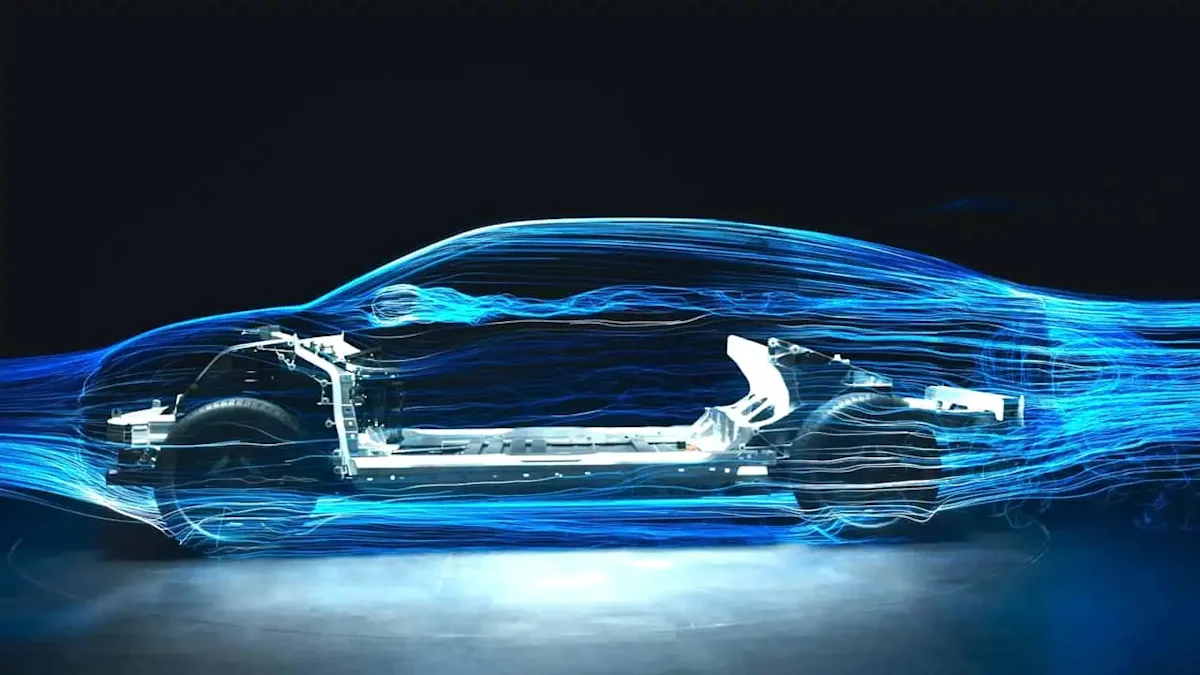
Ford (F) on Thursday revealed the name of its all-new affordable midsize electric pickup and the first model to roll off its new Universal Electric Vehicle (UEV) platform: the Fathom.
The truck will start at $28,350 with a standard-range battery, excluding a $1,595 destination and delivery charge, making it one of the cheapest EVs on the US market.
Ford said it chose the name Fathom for its meaning — that bringing the truck to life required reaching “a new depth of innovation,” allowing the company to fathom possibilities once thought beyond reach.
Ford’s big push with Fathom is to frame it as both high-tech and fun to drive, despite the low price. Every Fathom will be BlueCruise-capable — Ford’s hands-free highway driving assistant — and will feature bidirectional power capability, a large high-resolution touchscreen, and a digital car key.
Ford also made a big deal about its plan to have Apple Maps natively embedded in the car’s navigation system, though owners will still be able to project Apple CarPlay and Android Auto if they prefer.
On packaging, Ford projects the Fathom will have more passenger volume than a Toyota (TM) RAV4, with a frunk and a bed for added cargo flexibility.
A new way to build a truck

The Fathom is the first vehicle built using Ford’s new “assembly tree” manufacturing process at its Louisville Assembly Plant, and the first produced on the UEV platform — an approach Ford said is designed to unlock new levels of affordability and efficiency.
Ford said the UEV platform reduces the total number of parts by 20% compared with a typical Ford vehicle program. On the factory floor, Ford eliminated 40% of process workstations compared to current production. Using fewer parts and redesigning the build process makes a truck cheaper to manufacture, Ford said.
To keep battery costs low, Ford is going with lithium iron phosphate (LFP) chemistry — a less expensive, cobalt-free battery that offers lower energy density in exchange for significantly lower cost, more frequent charging, and improved safety.
Ford’s first-gen EVs, like the Mustang Mach-E and F-150 Lightning pickup, gave the automaker valuable insights into what customers want, as well as the difficulties in manufacturing EVs from scratch.
The big problem for Ford and other non-Tesla automakers was that customer demand was nowhere near the excitement levels projected by the industry, and the costs associated with the program were massive, to the tune of $19.5 billion in write-offs for Ford.
As a result, Ford pivoted its EV plans. The company’s focus is on the UEV platform, built from the ground up with a “skunkworks” team in California. The Fathom is the first product on it, and Ford is targeting profitability from the start.