dailynewsnblog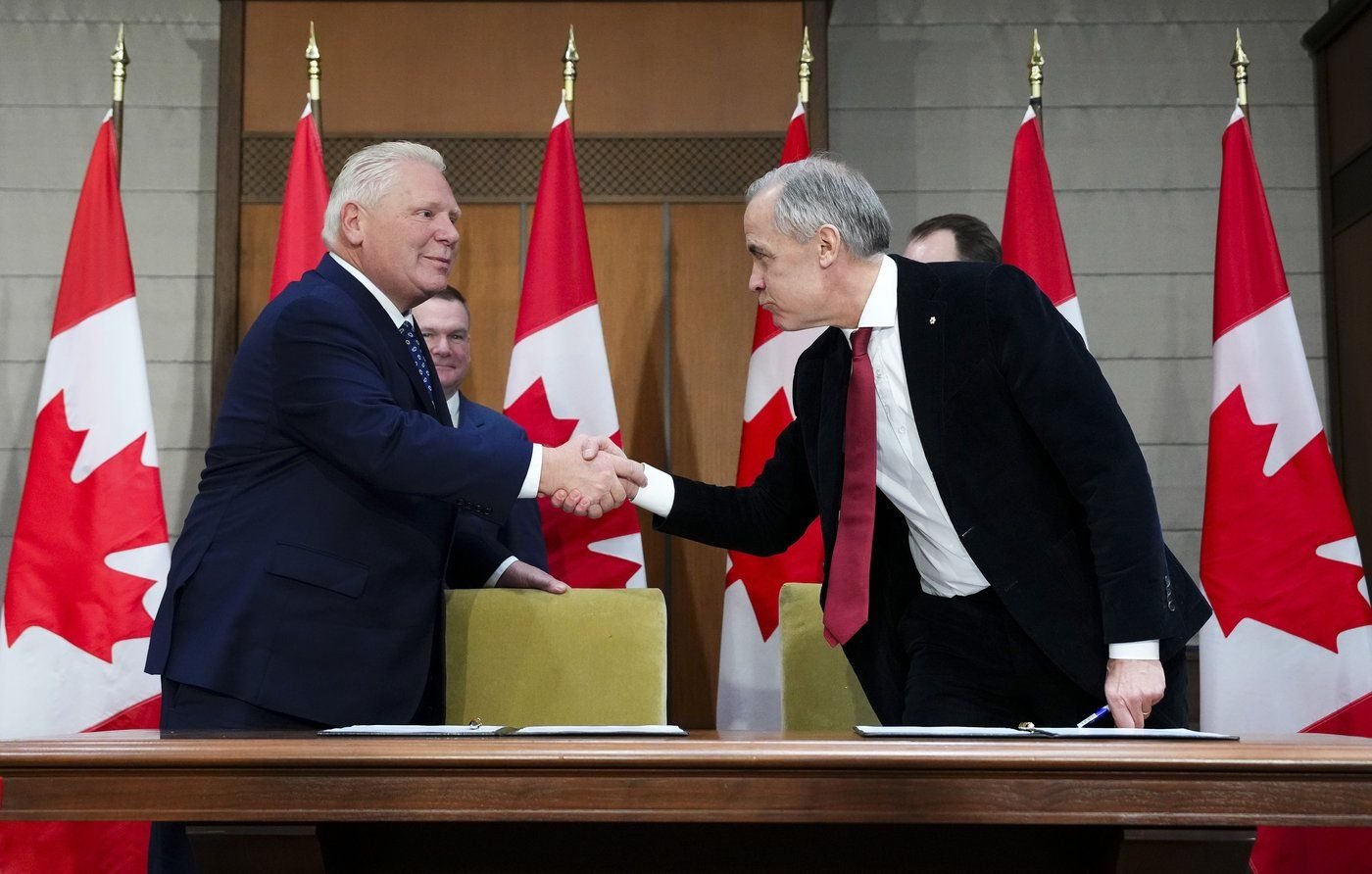
With reports that Canada could use the return of U.S. alcohol as a bargaining chip in ongoing trade negotiations, Ford said Thursday he would be willing to end Ontario’s boycott early, but only if Ottawa reaches what he considers a fair agreement with Washington.
Premier Doug Ford is opening the door to putting American alcohol back on Ontario shelves as part of a potential Canada-U.S. trade agreement, but says any deal must first protect key Canadian industries from U.S. tariffs.
With reports that Canada could use the return of U.S. alcohol as a bargaining chip in ongoing trade negotiations, Ford said Thursday he would be willing to end Ontario’s boycott early, but only if Ottawa reaches what he considers a fair agreement with Washington.
“If we get a fair deal that will protect our steel sector, our auto sector, our forestry sector, agriculture sector, manufacturing sector, then we’d be more than happy to bring booze back on the shelves earlier,” Ford told reporters.
Ford has been among the more hawkish premiers on the issue, repeatedly insisting American alcohol will not return to LCBO shelves without a fair trade deal.
Prime Minister Mark Carney said at this summer’s Council of the Federation meeting that keeping the boycott of U.S. alcohol are is a decision made by each province.
But with negotiations continuing, Ford’s comments suggest there is a path to reversing Ontario’s policy if concessions are secured on the sectors most exposed to U.S. tariffs.
Asked directly whether he was comfortable using American alcohol as a bargaining chip, Ford pushed back on that characterization.
“I do not emphasize use alcohol as a bargaining chip,” he said, before reiterating that Ontario would be prepared to bring it back if a deal protects Canadian industries.
Ford said he recently had a lengthy conversation with federal cabinet minister Dominic LeBlanc about the negotiations and praised his work in the United States.
“I want to thank him for his service down in the U.S. He’s been basically every single day, they’re sitting down, negotiating the deal,” Ford said.
“But I’ve been very clear. We want a fair deal for Ontario. We want a fair deal for Canadians. And we negotiate through strength, not weakness.”
Ford said that before Ontario makes any move on U.S. alcohol, a deal needs to protect the province’s auto, steel, agriculture, forestry and manufacturing sectors, as well as Quebec’s aluminum industry.
The premier was also pressed on what exactly would constitute a “fair deal,” especially if Washington maintains some tariffs on Canadian vehicles.
Asked whether he could accept an agreement that leaves U.S. tariffs of roughly 10 to 15 per cent on Ontario-made vehicles while Canada drops its retaliatory tariffs on American autos, Ford indicated he would not support a one-sided arrangement.
“At every single tariff, we have to match tariff for tariff,” Ford said. “We can’t negotiate through weakness. They can’t put tariffs on our autos, and we aren’t putting tariffs on theirs.”
Ford argued Canada’s importance as a customer for the U.S. automotive industry gives Ottawa leverage at the negotiating table and warned that maintaining tariffs would also hurt American manufacturers.
“If they don’t play ball on the autos, who’s it going to hurt? It’s going to hurt their auto sector,” he said. “Yes, it will hurt ours, but we’ll make sure we get creative, and we’ll continue moving forward.”
Ford also encouraged governments to buy Ontario-made vehicles “when possible,” highlighting the province’s auto workers and manufacturers, including Toyota.
The premier used the appearance to tout Ontario’s recent employment numbers, pointing to 52,000 jobs created last month and 119,000 over four months.
“We are kicking butt right now in uncertain times,” Ford said, crediting workers, entrepreneurs and businesses rather than government for the gains.
Ford said Ontario’s economic performance shows the importance of governments, businesses and organized labour maintaining a united front during the trade dispute.
“What I’ve seen is any time we’ve ever faced a challenge, no matter if it’s a pandemic, or Donald Trump’s tariffs and his attack on our economy, we pull together,” he said.