dailynewsnblog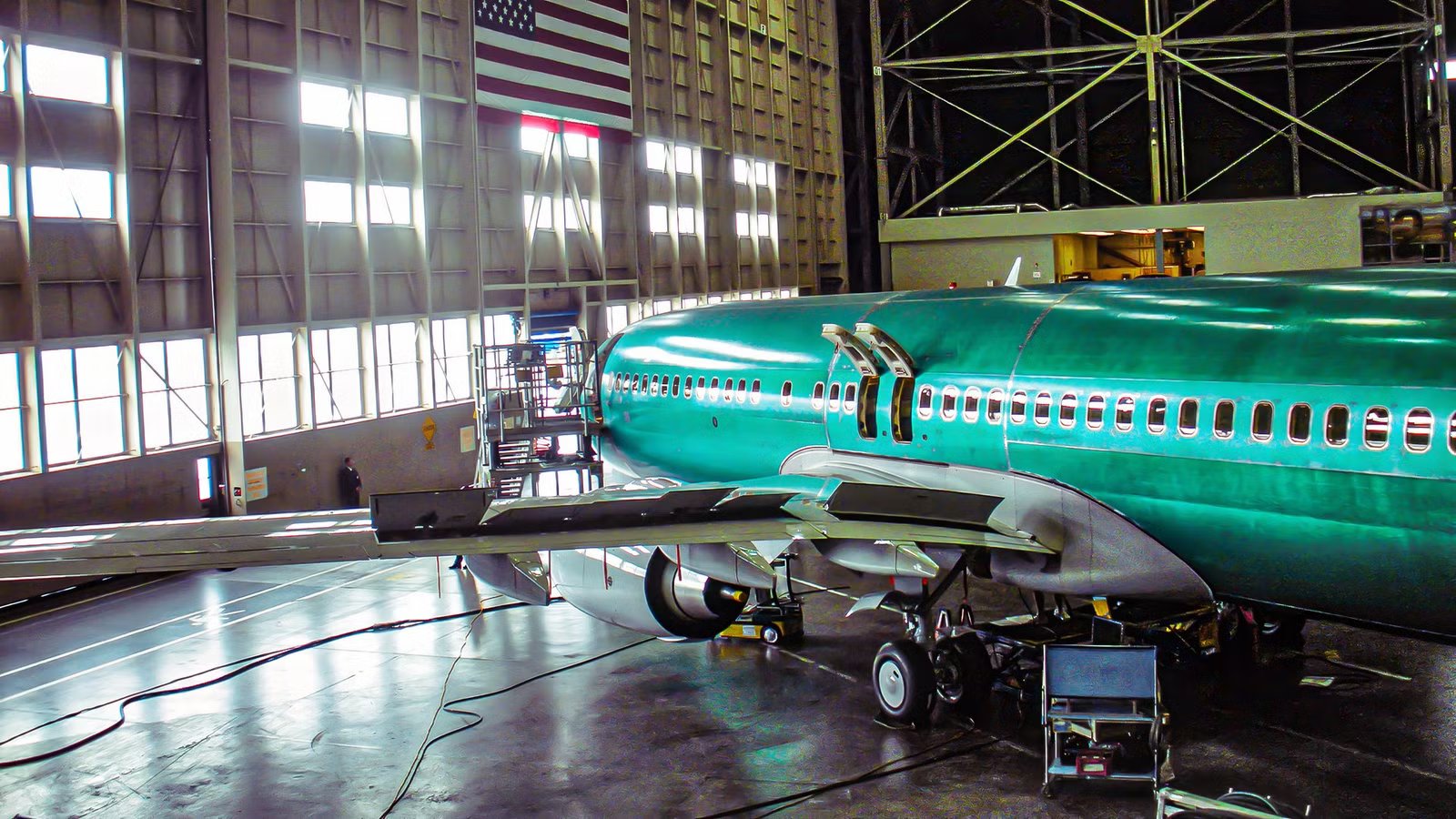
For generations of  Boeing employees, the 737 and Renton have been virtually inseparable. Since the iconic program entered production in the late 1960s, every generation of the aircraft—including the Original, Classic, Next Generation, and MAX families—has been assembled at the facility south of Seattle. While Boeing has expanded production of numerous aircraft programs across multiple locations over the years, the 737 remained the exception, with all final assembly activities concentrated in a single factory.
That long-standing arrangement is about to change. Boeing will activate a new 737 MAX final assembly line at its Everett facility, creating the first non-Renton production line in the history of the program. Known as the North Line, the facility represents more than just additional manufacturing space. It reflects Boeing’s effort to increase production capacity, support future growth, and position the 737 program for higher output rates as the company works through a substantial order backlog and continues its recovery from recent manufacturing challenges.
The End Of A Manufacturing Tradition

For almost 60 years, Renton has served as the sole production center for Boeing’s best-selling commercial aircraft. Throughout multiple redesigns and technological evolutions, the manufacturer resisted spreading 737 final assembly across multiple sites, instead refining and expanding operations within the same factory complex. That approach changes this summer.
Boeing CEO Kelly Ortberg confirmed that aircraft assembly at Everett’s North Line will begin on July 6, creating a second home for the 737 program for the first time. Although Boeing has opened numerous production facilities around the world over the years, none have ever assembled the company’s flagship narrowbody aircraft. The significance extends beyond symbolism. The 737 remains Boeing’s highest-volume commercial product and is responsible for the majority of the company’s commercial aircraft deliveries. Establishing an additional assembly location provides greater flexibility while creating room for future production increases without disrupting existing Renton operations.
Importantly, Boeing has repeatedly stressed that Everett is being added to the system rather than replacing Renton. The company’s three existing Renton production lines will continue operating, with Everett serving as a complementary facility designed to increase overall output. This move will help Boeing raise production rates that could match Airbus’ output targets, as revealed in our recent coverage.
Why Boeing Selected Everett

Everett has long occupied a unique place within Boeing’s manufacturing network. The factory has historically served as the home of the company’s widebody aircraft programs, including the 747, 767, 777, and 787. For decades, it was one of the most recognizable aircraft production sites in the world and played a central role in Boeing’s long-haul aircraft business. The Everett factory is notable for being the world’s largest building by volume, encompassing approximately 472 million cubic feet (13.4 million cubic meters) of space across a 1,025-acre site, a scale necessary to accommodate the assembly of Boeing’s largest widebody aircraft.
The Boeing Company claims that the Boeing Everett Factory is “big enough to fit about 70 soccer pitches inside.” To put that “70 soccer pitches” claim into perspective, a standard FIFA international football pitch is about 0.71 hectares. If you do the math on the floor space alone, you could easily lay out over 50 to 55 fields side-by-side—and if you account for the massive vertical clearance, the capacity easily clears that 70-pitch mark.
The factory’s role has evolved significantly in recent years. Production of the iconic 747 ended in 2023, while 787 Dreamliner assembly was consolidated in North Charleston, South Carolina. Although Everett continues to support the 767 and 777X programs, the site now has manufacturing space available for new projects. Rather than investing in an entirely new facility, Boeing chose to leverage existing infrastructure, transportation networks, and a highly experienced aerospace workforce. Company executives have stated that utilizing Everett allows Boeing to expand narrowbody production capacity more efficiently while making productive use of facilities originally designed for large-scale aircraft manufacturing. The decision also provides room for future growth without requiring major greenfield development projects.
Building A Carbon Copy Of Renton

One of Boeing’s primary goals has been ensuring that aircraft assembled in Everett are built using the same processes and standards already established in Renton. During public discussions regarding the project, Ortberg described the North Line as essentially a “carbon copy” of the existing 737 production system. This approach is intended to reduce production risk by relying on proven manufacturing methods rather than introducing entirely new processes. Equipment layouts, assembly sequences, quality control procedures, and employee training programs have all been closely aligned with those used in Renton, allowing Boeing to maintain consistency across both facilities while simplifying oversight and ensuring each aircraft meets the same safety, quality, and certification requirements.
By closely replicating tooling, workflows, and assembly procedures, Boeing hopes to minimize risk during the transition period. Maintaining consistency between the two locations is especially important because airlines expect aircraft produced at different facilities to be identical in terms of quality, reliability, and configuration. A standardized manufacturing system helps achieve that objective.
The new line has been designed to accommodate the entire MAX family. Initially, production will focus on the 737 MAX 8 and MAX 9, the two variants currently produced at the highest volumes. Over time, Boeing expects the facility to support the MAX 10 as well, positioning Everett to play a major role in the future growth of the program. The production system has been designed with greater flexibility, allowing manufacturing processes to adapt as market demand shifts between different aircraft variants. This approach is expected to improve efficiency while reducing the complexity associated with introducing new models into production. By building the line with long-term scalability in mind, Boeing aims to ensure that Everett can respond to future increases in production rates without requiring significant modifications to the facility. The addition of MAX 10 capability is particularly important, as the aircraft is expected to strengthen Boeing’s position in the larger narrowbody market segment once certification is completed. As customer demand evolves over the coming years, the North Line will provide Boeing with additional manufacturing capacity and operational flexibility to support deliveries across the expanding 737 MAX product family.
Training The Workforce Behind The New Line

Opening a new aircraft assembly line requires more than simply installing equipment. Boeing has spent months preparing the workforce that will support North Line operations, focusing on training, workforce integration, and knowledge transfer from existing facilities. This step is critical to improving Boeing’s manufacturing reputation following a series of recent production setbacks and maintenance issues.
The company has assembled a workforce that includes experienced Boeing employees from Renton, Everett, and Moses Lake, as well as newly hired personnel. According to Boeing, this blended approach is intended to combine established manufacturing expertise with new talent while maintaining consistent production standards across the program. The strategy also allows the company to transfer institutional knowledge from established 737 production lines directly to the new facility, helping reduce potential disruptions during the startup phase. Experienced employees can provide mentorship and guidance to newer team members while reinforcing Boeing’s safety, quality, and operational standards. As production ramps up, this combination of seasoned personnel and fresh recruits is expected to support a smoother transition and help ensure consistency across both the Renton and Everett assembly lines.
Training efforts have included classroom instruction, practical exercises, and extensive on-the-job experience within Renton’s existing production lines. Employees have worked alongside experienced 737 personnel before transitioning to Everett, helping ensure that assembly practices, safety procedures, and quality standards remain aligned between the two sites. Boeing views this preparation phase as essential to achieving a smooth production launch.
Supporting Higher Production Rates

The opening of the North Line comes at an important moment for Boeing’s commercial aircraft business. Following the Alaska Airlines 737 MAX 9 door-plug incident in January 2024, the FAA increased oversight of Boeing’s manufacturing operations and imposed limits on production growth while the company addressed quality-control concerns. In response, Boeing launched a broad effort to strengthen manufacturing discipline, improve process compliance, and rebuild confidence among regulators, airline customers, and the flying public. The company introduced additional quality inspections, expanded employee training programs, and increased oversight throughout the production process. These measures were intended not only to correct the specific deficiencies identified after the incident but also to establish a more consistent production system capable of supporting future rate increases. Against this backdrop, the North Line represents more than an expansion of manufacturing capacity. It also reflects Boeing’s effort to incorporate lessons learned from recent challenges by designing a production environment that emphasizes standardized work, improved quality assurance, and greater operational stability from the outset.
Since then, Boeing has worked to stabilize its production system and demonstrate improvements to regulators. In May 2026, the company announced that it had increased monthly 737 production from 42 to 47 aircraft after successfully completing the FAA’s capstone review process. The increase represented an important milestone in Boeing’s broader recovery effort. It also signaled regulators’ growing confidence in the manufacturer’s ability to maintain quality standards while gradually increasing output.
Boeing’s Planned 737 Production Growth
Production Stage | Monthly Rate |
Previous Approved Rate | 42 aircraft per month |
Current Approved Rate | 47 aircraft per month |
Boeing Target for 2027 | 52 aircraft per month |
Long-Term Goal | 63 aircraft per month |
However, company leadership has consistently stated that future rate increases will occur only if production quality and operational stability remain strong. Ortberg has emphasized that Boeing will not pursue higher output simply to meet numerical targets. Instead, future growth will be guided by performance metrics designed to ensure that manufacturing quality remains the company’s primary focus.
A Key Part Of Boeing’s Future Strategy

Although the North Line will begin operations in July, Boeing does not expect the facility to reach full output immediately. Instead, production will begin under a Low-Rate Initial Production (LRIP) framework, allowing engineers and managers to closely monitor performance while gradually increasing throughput. This phased approach is intended to validate manufacturing processes, ensure consistent quality standards, and identify any operational issues before the line reaches higher production rates. Employees will receive additional hands-on training during the initial months, while production data will be closely analyzed to refine workflows and improve efficiency.
During the LRIP phase, aircraft move through the assembly process at a deliberately slower pace. This provides opportunities for additional inspections, process validation, and operational adjustments before the facility becomes fully integrated into Boeing’s broader production network. Such an approach is common when launching new manufacturing lines and helps reduce the risk of disruptions later in the ramp-up process.
The facility is also expected to play a significant role in the future production of the 737 MAX 10. Boeing continues to work toward certification of the largest member of the MAX family, an aircraft widely viewed as essential to competing more effectively against the Airbus A321neo. Combined with Boeing’s substantial commercial aircraft backlog, the addition of Everett gives the manufacturer greater flexibility as it works toward higher production rates and long-term growth. For Boeing, the opening of the North Line is therefore not simply a factory expansion—it is a strategic investment in the future of its most important commercial aircraft program.