dailynewsnblog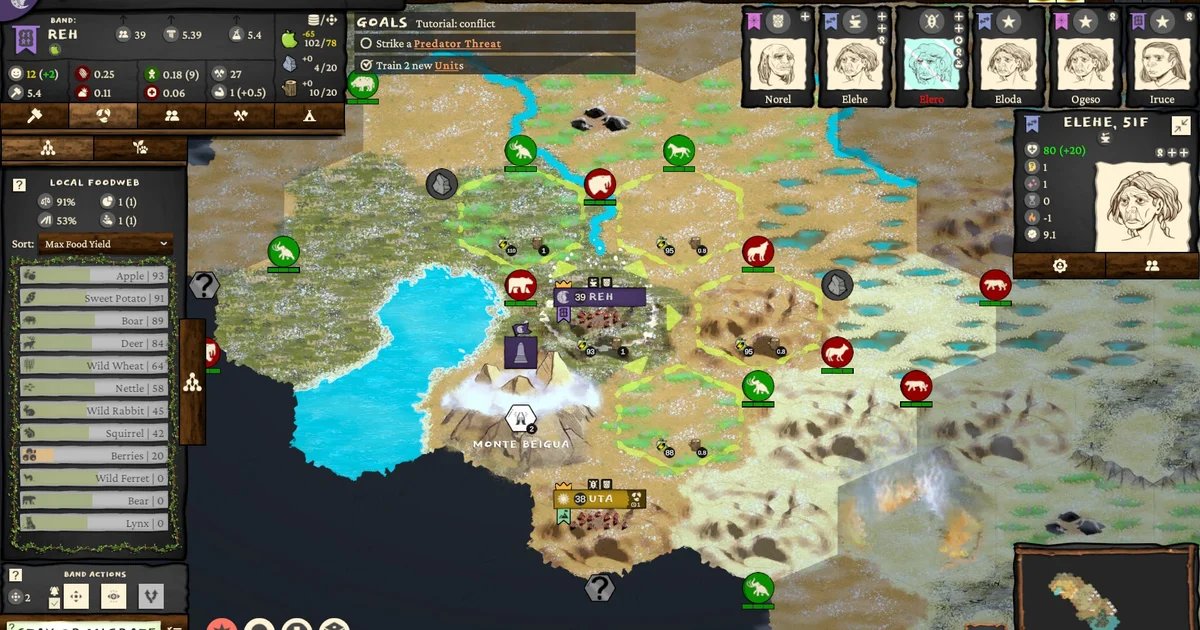
As the permafrost disappeared from the fjords of Edwinland – gosh, I’d absolutely kill to be living through a miniature Ice Age right now – Norel, shaman of the Moon tribe, gathered his people to make a fateful proclamation. The tribe had prospered during the colder years, fishing and hunting boar as they traversed the steppes, but that prosperity had its drawbacks: our population had swelled past 40. We had far too many quarrelsome youths, bumping elbows around the campfires. What’s more, the local boar herds were starting to look a mite see-through.
As such, the sage and humorous Norel proposed to split the tribe in two. One band, led by Norel himself, would continue the Moon tribe’s exploration of northern Edwinland, following the hexagonal coast. They would scour the cliffs for game, while trudging steadily towards the mountains in the east – a source of shiny rocks to trade with rival tribes for more immediately useful objects, such as pointy sticks.
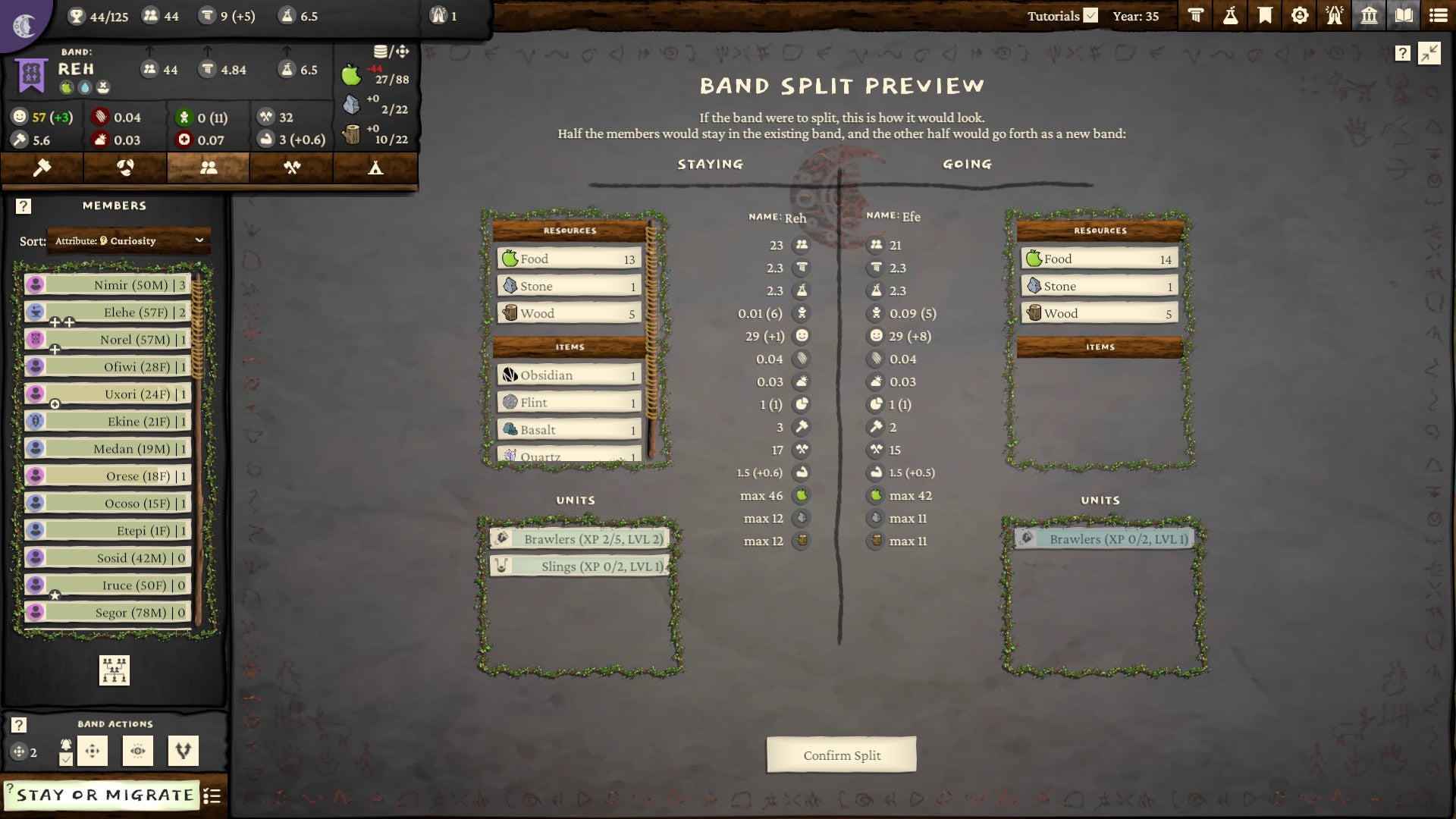
The other band, led by the testy young Warmaster Ekine, would roam back in-land, exploiting food caches diligently stored against this very eventuality, and camp near the sacred monument of Monte Belgua. Ekine’s group would decorate the shrine with soapstone, unlocking the blessings of the spirits. Then, they would travel further south to the savannahs and rainforests around another sacred mountain, Tebel Uweinat, there to gather fruit and experiment with a curious new technology known as “agriculture”.
I can’t say whether Folk Emerging is a careful and substantial portrayal of what human life was like in the Paleolithic era. I suspect the above three paragraphs are going to piss off any number of anthropologists and archaeologists. But I can say that it’s one of the more conceptually engrossing 4X sims I’ve played of late – a 4X sim that hacks away the city-building element with a sharpened flint, rewilding the genre for the benefit of people who are extremely bored of upgrading town centres.
The key to Folk Emerging is that you have to keep moving, because the world isn’t inexhaustible, nor static; if you stand still for too long, it will wash over you or shrivel up underfoot. When you order your people to forage, you’re pulling biomass from a local, finite web of carnivores, herbivores and edible flora. Develop a taste for roasted weasels, and eventually there will be no weasels to roast. The stress on the ecology is inevitably greater when several tribes are gathered together; enemy tribes are to be feared not just because they might pelt you with stones, but because they’re passively collaborating with you to pick the landscape clean.
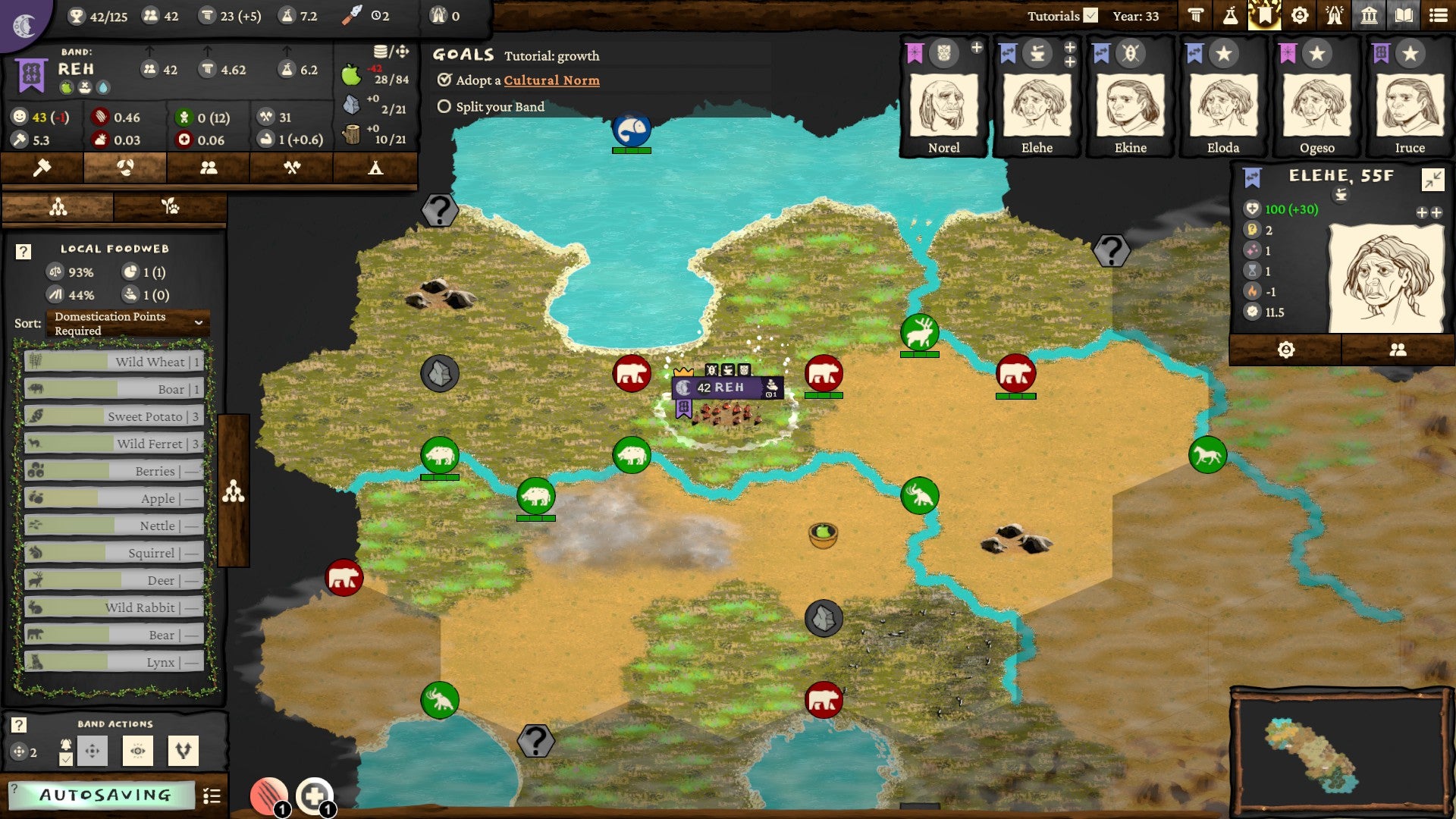
Helpfully, your tribe forages while travelling, scraping together a little “bonus” grub for every hex unfogged, and thereby freeing up productivity points for basketweaving, the whittling of figurines, and other activities that go beyond pure subsistence. There are also sacred sites you can claim and decorate for tribe-wide buffs and “victory points”, because this is still a game about Winning History.
Those are a few of the positive incentives to roam. The negative pressures include clusters of predators, who migrate from hex to hex: when those red icons are right next to your campsite, it’s not brilliant for morale, and there’s the risk of a pop-up story encounter that typically involves a maiming. Sabretooths and bears aside, you have to worry about the treacherous churn of the climate: storms, floods, heatwaves that may lead to deaths of exposure, and wildfires that leave patches of burned soil. All told, committing to one corner of the map feels like a recipe for slow disaster.
In terms of genre expectations, the interesting thing about all this that it’s still an exercise in “settling the land”. It’s just that rather than screwing a city into the juiciest clump of icons, then steadily colonising the tiles around it, you’re living in different parts of the realm at different times, as dictated by cycles of growth and predation.
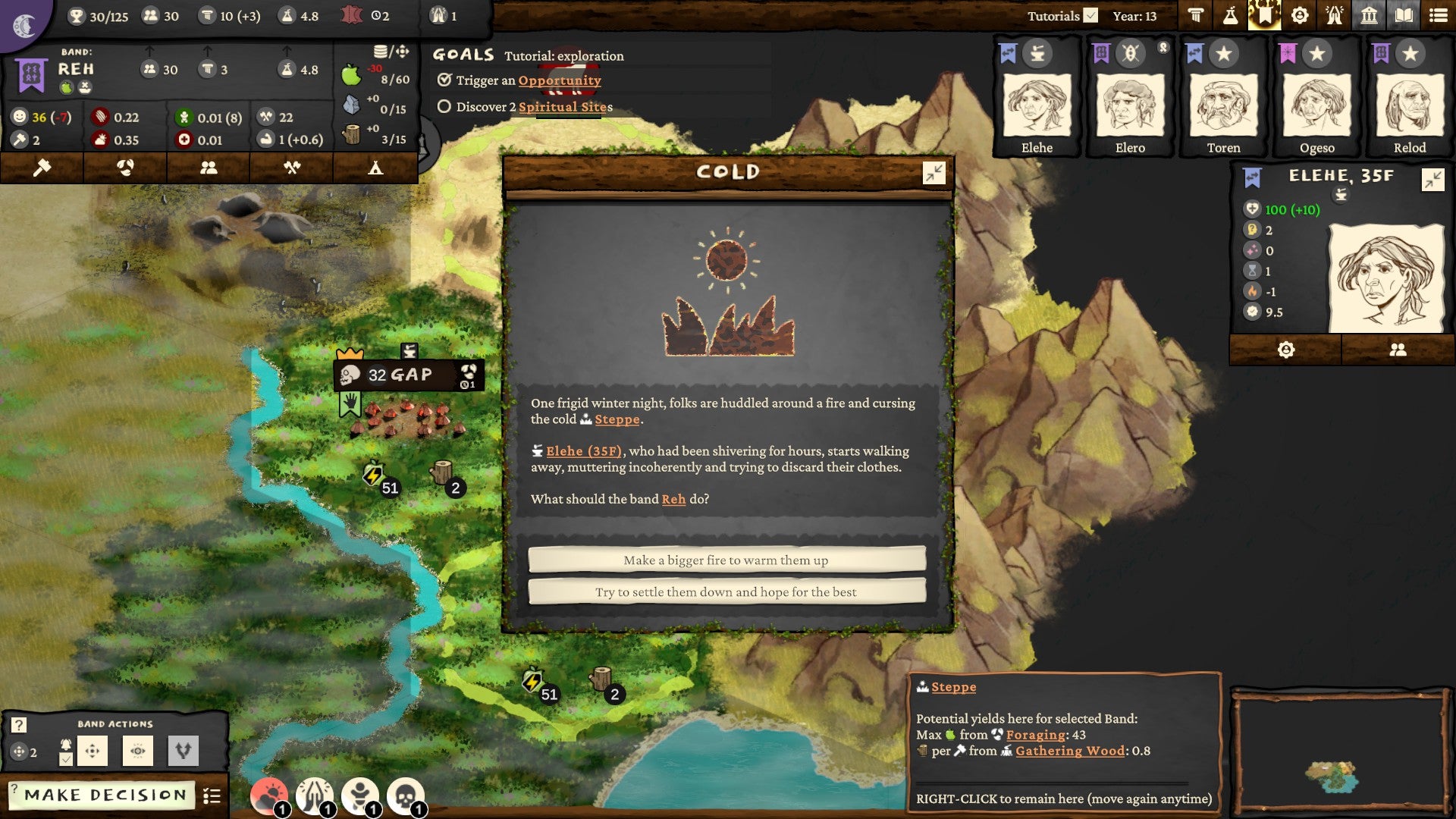
You need to remember where certain animals and plants are found, and how long you should spend away to let their numbers replenish. You need to remember where you’ve stored any food or resources your emerging folk are unable to carry. You do slowly learn technologies that allow you to build lasting structures on tiles – cropfields, watchtowers, pastures – but these fixtures don’t add up, for me, into anything approximating a city. Not yet, anyway. The tech tree carries an air of inevitability.
It’s an absorbing, curious experience, although the Steam demo – which I’ve played for all of three hours – does feel a little molten and embryonic. I’m still working out whether certain systems aren’t very impactful, or the presentation just isn’t doing enough to communicate the impact.
This is particularly true of what happens inside your tribe. Each tribesperson has a name, age, character stats, a clan allegiance such as Sage or Trader, and an opinion on everybody else. Once you’ve researched the requisite technologies, you can appoint the most gifted of them as tribal elders. The details are fed to you by means of some immediately confusing menus, each apparently conceived in isolation from the others. On the one hand, you’ve got the prehistoric medium of spreadsheets – dusty, but effective. On the other, a stretchy 3D octopus of family relationships, which feels like a glorified fidget spinner.
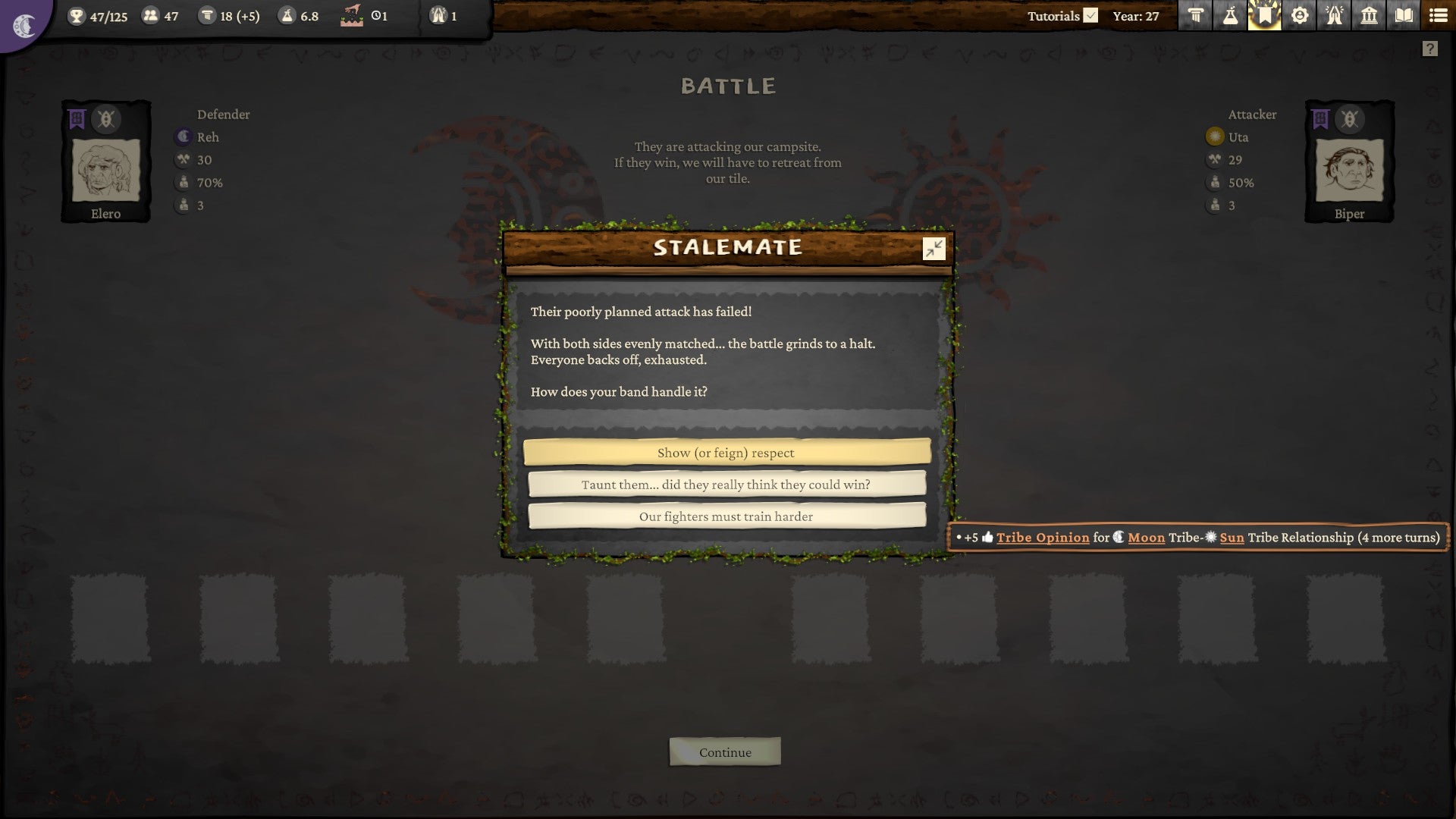
You can broadly shape the disposition of your tribe by means of unlockable pairs of contrasting philosophies, such as diligence and hedonism. These shunt everybody’s stats one way or another. During autobattles with other tribes, meanwhile, your warriors become flickering charcoal designs on a cave wall. There’s no bog-standard “military” element – rather, you’ll initiate training periodically to acquire discipline points, which then lets you form your folk into combat units as needed, such as Brawlers and Throwers. The catch is that discipline points are also required for other tasks.
I do like the mildly clashing interface design. It’s the kind of disorder you expect from a solo developer who is trying to wrangle a bunch of complex systems, and since when did games have to be these perfectly congealed aesthetic objects, anyway? This is the Stone Age, you snoots – symmetry hasn’t been invented yet. It reminds me of King of Dragon Pass and Mech Engineer, two games I respectively love and love hating. Still, it can make it hard to discern and imagine the lives you’re presiding over. These Folk have yet to Emerge fully from all the screen furniture.
My opening anecdote about Norel and Ekine is, in that sense, a little misleading: it represents the kind of intimacy I want to have with the people in this game. I find I remember them better when they star in those pop-up questlets, which tie them more persuasively into the larger strategic pressures. For example, you might have to decide whether a skilled craftswoman who’s past her prime should risk her life for a baby who could make a fine contribution in a couple of turns. Assuming you don’t just decide to save the baby because, you know, she’s a baby. You monster.
Watch on YouTube
It does feel like my criticisms might disappear on the second playthrough, once I’ve acclimatised to the UI. In general, I’m really enjoying the experience of a 4X in which you are at the mercy of a volatile world.
I’m interested to see how long that feeling will persist, as my tribe advances along what appears to be the opening sixth of a Civilization tech tree. It makes me wonder if we could perhaps call the whole ‘civilization’ project off, dispense with any baked-in ideas about historical progress, and investigate some of the alternatives expressed by, for example, the presence of Neanderthal tribes. It would be a shame, I think, if every game of Folk Emerging ended simply with the founding of a city.