dailynewsnblog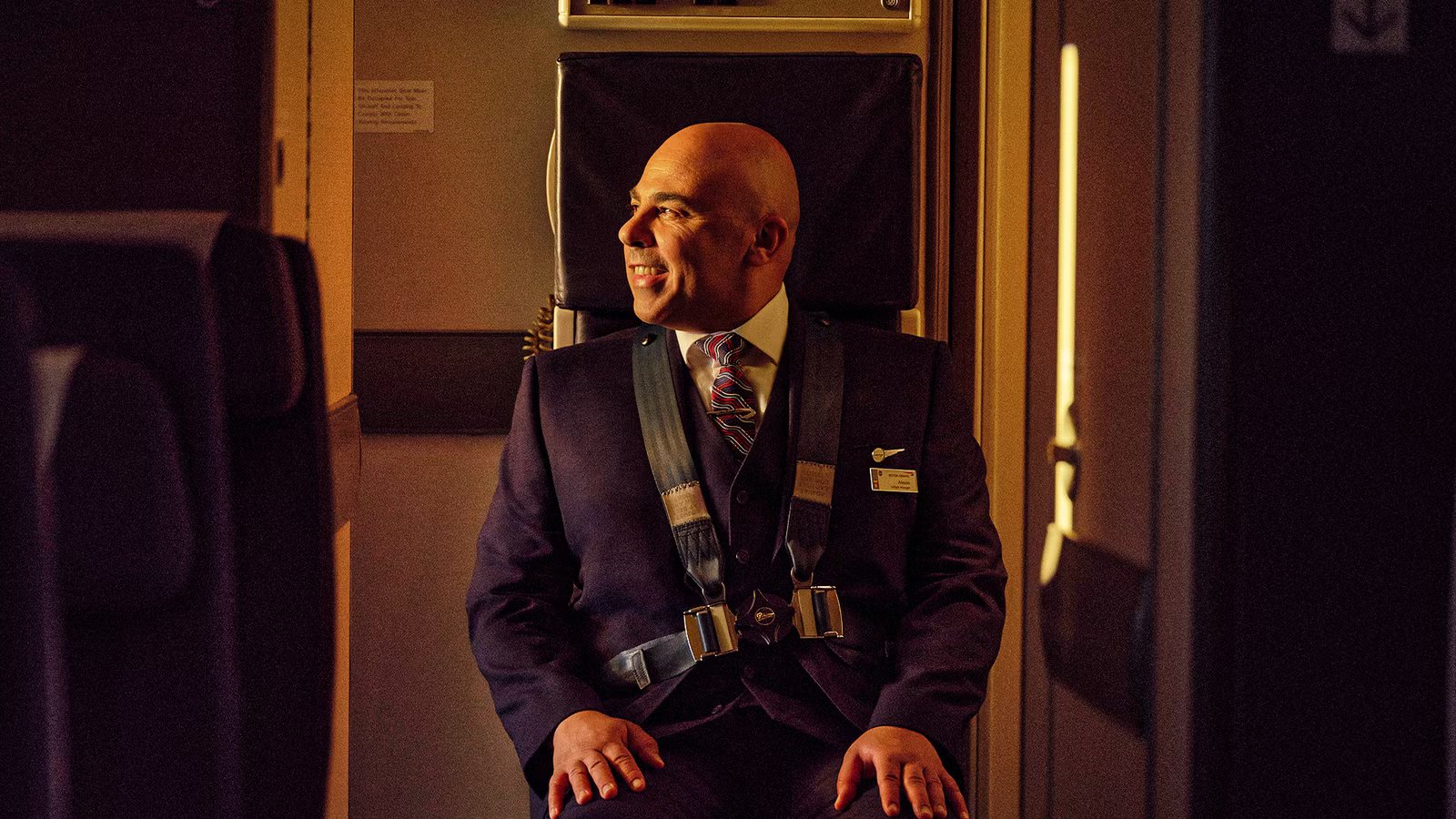
When you book a seat on an aircraft, there’s a lot to think about. Some people want the extra space of a bulkhead or exit-row seat, and of course, there’s a choice between the window seat and the aisle seat. No one likes the middle seat, it goes without saying. The ability to recline your seat may be important to those traveling on a long-haul flight, or extra legroom may be essential. Passengers may prefer to look out of the window, whereas others prefer easy access to the lavatories and to stretch their legs.
Frequent flyers will often have their own preferred seat, as do pilots and flight attendants, when not traveling on duty. This is often for comfort, but is also very subjective and down to personal choice. Of course, in an ideal world, we’d all have a comfortable premium economy or business class seat, but in reality, most of us face the prospect of long flights in economy. This guide will look at where flight attendants like to sit when traveling off duty and whether it is for safety or purely comfort, and which rows they would actively avoid.
Flight Attendant Favorites

When flying off duty, most flight attendants prefer the window seat on an over-wing exit; this would normally be seat 21A or 21F on narrowbody aircraft. This is because of the extra legroom, perceived spaciousness, and there is a window to sleep against. Flight attendants know that it is the least turbulent area on an aircraft due to being the center of gravity. It is also often quicker for boarding and disembarkation. Former flight attendant Kaz Marzo told Southern Living: “Exit row seats are a sweet spot — you board in an earlier group, exit quickly, and avoid the crowds near the galley and lavatory.”
The disadvantages of the over-wing exit are that the seats don’t recline, you cannot place a bag under the seat in front of you, and the area is sometimes colder than the rest of the cabin. Passengers are also responsible for operating the emergency exit in an evacuation. An off-duty flight attendant or pilot is the perfect person to operate it, as they are trained to do so. Bulkhead seats are also popular for the extra space on widebody aircraft, although hand luggage has to be stowed in the overhead locker, and there is more traffic. Also, baby bassinets are often placed there, so they may not suit everyone.
Flight attendants also like seats that are five rows in front or behind the galleys and lavatories, as they are less noisy. The first row of economy is also popular, because boarding is fast, and when disembarking, you can leave just after the business class passengers. There is also a practical issue as regards service, as food and bar carts work from front to back on most flights. Sitting at the front of the economy cabin means being served first, whereas if you are seated at the back, there is less chance of receiving your chosen meal and accepting what remains.
The One To Avoid

One of the least favorite rows and one that most flight attendants try to avoid is the last row of the aircraft. Many flight attendants from various airlines have consistently cited the same reasons why they avoid this particular seat row. The seats do not recline as there is a wall behind them, and as it is so close to the lavatories and galleys, making it noisy, potentially smelly, and is the most traffic-heavy section of the cabin, according to We3Travel. Sometimes, these seats also do not have windows, depending on the configuration.
As for the specific reasons why the last row is unpopular, one flight attendant said, “I avoid sitting in the last row if possible. It’s not just for comfort, but because turbulence can feel stronger at the rear of the plane and can cause motion sickness.” The rear of the aircraft pitches through a wider arc than the mid-cabin when there is turbulence, so it feels more bumpy. Added to that, passengers in the last row are the absolute last off the plane, which can be a problem if you have a connecting flight.
Row 11 has also been flagged by some flight attendants as not ideal. In a survey of British flight attendants by Velloy, crew members say that row 11 (especially seats 11A and 11F) is one of the worst, depending on the aircraft’s configuration. These seats tend to fall in the center of a narrowbody aircraft, meaning that when an aircraft disembarks from both the front and the rear of the aircraft, they are the last to leave.

Window Or Aisle: What Are the Most Comfortable Airline Seats For Long Flights?
Which seat should you choose for your next long-haul flight?
Are The Middle Seats The Safest?

There is always a question as to which is the safest seat on an aircraft, and many would say that the safest seat is the one that you are assigned or booked. It has often been thought that the middle seats at the rear of the aircraft are the safest. This is because in accidents, more people survive in that area. The US Federal Aviation Administration (FAA) studied aircraft accidents from 1985 to 2020 and found that the fatality rate was 39% in the middle of the cabin, 38% in the front of the cabin, and 32% in the rear of the cabin.
In addition, it was found that middle seats at the rear of the aircraft specifically had a fatality rate of 28% and were the best for survival, whereas the worst seats for fatalities were aisle seats in the middle at 44%. Saying that, the odds of being in an air accident are just one in 8,000 compared to one in 112 for road traffic accidents.
Interestingly, in June 2025, an  Air India Boeing 787 crashed on takeoff, and of all the 241 passengers and crew on board, there was only one survivor. He was seated in 11A, next to an emergency exit. Since that time, seat 11A has been seen by some passengers as the ‘lucky seat’. However, there is no direct evidence that the seat indeed is a safe seat or that any other seats are ‘safe’. Survival factors include the correct brace position, emergency exit proximity, and following crew instructions.
Facts And Figures: Safe Seats?

The FAA studied air accidents between 1969 and 2013, and this also looked at the survival rate in relation to the class seated in. They found that the survival rate in business and first class was 40%. In the middle of the cabin, it was 57%, and in the rear of the cabin, it was 62%. Furthermore, in the last ten rows of the rear of the cabin, the survival rate was 70%.
Studies also found that those seated in aisle seats at the rear of the cabin had a higher chance of survival, regardless of being on a narrowbody or widebody aircraft. In reality, no seat can ever be guaranteed as being safe and guaranteeing survival in an aircraft accident. The location and speed of the accident will determine the chances of survival. For example, in a water impact at high speed, there are likely to be no survivors.
Data from the International Air Transport Association (IATA) in 2023 states that you would have to fly every day for 103,239 years to be in a fatal air accident. Their data also says that there has been a 97% decrease in the risk of an accident compared to 60 years ago. Furthermore, 80% of all air accidents happen within three minutes of take-off and eight minutes before landing.
The Safest Seats On A Plane To Survive A Deadly Crash
Experts have analyzed whether seats such as the exit row, the aisle, the middle, and the window have higher survivability rates.
Strategies When Choosing A Seat

There are numerous ways to choose the best seat for you. First, how long is the flight, and how many passengers are traveling? Do you plan to sleep or work? Then it’s time to check the aircraft seat plan at the airline for the most suitable seat. More information on aircraft and their configurations can be found at AeroLopa and SeatMaps.
As the aircraft seating is assigned from front to back, some passengers use that strategy and prefer to book seats at the rear of the aircraft. Two people may book the aisle and window seats on a row and hope the center seat is not filled by another passenger. Others prefer this, as if the flight is not full, there may be an empty seat row at the back where they can sleep during the flight. Of course, it’s polite to ask a flight attendant if it’s OK first.
When looking at bulkhead or over-wing exit seats, it is worth checking to see if there are extra costs. Some airlines charge extra for these seats, classifying them as extra legroom seats. It may even cost more to book your seat in advance, but if comfort is important for your flight, it is better to book the seat in advance.
Key Takeaways

The consensus is that most flight attendants, when flying off duty, will avoid the last row of economy due to galley and lavatory noise and note that the seats do not recline. If there is turbulence, it is felt at the rear of the aircraft the most. They also try to avoid row 11 on narrowbody aircraft due to delays in boarding and disembarking. Although the bulkheads have more space, they are often used for baby bassinets — this is not ideal and if there is no storage space, items have to go in the overhead locker.
As a rule, flight attendants prefer the first row of economy for ease of boarding and disembarking as well as being the first row to be served with meals and drinks, and receiving your preferred choice. The over-wing exits are also popular for the extra space and legroom and seats A and F on narrowbodies have a wall to sleep against. They are also trained to open the emergency exits, so it is an ideal seat for them, should there be an evacuation.
Choosing a seat is a personal preference and everyone has their favorite area of the aircraft. Some passengers have strategies to allow for extra space and prefer the rear of the aircraft, due to how seats are assigned by ground staff. This may include an extra seat between two passengers traveling together or hoping for an empty row to sleep in. Always check the airline’s website for the ideal seat and websites like AeroLopa for more detailed information.