dailynewsnblog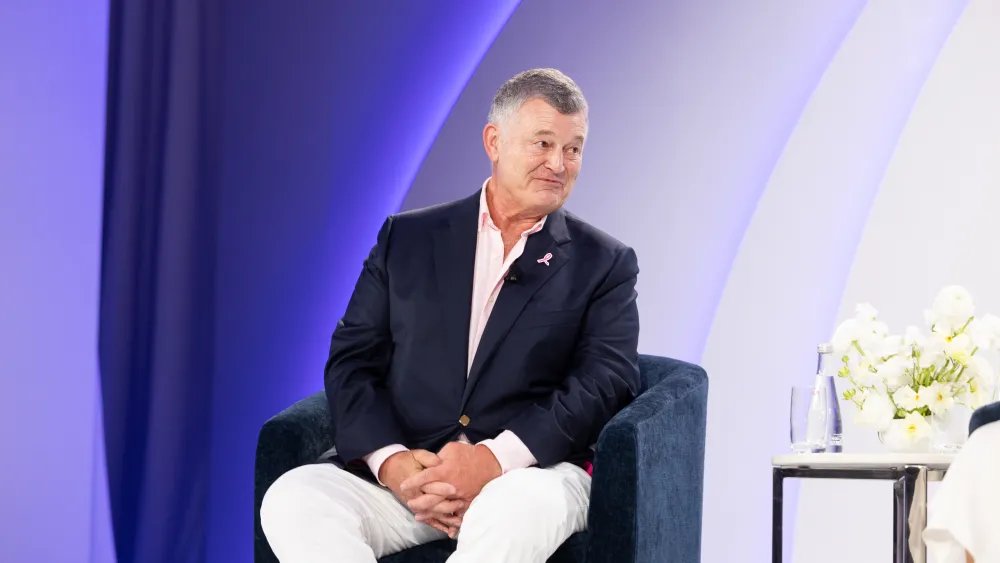
PALM BEACH, Fla. — The 2026 WWD Beauty CEO Summit, themed “The Innovation Imperative: Creating the Future of Commerce, Culture and Connectivity,” kicked off at The Breakers hotel Monday evening.
At the event, top executives and industry experts addressed hundreds of attendees on a variety of pressing themes — from AI to the evolution of retail to brand-building in an uncertain macroenvironment and more.
Here, five key takeaways from the summit’s first full day on Tuesday.
Change Is Name of the Game
Although the Estée Lauder Cos. board chair William P. Lauder remained mum on the status of ongoing merger talks with Puig, he did — perhaps fittingly — advise that: “We have to accept change as a constant. If you don’t let go of what’s behind you, you’re never going to reach what’s in front of you.…[As] Henry Ford once said: ‘If I listened to my customers, all they would have asked for is faster horses.’”
Meanwhile, SharkNinja chief executive officer Mark Barrocas said even during times of growth, brands must not rest on their laurels when it comes to investing in advertising and R&D.
“Don’t pare back on innovation; when the music stops on your virality, that’s not a place you want to be,” said Barrocas, adding that this strategy is part of what has enabled SharkNinja’s projected $7 billion in revenue this year.
Ulta Beauty’s Lauren Brindley also touched on the importance of not just innovating — but innovating on multiple fronts, and fast. “We acquired SpaceNK, we launched Mexico, we launched in the Middle East. It’s been this huge transformation into being a true global retailer,” she said, adding that one of Ulta’s recent bets — going deeper into prestige beauty — is paying off in dividends, with 80 percent of Ulta guests now buying prestige and luxury at the retailer.
Human Connection Is Only Becoming More Important
In the age of AI, bringing human touch and creativity to the fore is critical to building and maintaining consumer trust, executives said.
“Retail is emotional before it’s transactional,” said Nata Dvir, chief merchandising officer of Macy’s Inc., underlining the importance of live events in building a connection with consumers. The retailer recently hosted Paris Hilton on a double-decker bus with a DJ in New York’s Harold Square, for instance. “These are great ways to drive traffic, but to me they’re innovative, because it also brings back that human connection that consumers are ultimately craving,” Dvir said.
Indie brand founder Danessa Myricks echoed the sentiment. “Our customer is here because they believe in what we believe in,” Myricks said, adding that she has increasingly begun giving her community a peek into her own life as a founder in order to deepen that bond.
Being “close to culture,” as Milk Makeup cofounder Mazdack Rassi put it, is also part of maintaining that connection with customers.
Community Is Paramount
Community building is becoming increasingly key to longevity in a crowded market.
“We were always community-powered,” said Sarah Lee, cofounder and co-CEO of Glow Recipe, adding that, each Monday morning, the brand hosts a meeting beginning with the customer care team to share what the community has told them. “Our customer care team is really our star in the show,” she said, explaining there’s a true emotional connection. “It’s a real connecting moment, also from the inside. It broadens us.”
Wellness Isn’t Just Intersecting With Beauty — It’s Part of It
Wellness has become an inherent part of a growing number of consumers’ definition of beauty.
According to research from Boston Consulting Group, so-called “self-optimizers” make up roughly 6 percent of consumers.
That cohort — which sees beauty as being both about personal care and inner well-being — is growing fast. Millennials and male consumers, in particular, are highly represented among this group, whose priorities are shifting from being about looking better to aging better.
This growing definition of beauty is part of what informed Unilever’s decision to double down on its beauty and health business by merging its foods division with McCormick & Co.

Tommy and Dee Hilfiger, Venus Williams and Andrea Preti at the opening dinner of the WWD Beauty CEO Summit.
Caroline Xia/WWD
“Today, we’re 77 percent a personal care, beauty and health business,” said Herrish Patel, Unilever’s president and CEO, personal care, North America. “Beauty, personal care and health — these are the categories that are going to shape the industry going forward, and we believe we’re well positioned to do that in the U.S.”
AI Is Officially Table Stakes
AI’s trajectory from emerging technology to a must-use tool is already well underway, according to executives.
“Think of AI as your best product launch,” said Bianca Anghelina, founder and chief executive officer of Aily Labs, who finds data sets in companies today are too siloed — with tech and finance having their own, for instance. Those should be broken down.
Aily’s agent, Anghelina said, lends an unbiased view on where opportunities and risks of a business lie.
AI frees up not only time, but enables more creativity. Decision-making becomes everyone in an organization’s responsibility in real time. “We can’t wait for sequencing of events until a decision is made,” Anghelina said, suggesting companies move on AI now, that there is no more time.
And with this advent of AI, CVS Health senior vice president and chief merchant Musab Balbale said leaders have a responsibility “to make our teams as capable as possible to succeed in a future of AI, and that means getting them off the work that will be replaced by AI and teaching them how to use these tools, and find new areas to grab revenue and margin for the business.”
Sean Kim, CEO of AmorePacific, said the company is using AI for “true personalization at scale.”
“Don’t be afraid of change,” Anghelina said.