dailynewsnblog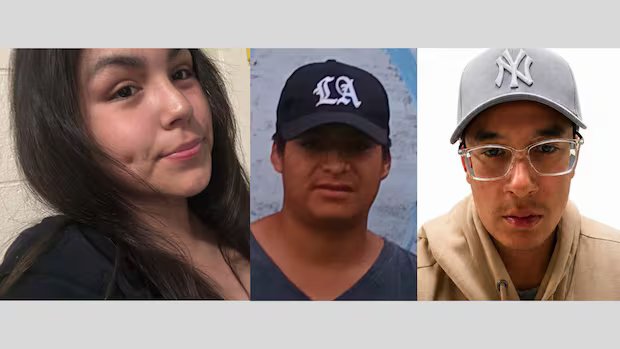
WARNING: This story refers to missing and murdered Indigenous people. Resources can be found at the bottom of this story.
Tensions are rising between First Nation leaders and police in Thunder Bay, Ont., following several recent high-profile missing persons cases in the city.
Indigenous leaders say the role of searchers from their communities is being disregarded and there have been repeated communication breakdowns with the police. Meanwhile, the chief of the local force has warned against the spread of “inaccurate or incomplete information” related to the recent cases.
The first case involved 23-year-old Ashlynn Bottle and 25-year-old Nodin Skunk of the Mishkeegogamang First Nation, who were last seen together at the old Pool 8 grain elevator in the 400-block of Syndicate Avenue South on the city’s south side.
While police said on May 11 that they had thoroughly searched the site and were confident Bottle and Skunk were not there, a team of Indigenous searchers say they found their bodies there days later.
On May 15, the Thunder Bay Police Service (TBPS) said Bottle and Skunk are “no longer the subject of a missing persons investigation,” but did not say the pair were dead.
Funeral services were held for both Bottle and Skunk in Thunder Bay this week.
On Monday evening, using similar messaging, the TBPS said the search for 36-year-old Kelsey Anderson had also ended and is “now a private family matter.”
A sacred fire was lit in the city this week in the memory of Anderson, a member of Webequie First Nation who grew up in Kasabonika Lake First Nation and had ties to Nibinamik First Nation.

In a statement issued Wednesday afternoon, Grand Chief Alvin Fiddler of the Nishnawbe Aski Nation, a political-territorial organization which represents 49 First Nations across Treaties 9 and 5, said the TBPS has not respected the role Indigenous searchers have played in these cases.
“There are growing calls for a dedicated Indigenous-led search effort to be established in Thunder Bay,” he said.
After TBPS missing persons co-ordinator Jeff Saunders told media May 11 that police were “very confident” Bottle and Skunk were not in the grain elevator, Fiddler said a female elder told him they were there.
“I believed her. A volunteer team of Indigenous searchers located their remains three days later,” he said.

Meanwhile, an Indigenous searcher who had been looking for Anderson discovered the remains of Richard Graham, a 42-year-old man reported missing in Thunder Bay in summer 2024.
On Thursday, the TBPS confirmed Graham had been located deceased and “this is now a private matter.”
In each case, the police said they would not be releasing further information.
The problem of missing people in Thunder Bay is not new, but it feels like we are at a tipping point.– Kiiwetinoong MPP Sol Mamakwa
“The public needs to understand what actually happens when our members go missing. And they need to understand how our Indigenous searchers are proving to be more effective than the police,” Fiddler said in the statement.
“Indigenous searchers do not rely on protocol and procedure. They are guided by the Spirits who lead them where they need to go.”
In an interview with CBC News on Thursday, Fiddler said there’s been “a disturbing pattern” of communication breakdowns between police, families and search leaders.
“Some family members of Kelsey Anderson were horrified when police posted a final update on his disappearance before they were contacted,” Fiddler said, giving an example.
All of this has contributed to a growing distrust of police among First Nation families, he said.

Kiiwetinoong MPP Sol Mamakwa spoke about Bottle, Skunk and Anderson at Queen’s Park on Wednesday.
“The problem of missing people in Thunder Bay is not new, but it feels like we are at a tipping point,” said Mamakwa, a member of Kingfisher Lake First Nation.
“It is time to come together to end this crisis, because no more families should go through this.”
MPP’s statement is ‘misled,’ police chief says
TBPS Chief Darcy Fleury issued a statement late Thursday afternoon, saying Fiddler’s comments “do not accurately reflect the Thunder Bay Police Service’s efforts or commitment.”
“TBPS members hold and value positive relationships with Indigenous leaders and community members, including with employees and program co-ordinators working for NAN [Nishnawbe Aski Nation],” Fleury wrote.

“It is unfortunate the recent comments do not reflect this. While we respect the role of NAN leadership in advocating for its members, inaccurate or incomplete information can undermine trust and impact the willingness of individuals to come forward with information.”
Fleury said he recognizes the role Indigenous searchers, community members, volunteers, elders and partner organizations have played in these recent cases.
But he said Mamakwa’s recent statement is “misled.”
“The true crisis has long been identified: a serious shortage of social supports, housing, addictions and mental health services, and prevention initiatives that help address the root causes that place vulnerable people at risk. Addressing these issues requires a collective effort with community partners working collaboratively,” Fleury wrote.
Titus Semple, who has provided statements on behalf of Anderson’s family, called Fleury’s words “an unfortunate mishandling of an excellent opportunity to bring people together to work on solutions.”
“At this point, the service should be defunded and given to the provincial police to manage the services required,” Semple wrote on Facebook, sharing Fleury’s statement in a post.
Provincial report on TBPS pending
This isn’t the first time there have been calls to disband the TBPS over the way it’s handled missing persons cases involving Indigenous people.
In October 2024, Ontario Inspector General of Policing Ryan Teschner announced he was conducting an evaluation of how the TBPS conducts death and missing-person investigations, as well as its compliance with the province’s policing legislation, after receiving “several complaints.”

A spokesperson for Ontario’s Ministry of the Solicitor General told CBC News in late February the evaluation had been completed and the report was “expected to be completed in the coming months.”
Meanwhile, Fiddler said he plans to consult with NAN leadership about holding a meeting with higher-level officials to figure out what a search system should look like for Thunder Bay and the region.
“Indigenous searchers must be recognized for their unique gifts and abilities that have directly led to the conclusion of many of these cases. Our ways and methods are different from first responders, but they are no less valuable — or effective,” he wrote.
“It is this city’s failing that the people in authority remain blind to this.”
Support is available for anyone affected by the issue of missing and murdered Indigenous people. Immediate emotional assistance and crisis support is available 24/7 through a national hotline at 1-844-413-6649.
Local resources include:
If you or someone you know is struggling, here’s where to get help: