dailynewsnblog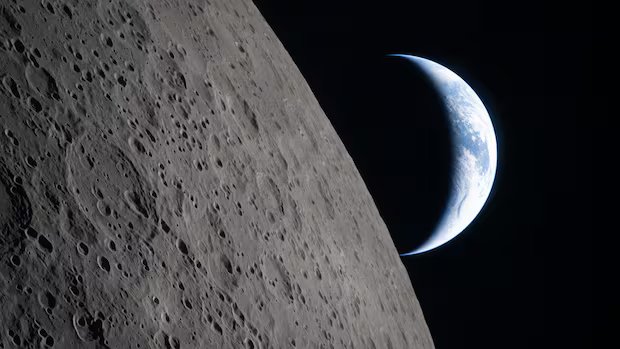

Listen to this article
Estimated 3 minutes
The audio version of this article is generated by AI-based technology. Mispronunciations can occur. We are working with our partners to continually review and improve the results.
On the heels of the successful Artemis II space mission, the federal government says it’s taking another step toward launching Canadian spacecraft from home soil.
Currently, Canada relies on countries like the United States to launch civilian and military craft into orbit.
On Tuesday, Transport Minister Steven MacKinnon introduced into the House of Commons the Canadian Space Launch Act or C-28, which he said would give Canada its own “sovereign way to space.”
“Canada is the only country in the G7 to not have its own space launch capabilities,” MacKinnon said. “Currently, we must rely on foreign countries, most often the United States, to get Canadian satellites into orbit.”

On Tuesday, government House leader Steven MacKinnon introduced the Canadian Space Launch Act as a framework for developing Canada’s own space launch capabilities. ‘This is about giving ourselves the options and the capability of protecting Canada, making sure our Armed Forces stay current and on pace with the rest of the world,’ MacKinnon said.
Tuesday’s announcement nodded to April’s NASA-led Artemis II mission. The four-person crew included Canadian astronaut Jeremy Hansen, and the mission achieved a lunar flyby.
“Canada has reached the moon but still lacks its own sovereign way to space,” MacKinnon said.

In an exclusive Canadian interview with The National, Canadian astronaut Jeremy Hansen and his wife, Catherine, tell CBC’s Ian Hanomansing about their respective experiences witnessing the history-making Artemis II mission from the far side of the moon and on the ground in mission control.
MacKinnon said this reliance on the U.S. discourages investment in Canada, creates expensive delays and hands control of “critical infrastructure” over to other space programs.
If passed, the federal law would allow Canada “to create and implement a modern regulatory framework” that would enable the federal government to authorize and regulate “homegrown space launches and re-entries,” he added.

It would also introduce a financial responsibility and indemnification framework, as well as safety and security requirements.
“We could create a commercial space industry right here in Canada that could be worth $40 billion,” MacKinnon said, pointing to satellite, aerospace and innovation opportunities.
Through satellite imagery and monitoring, sovereign launch capability would also allow Canada to better predict and monitor wildfires, protect marine life and support national and Arctic security, he said.
Some companies are already trying to launch made-in-Canada space solutions on home soil. For example, Halifax-based Maritime Launch Services is building Canada’s first commercial spaceport in Canso, N.S.
MacKinnon said it could be at least two to three years before Canadians see rockets take off from home soil, adding that Tuesday’s announcement is largely about launching satellites.
He stopped short of saying whether the bill would one day enable the launch of Canadian astronauts into space, saying the Canadian Space Agency will continue to partner with NASA.