dailynewsnblog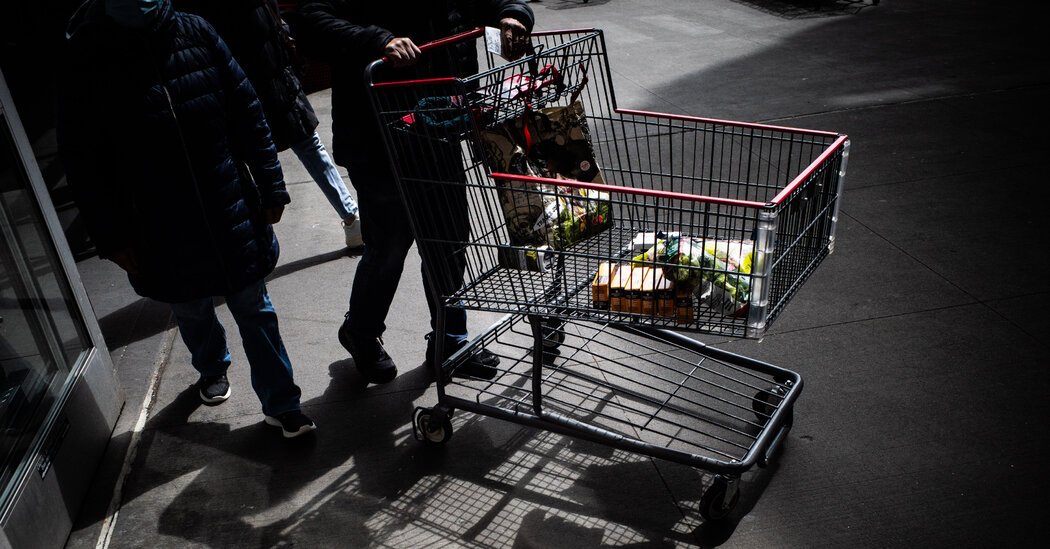
A stable labor market has given the Federal Reserve more flexibility to focus on mounting inflation risks stemming from the war in Iran, which have weakened the case among officials for interest rate cuts.
April’s jobs report, released by the Bureau of Labor Statistics on Friday, ratified the central bank’s view that it can afford to hold rates steady at a range of 3.5 percent to 3.75 percent as it contends with an uncertain economic backdrop.
Employers hired significantly more last month than expected, adding 115,000 positions. The unemployment rate held steady at 4.3 percent.
Inflation, meanwhile, has shot higher in the roughly two months since the Middle East conflict began, reflecting the run-up in oil prices, airfares and other travel and shipping-related expenses caused by the shuttered Strait of Hormuz, a crucial oil and natural gas shipping path. Gasoline prices have risen to $4.55 per gallon on average, according to the AAA motor club, up from around $3 before the war.
As of April, data from the Federal Reserve Bank of New York showed that supply chain pressures are at the highest level since July 2022, when the economy was reeling from the aftershocks of the pandemic.
The worry for Fed officials is that intensifying price pressures will broaden to other parts of the economy, including the services sector. That would produce a much more persistent inflation problem, one that would probably require higher rates to root out. What is more, the Fed has missed on its 2 percent inflation target for roughly five years.
No Fed official has backed rate increases, however, reflecting a concern that officials also harbor about the trajectory for economic growth amid the energy shock. Higher prices could eventually temper consumer spending, causing a slowdown that could result in job losses.
So far that has not happened, as April’s data on Friday confirmed. A shift to a higher unemployment rate would revive the debate about resuming interest rate cuts, which have been on hold since January. Barring that, officials have indicated no urgency to make any immediate moves.
In fact, a growing cohort of policymakers wants the Fed to make clear that its next rate decision is equally likely to be an increase as a cut. Three officials opposed the policy statement the Fed released at its most recent meeting in April, citing what they described as an “easing bias.”
One of those dissenters, Beth M. Hammack of the Cleveland Fed, elaborated on her decision on Thursday, saying the statement was “a little bit misleading, just given my view of where the economy is.”
Susan M. Collins, who as president of the Boston Fed is not a voting member of the 12-person policy committee this year, said on Thursday that she also wanted the statement to be amended to “not be as closely aligned with language that has been associated with the presumption that the next move will be a cut.”
In earlier remarks on Wednesday, Alberto G. Musalem of the St. Louis Fed stressed that “the risks have been shifting towards more risk on the inflation side than the employment side.”
This backdrop could create complications for Kevin M. Warsh, who President Trump has nominated to replace Jerome H. Powell as Fed chair. The president wants much lower rates and has made clear that he expects Mr. Warsh to deliver.
The Senate is expected to confirm Mr. Warsh next week before Mr. Powell’s term ends on May 15. Lawmakers will hold a procedural vote on Monday as part of that process.
Mr. Powell will not be departing the Fed altogether, however, and will stay on as a governor, a decision that reflects his concerns about the central bank’s ability to operate independently amid a barrage of attacks from Mr. Trump.