dailynewsnblog
In private, Iranian officials say they’re preparing to resume peace talks with the United States. In public, however, they are far more wary, even pugnacious at times, as they blame the White House for putting diplomacy at risk.
On Monday, Iran’s foreign ministry spokesman, Esmail Baghaei, refused to confirm if Iran would take part in a second round of peace talks in Islamabad this week. Asked about reports of a U.S. delegation planning to travel to Pakistan, Mr. Baghaei curtly called it “their own business.”
Iranian officials “do not see any serious sign of U.S. commitment” to a deal, he said.
Masoud Pezeshkian, Iran’s president, then vacillated on the message. While noting the “deep historical mistrust” between Iran and the United States, he said that war would serve neither country’s interests. But soon he too was back with a warning that Americans “seek Iran’s surrender. Iranians do not submit to force.”
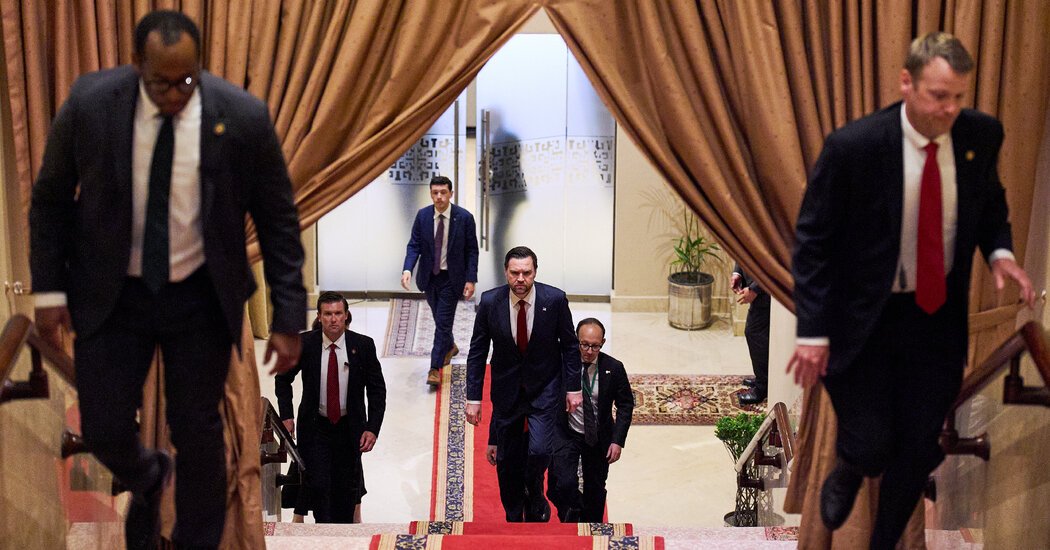
All the while, several officials quietly said Iran was still planning to go to Pakistan and that Mohammad Bagher Ghalibaf, the influential head of Iran’s parliament, would lead the delegation if U.S. Vice President JD Vance also attends.
If the messages seemed muddled, they reflect Iran’s quandary. Iran’s leaders are deeply distrustful of Washington, even as they know a deal is critical to easing the country’s dire economic crisis.
They want to strengthen their own hand in any negotiations by showing American officials they will not negotiate if President Trump continues his bluster — from reasserting his naval blockade to insisting that Washington would obtain Iran’s nuclear stockpiles in a deal.
And they need to hold their hard-line base in check — which still feels emboldened by the war and does not want them to give ground in negotiations.
The clock is ticking: the two-week cease-fire between the countries is set to expire early Wednesday in Iran.
Mr. Pezeshkian said for “reason” to prevail in negotiations that Iran wants stronger signs President Trump would stand by a deal.
The president already pulled out of a previous U.S. nuclear agreement with Iran, officials point out. And he twice joined Israel in a war against Iran as they were trying to negotiate with Washington. Vice President Vance is expected to leave Washington for Pakistan on Tuesday, according to two U.S. officials.
Iran’s fiery rhetoric around the resumption of talks reflects the pressures that Iran’s leadership faces, said Hamidreza Azizi, an expert on Iran security issues at the German Institute for International and Security Affairs.
One is its own hard-liners, emboldened that their leadership survived a five-week-long U.S.-Israeli onslaught, and who have rallied supporters almost nightly in cities across Iran, waving rifles and chanting against surrender.
“They have a core support base of the Islamic Republic, which is very hard-line and ideological, and is very sensitive to any sign of a concession,” he said.
“The other pressure, of course, is Donald Trump — and his apparent willingness to stick to his coercive diplomatic strategy.”
He pointed to what happened over the weekend, after Iran’s foreign minister, Abbas Araghchi, announced that Iran would reopen the strategic Strait of Hormuz.
Mr. Araghchi immediately came under criticism from media affiliated with Iran’s powerful and hard-line Revolutionary Guards. Less than an hour later, Mr. Trump said a U.S. naval blockade against Iran would continue. The next day, Iranian forces reimposed their own blockade on the strait.
“I think the Iranians really do want a deal, but Trump is just too crude — he just wants total victory in public,” said Mohammad Ali Shabani, the editor of the regional news outlet Amwajmedia.com. “And the Iranians feel like time is on their side.”
Iran’s decision to block maritime traffic through the strait will have severe economic and geopolitical consequences for Iran, Mr. Shabani said. Still, he said, Iran feels it can withstand the pressure longer than Mr. Trump.
Some Iranian officials remain deeply concerned they could come under attack even amid talks, or that Mr. Trump could return to full-fledged war, said Sasan Karimi, a vice president for strategy in Iran’s previous government, and political scientist at the University of Tehran.
“Negotiators do not even know whether they could be attacked or not when they are in the air,” he said.
“They don’t want to fall into a trap, and they don’t want to have pressurized negotiations, whether that is by limiting the time or by setting preconditions,” Mr. Karimi added. “The Iranians, in those circumstances, would prefer war.”
Farnaz Fassihi and Sanam Mahoozi contributed reporting