dailynewsnblog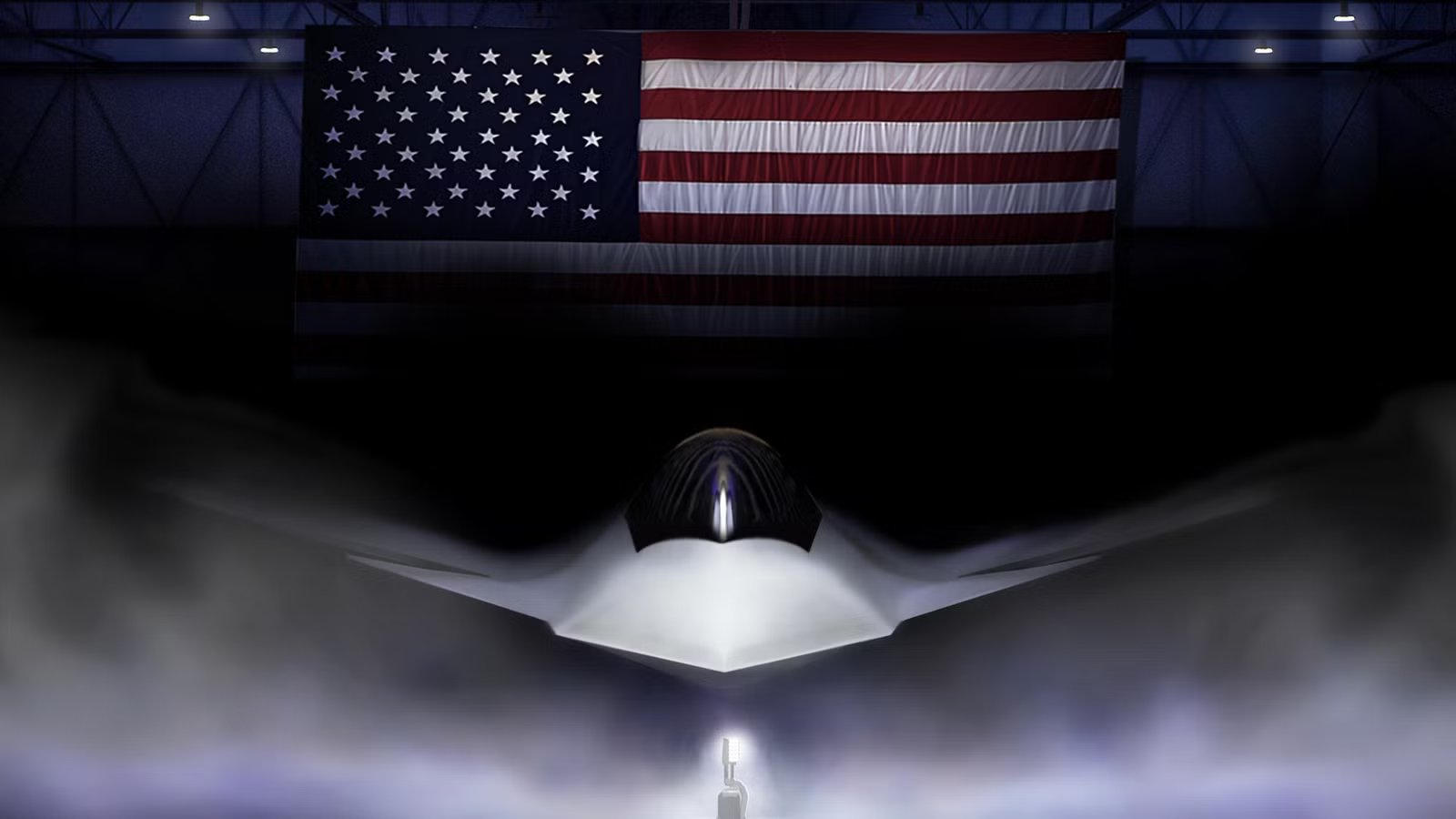
The  Boeing F-47 has, in all communications made with the public so far, been positioned as the United States Air Force’s answer to a brutal future air-war problem and how to combine the F-22’s air-dominance with the range, endurance, and networking needed for operations in the Pacific theater. Boeing won a next-generation fighter contract to build the jet in March 2025, with the aircraft intended to succeed the F-22 and anchor a broader family of advanced battle systems that could include drones, advanced sensors, and AI-enabled battle management platforms.
Public details about the program, however, remain extremely limited, but USAF leaders have described the F-47 as more survivable, more adaptable, easier to sustain, and significantly longer-ranged than current fifth-generation fighter aircraft. There were extensive reports that point to a combat radius that exceeds that of earlier-generation fighters, as well as speeds above Mach 2, and a first flight target around 2028.
That ultimately matters because the F-22 Raptor remains virtually unmatched in many close-in air-superiority roles, but its range and aging fleet size limit its overall usefulness across vast Indo-Pacific distances. This means that the F-47 is thus less a simple replacement than a strategic reset for the Air Force. It is a stealth fighter built not just to win dogfights, but rather to command networks, survive contested airspace, and extend American airpower deeper into the battlespaces of tomorrow.
What Is The Need For The F-47?

The ultimate need for the F-47 program comes from a fundamentally shifting system of air power in the United States. Regional and global threats are becoming a bigger deal for the US to manage, and the capabilities of earlier-generation fighters simply cannot keep up. This is because the U.S. Air Force’s most dynamic fighters in operational service today were designed for an earlier strategic environment. The F-22 Raptor thus remains an elite air-superiority platform, but the fleet is small, aging, expensive to maintain, and limited by range. The F-35 is highly capable, but it was built as a multirole strike fighter rather than a pure air-dominance aircraft, with certain adversary capabilities being of more concern than others.
Specifically, against China, the United States Air Force needs fighters that can operate across the vast Indo-Pacific region, survive dense air defenses, and fight far from nearby bases. This is ultimately going to be the piece of the conversation where the F-47’s development comes into play. Future air combat will likely involve long-range missiles, electronic warfare, stealth detection networks, drones, satellites, and cyber-contested communications.
A sixth-generation fighter must therefore be more than a fast stealth jet. It needs improved range capabilities, higher survivability, open-architecture systems, advanced sensors, and the eventual ability to control uncrewed aircraft. The program also reflects a deterrence requirement. If adversaries believe US fighters cannot reach, survive, or coordinate inside contested zones, American airpower loses its overall credibility. The F-47 is thus meant to restore that margin. This gives the Air Force a platform built for distance, persistence, and command of the future air battle.
How Was Boeing Chosen As The Contractor?

Boeing’s selection for the F-47 program was incredibly significant. Not necessarily because Boeing received the contract. That is fairly expected given the manufacturer’s impressive reputation. Rather, it was more noteworthy that Lockheed Martin did not receive the contract. This broke that company’s long-standing dominance of the American top stealth-fighter program contracts. Lockheed was contracted to build the F-22 and leads the development of the F-35, so a very large number of observers expected it to be the natural favorite.
Instead, the Air Force chose Boeing for the Engineering and Manufacturing Development phase of the program, ultimately saying that Boeing’s bid offered the best overall value and best met service requirements. From a strategic perspective, the choice keeps the US fighter industrial base much more competitive. If Lockheed had won the contract again, America’s next air-superiority fighter, current stealth frontline fighter, and previous air-dominance platform would all sit directly under one prime contractor. Giving Boeing the F-47 program preserves another major combat-aircraft design house and ensures that the company remains central to high-end tactical aviation.
This unique decision also gave Boeing a badly needed defense win after years of endless cost overruns and execution problems that had hamstrung other programs. That creates a unique kind of risk. Boeing must demonstrate that it can deliver a highly complex, secretive sixth-generation fighter on schedule. It also creates opportunity. Boeing has extensive experience with fighter jets such as the F-15EX Eagle II and the F/A-18E/F Super Hornet. The F-47 contract suggests that the Air Force has seen enough technical maturity, range, survivability, and adaptability in its proposal to bet its future air-dominance strategy on Boeing.

Lockheed Martin Pushing For Upgrades To US Air Force’s Oldest F-22 Raptors Instead Of Retirements
The maker of the world’s first fifth-gen fighter says it can keep the fleet alive.
How Is The Development Process Going?

The development process for this advanced fighter appears to be moving quite quickly, at least by the standards of a sixth-generation fighter program. The Air Force awarded Boeing the F-47 Engineering and Manufacturing Development contract in March 2025, and officials have since said that the aircraft remains on track for a first flight in 2028. Recent analysis has said that the first representative prototype for the aircraft is already under construction, all while earlier NGAD experimental aircraft have reportedly been flying since 2020 to test key technologies.
This suggests that the F-47 is not starting directly from a blank sheet. Rather, the Air Force appears to have spent years maturing stealth shaping, propulsion concepts, sensors, digital design methods, and drone-integration architecture before choosing Boeing as the prime contractor. Nonetheless, the program is far from risk-free. Most performance details remain classified, and Boeing must prove that it can translate a secretive prototype effort directly into a producible operational fighter.
The schedule is extremely ambitious. A 2028 first flight would come only about three years after the contract was awarded, with broader operational fielding expected in the 2030s. For now, development seems to be proceeding well, but the real test will be whether Boeing can control costs, software complexity, supply-chain pressures, and manufacturing quality.
Are Other Nations Developing Sixth-Generation Frontline Fighters?

There are most certainly other nations developing sixth-generation fighter capabilities. The clearest rival effort is the UK-Italy-Japan Global Combat Air Program, which aims to field an advanced next-generation fighter around 2035. Its industrial structure is already taking shape through aBAE Systems, Leonardo, and Japanese industry joint venture. Europe’s France-Germany-Spain Future Combat Air System (FCAS) initiative intends to pair a New Generation Fighter with advanced drones.
Airbus, a core contractor on the project, is targeting full systems integration by 2040, but the program is currently strained by extensive disputes over leadership, work-sharing arrangements, and full-scale industrial control. The other important player for us to keep in mind here is China. While Chinese projects remain opaque, Western analysts frequently identify Chinese next-generation fighter development initiatives as strong efforts to challenge the F-47.
Beijing clearly has a similar focus, with the Chinese government emphasizing stealth, range, sensors, electronic warfare, and manned-unmanned aircraft teaming. Russia has also discussed some future fighter concepts. However, its progress is far less certain given extensive industrial constraints, sanctions, and financial limitations created by the Ukraine War.

6 Aircraft That Represent The Future Of Air Combat
Discover six aircraft redefining modern air warfare, from stealth fighters to missile trucks, shaping the balance of air power in 2026 and beyond.
When Will The F-22 Be Retired?

The F-22 Raptor does not yet have a fixed retirement date, but the overall direction is quite clear. The plane is going to remain in service into the 2030s while the F-47 program continues to mature. Earlier planning pointed directly to F-22 retirements beginning around 2030, but that now looks unlikely.
This is because the F-47 is not expected to be operational in meaningful numbers until at least the mid-2030s. Air & Space Forces Magazine reported in March 2026 that the F-47 will replace the roughly 185-aircraft F-22 fleet at some point in the next decade, while officials still hope for a first F-47 flight in 2028.
This means that the Raptor is likely to act as a bridge aircraft for much longer than originally intended. The Air Force may retire some older or less-upgradable F-22s earlier, especially training jets, but the combat-coded fleet will probably stay active until the F-47 can assume the air-superiority mission at scale.
What Is Our Bottom Line?

The ultimate bottom line in this situation is that the F-47 represents a generational bet on what the United States Air Force believes air combat is becoming. It is not just a newer F-22 or a stealthier F-15, but rather a platform intended to solve range, survivability, networking, and command-and-control challenges all at once.
The aircraft is designed around the realities of a Pacific flight, where distance, advanced air defenses, electronic warfare, and overall drone integration will define success. Boeing’s selection adds both promise and pressure. It is now time for Boeing to perform under the stress of a massive defense mandate.
The company now has a chance to reestablish itself at the very center of US fighter development, but it must deliver an extremely complex aircraft on an excessively ambitious schedule. Up until then, the F-22 will remain essential as a bridge directly into the era of the sixth-generation fighter.