dailynewsnblog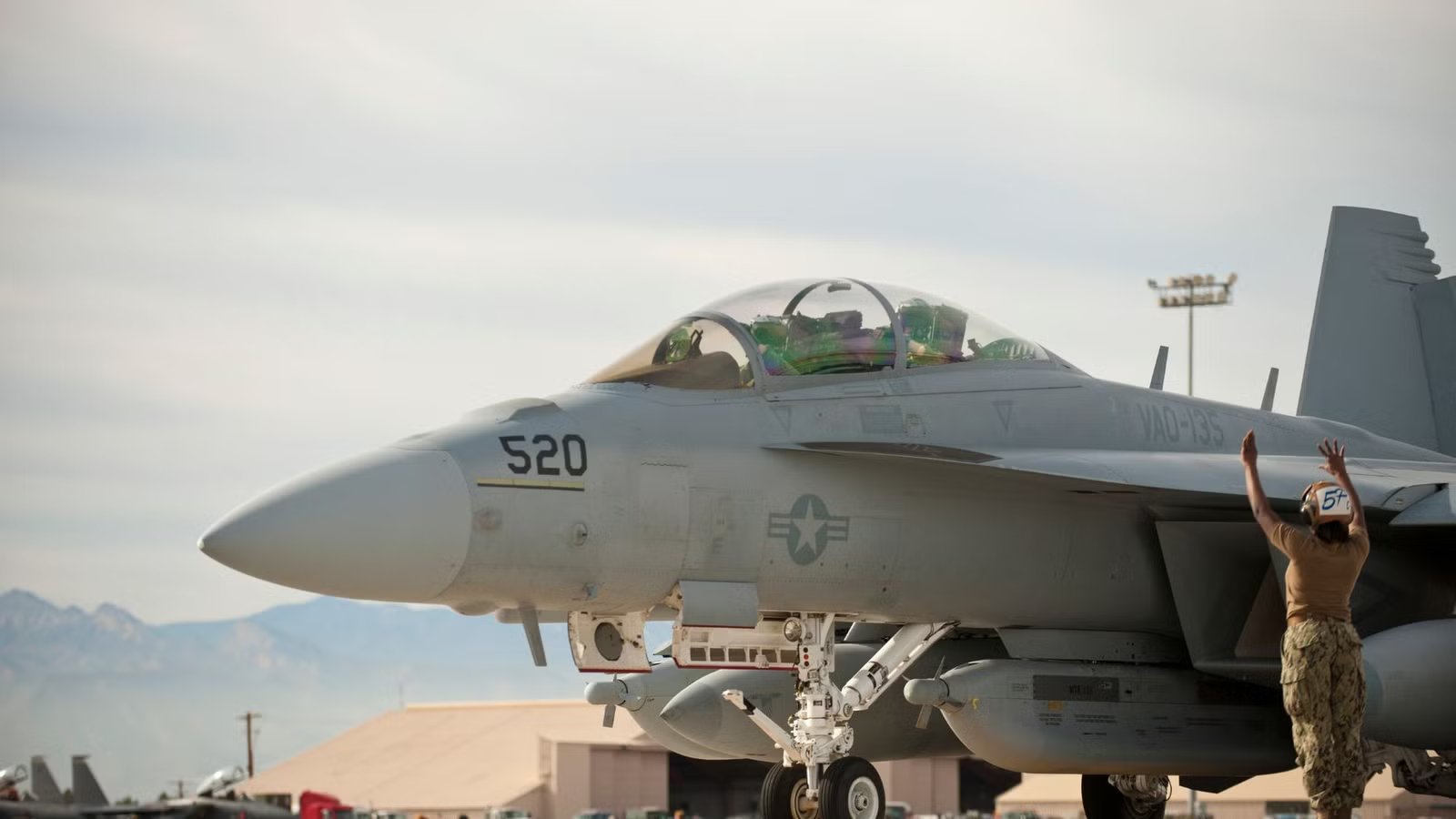
The loss of two United States Navy EA-18G Growler aircraft during an air show in Idaho has become one of the most expensive non-combat aviation incidents involving the Navy in recent years. The jets collided during the “Gunfighter Skies” air show at Mountain Home Air Force Base on May 17, 2026, while performing a coordinated aerial demonstration. Both aircraft were destroyed in the crash, though all four aviators aboard the jets successfully ejected and survived.
The incident immediately attracted national attention because the EA-18G Growler is not a standard fighter aircraft, but a highly specialized electronic warfare platform used in frontline military operations. CNN reported that Navy estimates place the value of each aircraft at nearly $70 million, bringing the total loss to more than $130 million before accounting for maintenance, mission systems, and operational costs. The aircraft involved were assigned to Electronic Attack Squadron 129 based at Naval Air Station Whidbey Island in Washington state.
Specialized Aircraft Were Among Navy’s Most Advanced Jets

The EA-18G Growler was developed from the  Boeing F/A-18F Super Hornet and entered operational service with the US Navy in 2009. Unlike conventional fighter jets designed mainly for air combat, the Growler’s primary mission is electronic attack. The aircraft is built to jam enemy radar systems, interfere with communications networks, and help disable hostile air defenses during military operations.
According to NAVAIR’s EA-18G Growler program page, the aircraft carries advanced systems including the AN/ALQ-218 receiver suite and ALQ-99 tactical jamming pods. These systems allow crews to detect electronic emissions, identify threats, and disrupt enemy targeting systems in real time. The aircraft also retains air-to-air combat capability and can carry AIM-120 AMRAAM missiles and other weapons while conducting electronic warfare missions.
The Growler is operated by a crew of two, a pilot and an electronic warfare officer, and can fly at speeds exceeding Mach 1.8. Boeing has produced fewer than 200 Growlers for the US Navy and allied nations, making the platform relatively limited in number compared to other combat aircraft. Because production has slowed significantly, replacing destroyed aircraft can take years and require substantial funding approvals from Congress and the Department of Defense. John Venable, a senior resident fellow at the Mitchell Institute for Aerospace Studies, said:
“The real purpose of a military air show is to give people a sense of the precision and professionalism of the military to people who wouldn’t otherwise have an opportunity to see it and, in a special few, spark the urge to serve.”
Air Show Accident Sparks Safety Debate

Military air shows have long served as recruiting and public engagement events, allowing civilians to observe military aircraft and flight demonstrations up close. Supporters argue these performances strengthen public understanding of military aviation while helping pilots maintain precision flying skills under demanding conditions. Tactical demonstrations involving Navy and Air Force aircraft regularly draw tens of thousands of spectators across the United States each year.
The Idaho collision has renewed criticism from aviation analysts and defense observers who question the risks associated with using frontline combat aircraft in demonstration flights. Midair performances often involve tight spacing, synchronized maneuvers, and rapid directional changes that leave minimal margin for error. When accidents occur, the consequences can involve both human casualties and major financial losses.
The Navy has experienced several high-profile aviation incidents in recent years involving expensive military aircraft. Rising aircraft costs have intensified scrutiny over operational risk because modern jets contain sophisticated radar systems, encrypted communications equipment, mission software, and classified technology that dramatically increase replacement expenses. The destruction of two Growlers in a single accident, therefore, represents more than the loss of airframes alone.
F/A-18 Fighter Jets Collide Mid-Air During Idaho Air Show, Triggers Lockdown
Emergency crews raced to Mountain Home Air Force Base after a midair collision between two jets sent black smoke billowing into the sky.
Crews Escaped Seconds Before Impact

Witness footage showed the two EA-18G Growlers making contact during the aerial demonstration before both aircraft rapidly descended toward the ground. The collision occurred at a relatively low altitude, leaving the crews with only seconds to respond before ejecting. Aviation experts noted that survival in this type of incident often depends on immediate crew reaction, aircraft positioning, and the performance of onboard escape systems.
Modern military aircraft such as the Growler are equipped with advanced “zero-zero” ejection seats, meaning they are designed to operate even at zero altitude and zero airspeed. These systems use explosive charges and rocket motors to propel crew members away from the aircraft quickly enough for parachutes to deploy safely. Over the decades, zero-zero ejection technology has saved thousands of pilots and aircrew members involved in combat losses, mechanical failures, and training accidents.
All four aviators aboard the two aircraft survived the Idaho collision after successfully ejecting before impact. Emergency responders reached the crash area shortly after the accident, and the Navy later confirmed that none of the crew members suffered life-threatening injuries. Considering the speed of the aircraft and the violent nature of the collision, aviation specialists described the outcome as unusually fortunate and a testament to both crew training and modern escape-system technology.