dailynewsnblog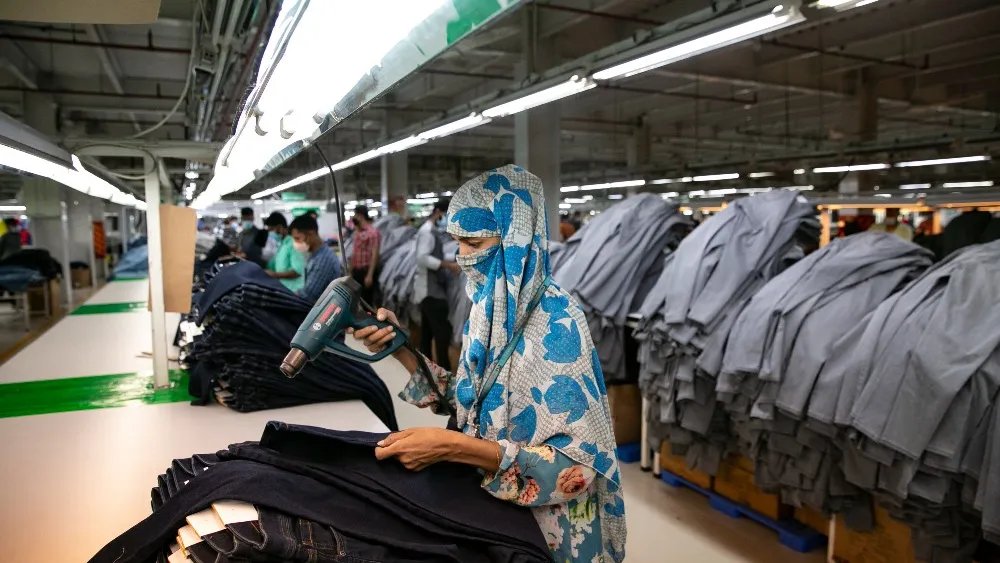
Nearly 40,000 workers have been waiting for a way back since Beximco Group‘s operations ground to a halt—one of almost 350 apparel export factories that have shut down in Bangladesh in the last 18 months.
Beximco has been one of the biggest such factory closures in decades, with the largest number of employee layoffs. It has also been one of the most successful in the industry, and is being closely watched as perhaps an inspiration for other failed and distressed factories.
Beximco’s factories shut down because the group became overwhelmed by massive debt, lost access to normal banking support and working capital, and could no longer finance operations.
Following the collapse of a $20-million investment attempt by the Japan-based Revival Group last year, a newly consolidated private rescue effort is moving swiftly to inject fresh capital and lure back international buyers. A Chinese-backed restructuring plan now offers fresh hope that one of Bangladesh’s largest industrial shutdowns may yet be reversed.
Huda Mohammed Faisal, CEO of Revival Group Co Ltd., Japan, told Sourcing Journal that although the transaction was very close to being completed last year, there were a series of issues that stopped it from going through.
There’s fresh hope to make it happen.
“We are just connecting the missing dots,” he said, pointing out that while Beximco had challenged the auction process for the companies, and the court had granted a stay order on the auction, time was of essence. “Now, the investors are currently completing the due diligence with strong government cooperation.”
“Our main concern is the 40,000 workers. The Beximco management intends to revive and reopen Beximco through Revival, and it is important to do this with urgency,” Faisal added. “The workers need to be reinstated, and also over time the machinery at the factories will also become junk.”
“Now we have arranged 6 billion taka”—around $49 million—”working capital, and are looking at a joint venture with the Chinese company, and will make a tripartite agreement with Revival, Beximco and the Janata Bank,” he said.
Faisal explained that under the recent scheme to aid in pre-financing to help closed and partially operational factories return to full production, eligible large industrial and service sector firms can receive up to 2 billion taka ($16.3 million) in working capital loans at 7 percent interest. The fund is aimed at supporting wage payments, utility bills and raw material purchases, while helping revive production, exports and employment.
“This, in addition to the Chinese investment, can help us revive Beximco, which still has some of its large buyers interested in continuing the relationship,” he pointed out.
He said that the goal was to continue to help other distressed companies.
“We want to make this model effective in the context of Bangladesh, once we are successful, we can implement the similar model to other factories that are facing such difficulties as well,” he said.
“Our group is acting as a distressed asset management entity rather than an equity stakeholder, has arranged approximately 600 crore taka”—about $48.8 million—”in working capital to restart operations under a corporate lease arrangement, an approach accepted by Beximco’s managing director to restore lost jobs,” he said.
This private sector revitalization strategy extends beyond Beximco to other large-scale distressed manufacturing assets.
Revival Group has also secured a 10-year Master Lease Agreement with the owner of the 200-acre Saad Musa Industrial Park and has signed a memorandum of understanding with a Chinese buyer-operator.
“The entities are currently negotiating commercial terms with asset owners and lending banks to finalize the transaction,” he said.
The site includes three spinning units spanning 360,000 square feet, a 165,000-square-foot textile unit, a 240,000-square-foot dyeing unit, a 65,000-square-foot warehouse, and a biological effluent treatment plant. The operational turnaround plan mirrors the budget’s emphasis on modernizing production capabilities; the operators intend to convert the three traditional spinning units into specialized garment manufacturing facilities consisting of a padded jacket factory, a soft woven garment factory, and a knit garment factory to maximize existing infrastructure and value. “This has been a distressed area for more than six years,” he said.
The frantic effort to revive Beximco and other distressed factories reflects a broader, state-level urgency to stabilize an industry that has been facing headwinds.
An emergency session called by the Bangladesh Garment Manufacturers and Exporters Association (BGMEA) on Wednesday emphasized that the sector remains fragile: Bangladesh’s apparel exports fell 2.82 percent year-on-year to $31.72 billion during the first 10 months (July–April) of financial year 2025–2026, according to BGMEA data, with knitwear exports declining 3.68 percent and woven garment shipments down 1.83 percent.
Meanwhile, members reportedly said that they were working toward finding solutions.
Faisal Samad, director of BGMEA, said that “both a short- and a long-term strategy was being discussed, and would be implemented through participation of all the stakeholders.”
“Business has to be revived,” he said, emphasizing the urgency. “Support from the government is being reflected in recent policy announcements, however a comprehensive plan and strategy needs to be decided. We hope to lead this for the export sector.”
The need for reviving business is clear as workers bear the brunt of the factory shut-downs.
Labor lay-offs have been part of the shifting landscape over the last 18 months with more than 100,000 workers across factories in the Dhaka region and suburbs of Ashulia, Savar as well as in the Chittagong suburbs losing their jobs.
As pressures have been growing, in terms of job losses and factory idling, the government’s newly unveiled budget announced on Thursday focused heavily on lowering the cost of doing business and clearing entrenched logistical bottlenecks.
Presented to parliament by finance minister Amir Khosru Mahmud Chowdhury, the newly unveiled 9.38 trillion taka (approximately $77 billion) the national budget for the fiscal year 2026-2027, appeared to make a shift to subsidize and deregulate the apparel export industry, analysts observed.
Yet the first budget to be presented by Prime Minister Tarique Rahman’s administration has stirred the economy into the debate, with discussions taking place on whether the plan is realistic.
Reactions to the plan have ranged from “business-friendly” to “emphasizing investment facilitation” and “long-term policy stability” while being “positive and proactive.”
Mahmud Hasan Khan Babu, president of the BGMEA, praised the new growth measures but also pointed out that “effective cost reduction and infrastructure readiness” would be key to making the changes.
Others like Mohammad Hatem, president of the Bangladesh Knitwear Manufacturers and Exporters Association (BKMEA) said that the new budget would help stabilize employment with its focus on tax relief and structural adjustment—a point emphasized by others in the industry.
“Overall, sectoral policies announced will help the industry, particularly the tax relief on incentives and supply chain support,” said Faisal Samad.
The new measure will include the complete elimination of mandatory annual customs bond audits for fully compliant, 100 percent export-oriented garment factories and the removal of the restrictive 30 percent minimum value-addition threshold previously imposed on manufacturers importing raw materials via bank guarantees.
Analysts noted that the customs clearance speed will double as the system-based self-assessment process for Authorized Economic Operator enterprises is being expanded.
The 10 percent supplementary duty on imported synthetic woven fabrics has also been withdrawn and customs duty exemptions on wastewater treatment chemicals have been put in place through June 2027.
A lowered withholding tax rate has been implemented on electricity purchases from power producers, which manufacturers said would provide some protection of the huge operating costs. There is also a cash support incentive to those who subcontract to smaller local workshops.
Part of the fiscal easing, analysts in Dhaka noted, is to ensure “Advantage Bangladesh,” especially in the wake of competition from other neighboring countries.
India, for example has recently implemented India-United Kingdom Free Trade Agreement. Meanwhile, the highly anticipated conclusion of the India-European Union Free Trade Agreement is set to grant Indian exporters zero-duty access to Europe’s massive $263.5 billion textile and apparel import market.
The recent downward reset in U.S.-India tariffs to 18 percent for Indian imports—coupled with new bilateral provisions enabling zero-duty apparel access under specific raw material blending thresholds—may well be a challenge to Bangladesh’s traditional price-point edge.
“The road ahead is not likely to be easy still,” a small-enterprise manufacturer in Savar observed.
“The budget’s assumptions on inflation, economic growth, investment, and revenue mobilization do not adequately reflect prevailing economic realities,” Mustafizur Rahman, distinguished fellow at the Centre for Policy Dialogue (CPD), pointed out. “The assumptions underpinning the budget are highly ambitious. Given the current economic situation, implementation will be challenging.”
Other analysts, including those from the Dhaka Chamber of Commerce and Industry (DCCI), highlighted the difficulty of “raising enough revenue to meet the targets laid out, especially under the present macroeconomic situation, and weak private credit growth.”
Yet many felt that optimism was contagious, buoying an industry that weighed down by the last 18 months of uncertainty.
“The 6.5 percent GDP target—up from the provisional estimate of 5 percent—may well be unrealistic; thinking that private investment can continue to rise to 21.3 percent of GDP of the budget may not quite happen,” a Dhaka based analyst noted. “But there is hope for the industry.”
In the case of Beximco, the hope of the injection of funds could well save the 16 apparel and textile factories as well as save the much-needed jobs the facilities offered.
The feeling that the show must go on was strong at the 20th edition of Bangladesh Denim Expo, held on June 10-11 in Dhaka.
The event, organized by Bangladesh Apparel Exchange (BAE) brought together leading denim manufacturers, international brands, retailers, designers, technology providers, and industry professionals from around the world.
“We are going through a difficult time. But we have been through demanding periods before. We always moved forward. We will do so again. We cannot do this alone. No manufacturer can. No association can,” said BGMEA’s Mahmud Hasan Khan Babu at the event, emphasizing the importance of staying equal partners from all sides. “Manufacturers require brands and buyers to work with us, not just audit us. They require development partners to invest with us, not just advise us. They require government to stand with us, not just regulate us,” he said.
More optimism yet came from Mostafiz Uddin, founder and CEO Bangladesh Denim.
“From championing a just transition for its workforce to pioneering product diversification beyond apparel, Bangladesh is not waiting for the future—it is building it,” he observed.