dailynewsnblog
The mechanical keyboard isn’t always so mechanical anymore.
Over the past six years, keyboards with optical, Hall-effect, and other “contactless” switches have become increasingly common, often going for higher prices than traditional mechanical keyboards, which already command a premium over basic membrane boards. In return, they promise some theoretical advantages, particularly for gamers. In daily use, though, the differences can be pretty subtle.
So what exactly are you paying for? In this guide, we break down how the newest switches work, why contactless designs are becoming more popular, and where their advantages—and disadvantages—really matter.
Table of Contents
How standard mechanical switches work
First, let’s recap what happens when you push a key with a traditional mechanical switch inside.
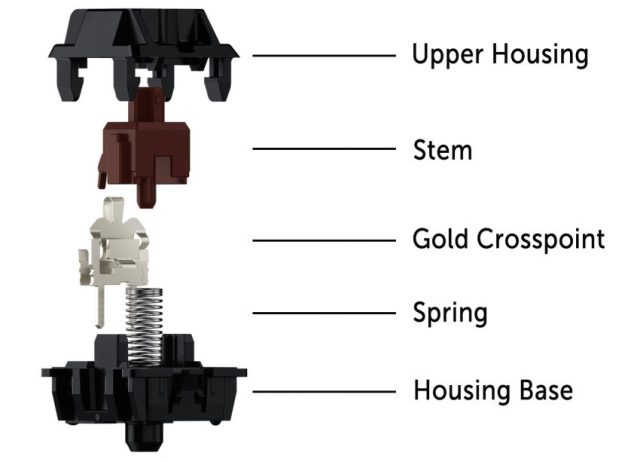
As you can see in the diagram of a Cherry MX Brown switch below, standard mechanical switches have two metal leaves—in this case, the “crosspoint”—that are shaped differently, with the top of the larger leaf bent away from the smaller leaf.
Credit:
Das Keyboard
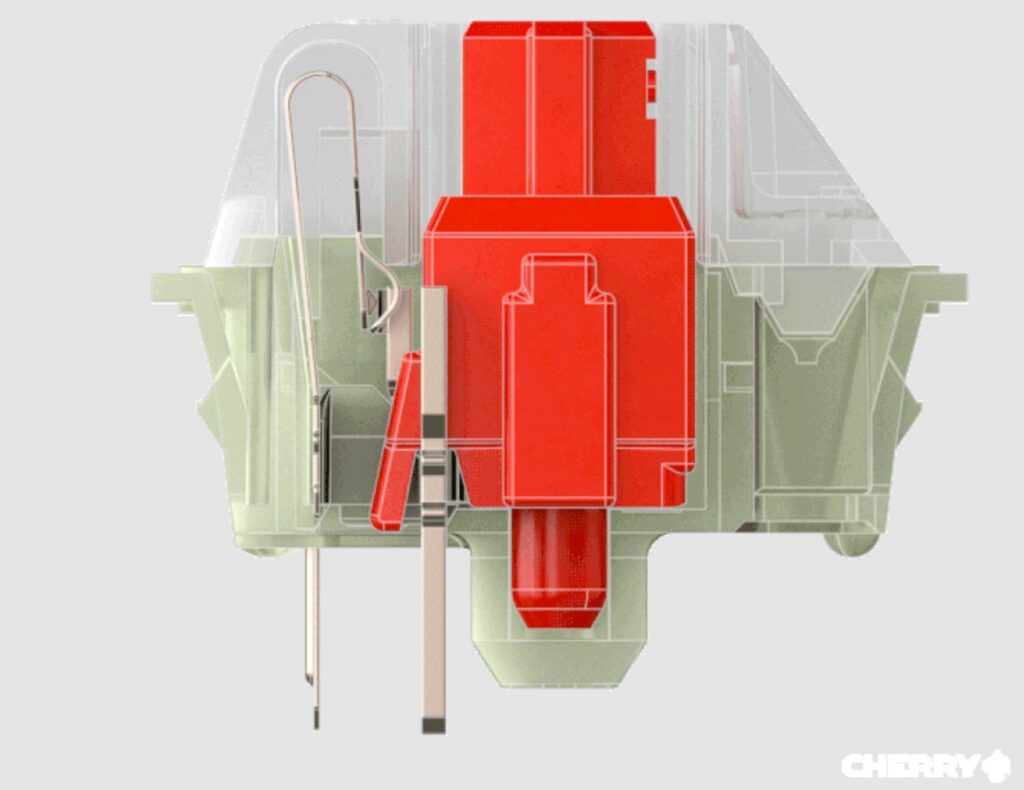
When you press a mechanical switch, its plastic stem moves downward toward the keyboard’s PCB, and a spring wrapped around the stem compresses. As you release the button, the spring expands, forcing the stem back up to its original position.
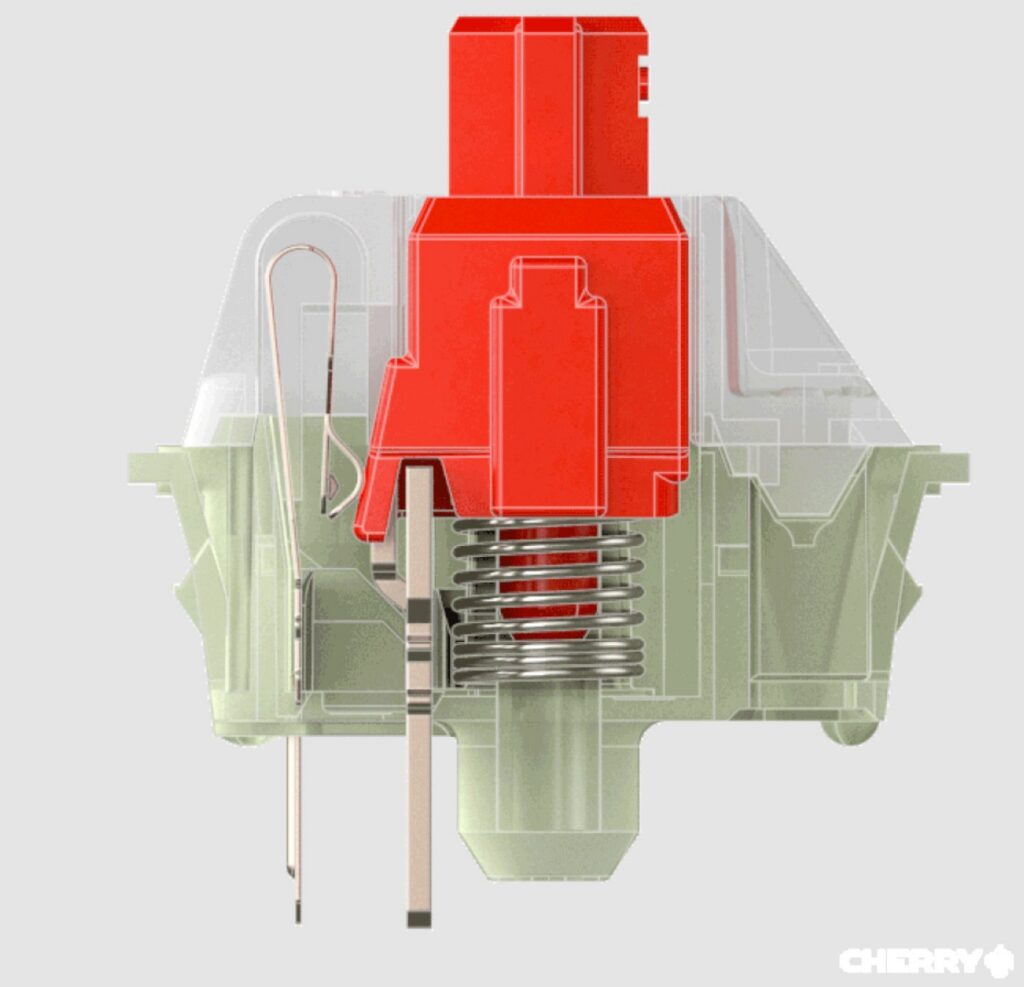
When a switch is at rest, a protruding piece of the plastic stem keeps the switch’s two leaves from making contact. As the stem goes downward, that piece moves with it, allowing the leaves to touch and close a circuit on the keyboard’s PCB, which sends a signal to the keyboard’s microcontroller, telling the computer which input was made.
Cherry
A transparent profile view of an MX Red switch at rest.
Cherry
Cherry
A transparent profile view of a depressed MX Red switch.
Cherry
A transparent profile view of an MX Red switch at rest.
Cherry
A transparent profile view of a depressed MX Red switch.
Cherry
But because mechanical switches rely on the physical contact of internal components, they can degrade over time.
Why new switches?
The switches in this guide differ from traditional mechanical switches because they don’t register input through contact between two metal leaves—hence the term “contactless.” Manufacturers often claim contactless switches last longer than regular switches, and they’re not susceptible to oxidation or corrosion, which can affect mechanical switches after prolonged use.