dailynewsnblog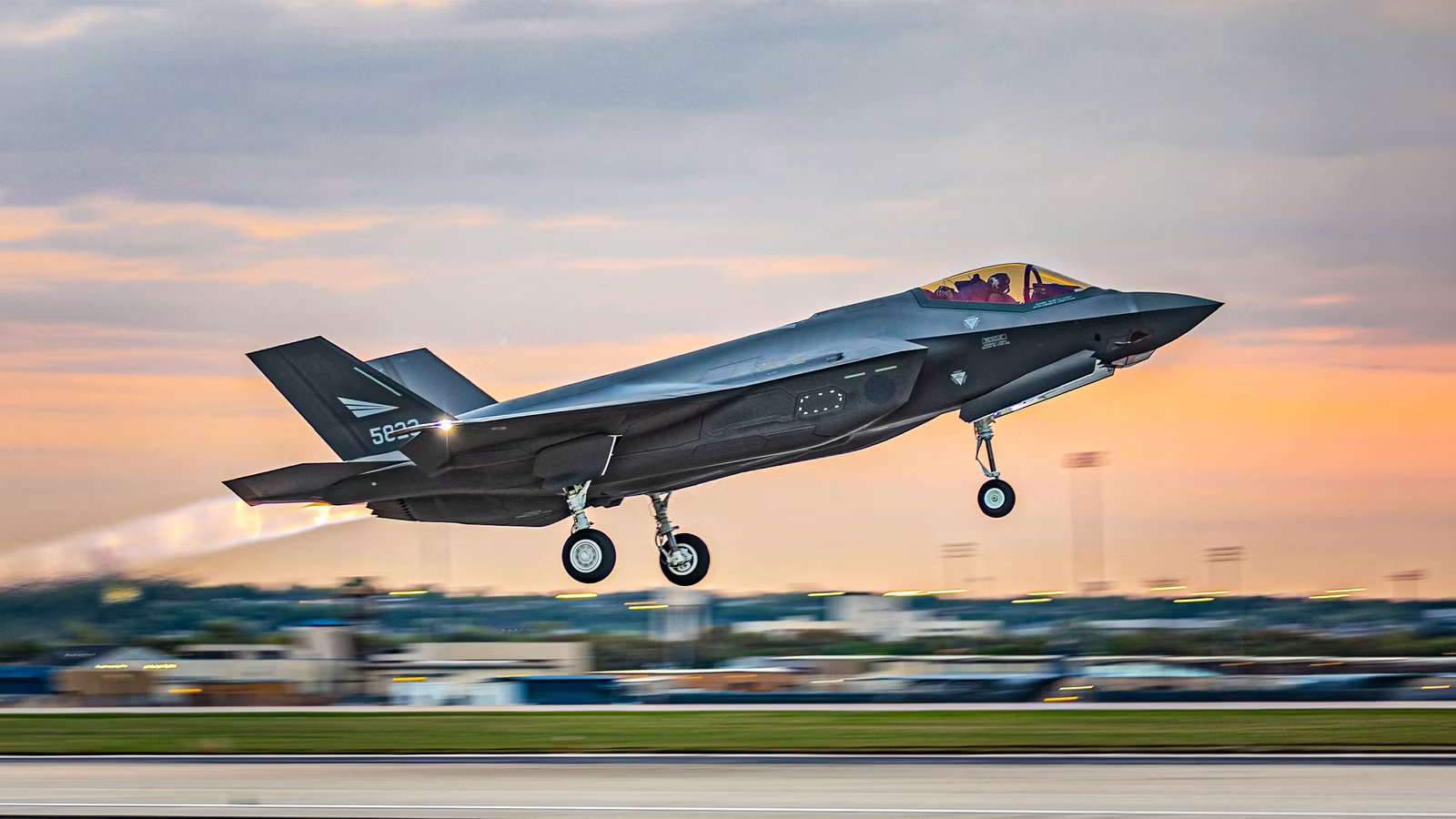
In April 2025, Norway became the first country (or service) to complete its program of record. While this was a milestone for the F-35 program, there is more to the story to understand the context. With 52 F-35As in service, Norway is now tied for the second-largest operator of the type outside the United States with Japan (after Australia). With no more F-35s on order, it is soon to fall behind the Netherlands (around 49 of 57 received).
Israel, the UK, Italy, and South Korea are also among the countries that will operate more F-35s than Norway in the 2030s. By far the largest operator is the US Air Force, which is currently expected to procure around half of all the F-35s to be produced, although this could change. Let’s examine why Norway has become the first country to complete its program of record and why that title may be better attributed to Australia.
Norway Was The First To Complete Its Program Of Record

Last year, Lockheed Martin announced that on April 1, 2025, the Royal Norwegian Air Force received the final 51st and 52nd F-35As. This made Norway the first country to complete its program of record. At the time, Tore O. Sandvik, the Norwegian Minister of Defence, stated that “the F-35 is the world’s best fighter jet, and I am very pleased that we will receive the last of the 52 fighter jets from Lockheed Martin that Norway has ordered.”
Lockheed said that the F-35As would play a critical role in protecting the High North and supporting NATO missions. As the F-35As entered service, Norway retired its aging fleet of F-16 Fighting Falcons. As these were mostly well-maintained, most were transferred to NATO ally Romania as it upgraded from legacy MiG-21s. This left only a small number of F-16s to donate to Ukraine. Some F-16s were sent as spare parts.
Norway was a founding member of the NATO alliance, and like Finland, it chose the F-35 for its Arctic conditions over that of the neighboring Swedish Saab Gripen fighter jet. With that being said, being mostly further away from Russia (apart from the relatively small northern border), Norway has a different fighter jet doctrine compared with Sweden. Finland, being on the border with Russia, has a reasonably comparable fighter jet doctrine with Sweden, including dispersed operations.
What Is A Program Of Record?

Before celebrating Norway completing its program of record, it is worthwhile to first understand what ‘program of record’ actually means. In the context of the F-35, a Program of Record is an official government acquisition program that has been formally approved, funded, and incorporated into long-term defense planning: at least in theory…
In practice, the program of record is often somewhat aspirational, especially in the context of the United Kingdom and its program of record for 138 F-35s and the US DoD and its program of record to eventually procure 2,456 jets across the US military branches. In practice, only a part of these are funded, and cyclical budgetary cycles negotiate how many to purchase. It is not a given that the US will actually purchase all of these jets.
The UK is a similar case study. It originally had a program of record for 150 F-35s, but this was reduced to 138. The UK later considered reducing it further to 72, although after the deterioration of security in Europe after 2022, it reaffirmed it would eventually purchase 138. It has received 48 examples. The next UK order (to be placed soon) is expected to be for 27 aircraft, including 15 F-35Bs and 12 F-35As.
Catch what other flight trackers miss
Emergency squawks, holds, NOTAMs — live signals, no signup.
Open tracker
Catch what other flight trackers miss
Emergency squawks, holds, NOTAMs — live signals, no signup.
Open tracker
Competing Fighter Jet Programs

Smaller air forces, like Norway, tend to only purchase one type of frontline fighter jet. This is also true for Finland, Denmark, the Netherlands, Belgium, Singapore, Switzerland, the Czech Republic, and previously, Canada. Medium-sized air forces, like the Royal Air Force, tend to operate multiple (typically two) types of frontline fighter jets, and this can complicate the situation.
In the UK, there is a debate about how many mostly-US-made F-35s it should purchase and how many mostly domestically produced Eurofighter Typhoons it should acquire. There is a similar debate in Italy and Germany, while France and Sweden have elected to only support their domestic fighter jet programs. Adding to the complication is the fact that the UK is the leading partner in developing the GCAP/Tempest sixth-generation fighter jet.
Select countries/services with F-35 programs | Program of record (per F-35.com) | Number received (approximate) |
|---|---|---|
United States Air Force | 1,763 | 500+ |
United States Marine Corps | 420 | 250+ |
United States Navy | 273 | 60+ |
United Kingdom | 138 | 48 |
Japan | 127-147 | 52 |
Israel | 100 (planned) | 48 |
Italy | 110 | 40 |
Australia | 100 | 72 |
Finland | 64 | 8 |
The Netherlands | 57 | 49 |
Norway | 52 | 52 |
It is plausible that if Tempest is successful, the RAF may purchase more Tempests in place of planned F-35 purchases. The Royal Navy can only operate the F-35B fighter jet from its aircraft carriers, but it is also looking to augment its F-35Bs with carrier-based advanced drones. Meanwhile, Canada is also debating reducing (but not canceling) its F-35 purchase in favor of Saab Gripens and potentially eventually Tempests.
Increasing The Program Of Record

While it is true that Norway is the first country to complete its program of record, it is also worth noting that it hasn’t increased it. Norway set its program of record at 52 jets, and then fulfilled it. Norway has not increased its planned F-35 purchase. For now, it doesn’t appear that Norway is seriously considering ordering more jets and is instead interested in sustaining and upgrading the ones it has.
While Norway would have been the first to complete its program of record regardless, Denmark officially has a program of record for 27 F-35s, but plans to place an order for 16 more. This will bring the total to 43 fighter jets. The same is true for Belgium. Belgium has a program of record for 34 F-35As, but plans to increase it by 11 and acquire 45 F-35s.
Germany is purchasing 35 F-35As alongside more Eurofighters. After the collapse of its FCAS sixth-generation fighter jet program with France (and Spain), Germany is considering doubling the order as a stopgap. Germany is now considering its operations that include developing a next-generation fighter with Sweden (and/or Spain), joining the GCAP/Tempest program, or ordering more F-35s and investing in advanced autonomous combat aircraft to pair with the F-35s.
Why Australia Was Really The First

If the consideration is the country that has received all the F-35s that it is likely to order, then that accolade may be better given to Australia. While Australia has a program of record for 100 F-35As, it has only ordered 72 jets and has scrapped plans to order the remaining 28 F-35As for the fourth squadron.
Interestingly, the Royal Australian Air Force, with 72 F-35s, is currently the largest operator of the aircraft outside of the United States. The second largest operator is now Japan, while third place is a tie between Israel and the UK, which have both received 48 F-35s. The UK is known to have lost one over after it fell off an aircraft carrier, while Israel is not known to have lost any in its recent conflicts despite Iranian claims and direct missile hits on its Nevatim Air Force Base.
Australia is planning to keep its 24 F/A-18 Super Hornets in service for longer. Still, Australia may order more F-35s with a future government. The opposition campaigned in the last election (2025) on the promise that it would purchase the 28 remaining F-35s if it were to be elected. It lost. The current government is more interested in sustaining the aircraft it has and leaving the option open to eventually purchase another aircraft, like the GCAP/Tempest.
The US Military & Its F-35 Purchases

However, while Norway has a large number of F-35s relative to its population (52 jets for 5.5 million people), its fleet is dwarfed by the United States Air Force. The US Air Force has a program of record to eventually purchase 1,763 F-35As and is also planning to purchase around 267 F-15EX fighter jets and 185+ upcoming F-47s. The USAF has currently received 500+ F-35As.
The second-largest operator is the US Marine Corps, which has a program of record for 420 F-35B/Cs with around 205 F-35Bs and 56 F-35Cs received. In 2026, the Marines finally retired their legacy AV-8B Harrier II jump jet, leaving it with a fleet of legacy F/A-18 Hornets and a growing fleet of F-35B/Cs. As the service receives its F35B/Cs, it will phase its legacy Hornets out until it has an all-F-35 frontline fighter jet fleet.
Unlike the Navy and Air Force, the Marines do not currently have a sixth-generation fighter jet program, although that is partially a marketing distinction. The US Navy is the third-largest operator of the F-35 with a program of record for 273 F-35Cs, of which over 60 have been received and as many as 80 have been funded. With the Navy, the F-35C is partially replacing the F/A-18 Super Hornet and is competing with the Navy’s upcoming F/A-XX 6th-generation fighter program.