dailynewsnblog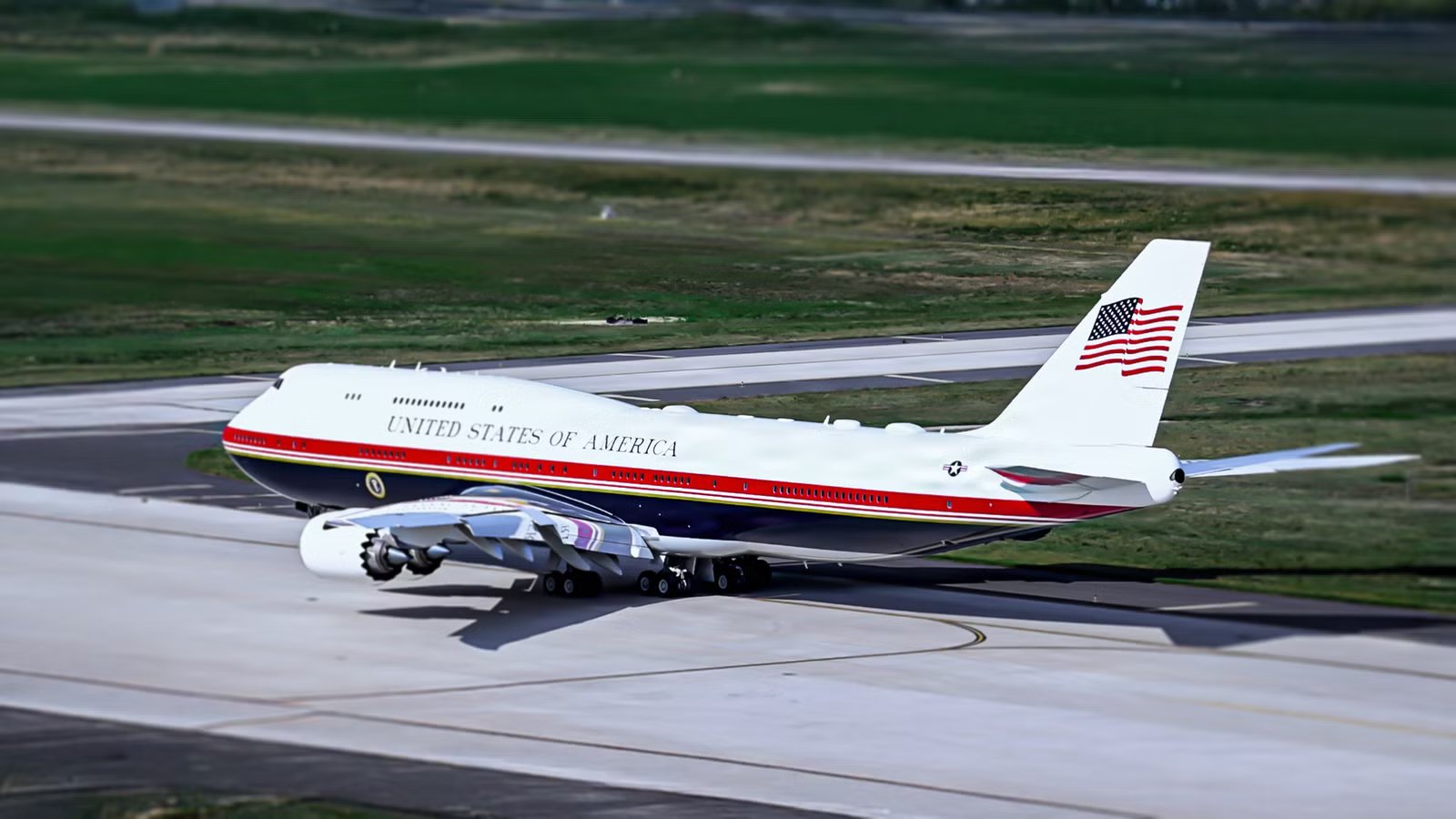
The Qatari-gifted Boeing 747-8 being used as a temporary Air Force One is undergoing interior “cosmetic upgrades,” according to an administration source cited by ABC News. However, officials have not said whether the aircraft is receiving the more consequential defensive systems President Donald Trump previously said would be added. The uncertainty leaves unanswered the central question surrounding the aircraft: whether its current refurbishment addresses the security limitations that have already affected how it is used.
The aircraft, valued at about $400 million and approximately 14 years old, was last documented carrying Trump on September 16. The president has since returned to the older, purpose-built Air Force One for several domestic and international trips. ABC News reported that the White House did not immediately answer questions about the scope of the work, its completion date, or when the Qatari aircraft will return to service.
Cosmetic Work Leaves Security Questions Open

The administration source described the work specifically as “cosmetic upgrades” to the aircraft’s interior. That description differs from Trump’s earlier explanation of what would happen to the aircraft in October. In an interview with ABC News last month, Trump said the 747-8 would be sent away for roughly 60 days to be “maxed out,” including improvements intended to make it capable of operating in any territory. He also referred to upgrades involving the interior and engines. However, the administration source cited by ABC did not mention security modifications, and the White House has not confirmed whether such work is part of the current project.
“It’s going to be maxed out. Yeah, it’s going to go away and — to make magnificent plane. Interior wise, the best. Engines, the best… it has a lot of stuff, but to max it out, meaning you can go into any territory, it’ll take about 60 days. And it’s being sent in October to be maxed out.”
– President Trump to ABC News in September
For a presidential aircraft, interior improvements and defensive modifications represent very different categories of work. A more luxurious cabin can improve the president’s working environment, while military-grade survivability equipment is designed to address threats that commercial aircraft are not normally expected to encounter.
Missile Defense Remains The Major Unknown

The unanswered security question has a clear precedent. During Trump’s July trip to Turkey for the NATO summit, he arrived aboard the Qatari 747-8 but did not use it for the return journey. He instead traveled back using the older Air Force One after a last-minute aircraft switch. ABC News subsequently reported that Secret Service officials had urged Trump to use the older aircraft as a security precaution.
The issue was particularly significant because the older Air Force One aircraft are purpose-built presidential transports with defensive capabilities not necessarily found on a commercial 747-8. HuffPost previously reported that the Qatari aircraft did not appear to have the same self-defense equipment, including systems associated with detecting and countering missile threats, as the existing presidential fleet. ABC News also reported that The New York Times had previously described the Qatari aircraft as lacking the anti-missile capabilities of the existing Air Force One fleet. The White House, however, has maintained that the aircraft was equipped with high-level security protocols and defended its safety.
The Bridge Aircraft Has A Limited Window

The Qatari 747-8 was never intended to become the United States’ permanent replacement for the existing Air Force One aircraft. It serves as a bridge while Boeing’s next-generation presidential aircraft program continues toward completion. Its operational history has already demonstrated the limitations of using a commercial-origin aircraft for presidential transportation. Trump began flying aboard the jet in July, and it subsequently operated international service, including a September trip to Ireland. Yet the aircraft’s security configuration remained a recurring concern, particularly when presidential travel brought it closer to potential military threats.
The current refurbishment could therefore determine how useful the aircraft remains during its temporary role. If the work is limited primarily to the cabin, the principal questions surrounding its defensive capabilities will remain unresolved. If more extensive classified modifications are also being incorporated, the administration has not publicly disclosed them.
For now, the most concrete information is narrower: the Qatari 747-8 is sidelined, interior work is underway, and no administration official has publicly confirmed that its missile-defense capabilities are being upgraded. Its eventual return to presidential service should provide a clearer indication of whether the aircraft received the broader “maxed out” transformation Trump previously described.