dailynewsnblog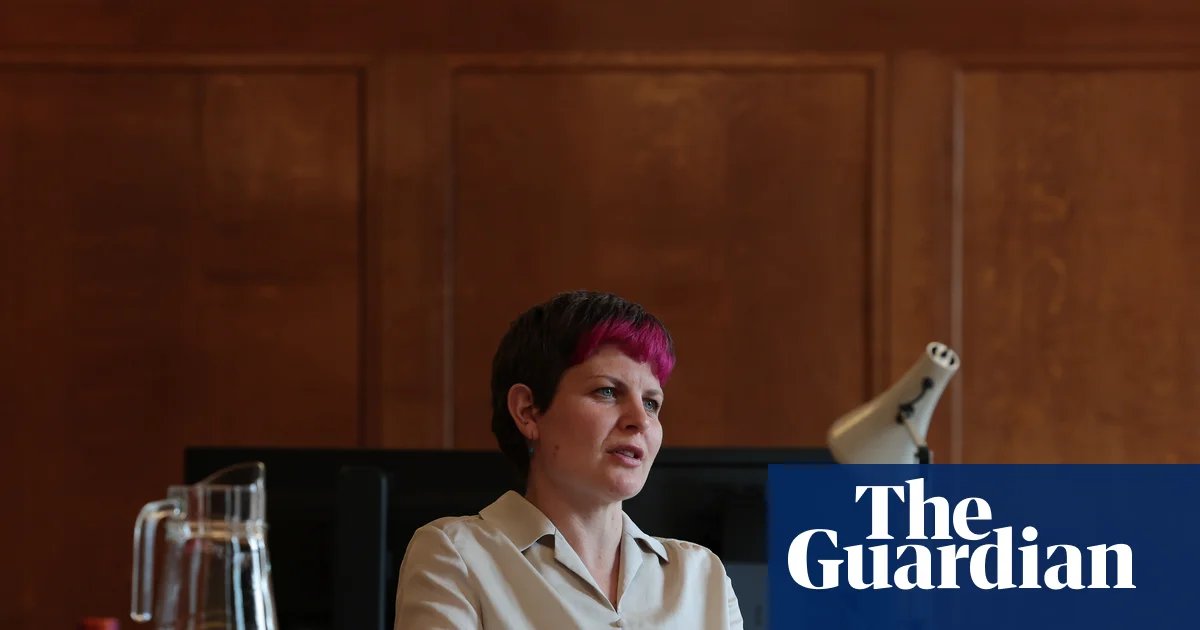
For the first time in decades the person sitting behind the desk in the wood-panelled office of Hackney’s imposing art deco town hall is not a Labour politician.
Zoë Garbett was elected as the east London borough’s first Green party mayor in this month’s local elections, surfing a wave of support which resulted in the party winning more than 500 seats, taking control of five councils and winning two mayoralties.
But even amid a celebratory national picture, the results in Hackney, one of the Labour party’s longtime strongholds in the capital, stood out. Not only did Garbett secure the mayoralty, the party jumped from four councillors to 40. At the same time, the Labour block slid from 50 seats in 2022 to nine.
“Before the election, I was saying it’s going to be really different this time, there is going to be a different landscape in London,” says Garbett, an increasingly familiar figure in the borough with her pink fringe and ready smile. “But I genuinely did not think it would be to this scale.”
Now, the hard work of local government looms. Hackney is one of the most diverse areas in the country, with around half its residents from black and global majority groups, according to the council. Life expectancy is below the national average and although there are pockets of wealth as some neighbourhoods gentrify, the English indices of deprivation report found it was the second-worst area in the country for child deprivation.
The council has an annual budget of about £2bn and Garbett’s team is responsible for services from housing to inequality, adult social care and transport.
“It is all sinking in still,” says Garbett, 39. “But we are now getting to the real practical stuff of how are we going to deliver these things, and to be honest, I think I’ve been itching to do that for a long time.”
A self-described “local government obsessive”, Garbett, originally from Somerset, has been involved in London government and healthcare for more than a decade, working for the NHS and local councils, responsible for services ranging from public health to adult social care. She has sat as a London Assembly member for the Greens and as a councillor in Hackney for the last four years. She was also the Green party candidate for London mayor in 2024.
“I love local government,” says Garbett. “It is the everyday that people experience, from adult social care and Send provision, to housing and roads … That means we have this real connection with people in Hackney and I love that.”
Since Zack Polanski became the leader of the Greens last year, the party’s membership has tripled and now stands at more than 200,000. As well as its success in the local elections, it gained a fifth MP in February when Hannah Spencer saw off Labour and Reform in the Gorton and Denton byelection.
But along with the excitement and hope that accompanied that success, there have been questions about the party’s direction. Can it hold its coalition of voters together: the longstanding members and the influx of new supporters, many of whom are younger, urban and more leftwing? Should it consolidate its success and rein in some of its more radical policies to broaden its appeal, or keep pushing to try to shift the national debate on issues such as inequality, taxation and housing?
“I feel like we’ve been able to accommodate both groups,” says Garbett.
The key is to keep focused on the policies that appeal across the Green’s coalition, she says – from rent controls to nationalising the water industry, protecting the NHS to climate justice, and delivering where they get the chance in local government.
“These policies can and do appeal to all ages and people in all different circumstances, we just have to go out and clearly and boldly make the case for them.”
Garbett says there are lessons to be learned from Hackney, where Green party activists have been backing local campaigns and working in the community for years. “People have seen us showing that solidarity; we have been on picket lines and we have called out injustice.”
She says Polanski has played a crucial role in the Green’s success. “He’s resonated so strongly with people who felt completely unheard in the systems that we’ve got.”
But as his profile has risen, Polanski has faced criticism over a range of issues from whether he failed to pay the correct council tax, to not registering to vote. The party has also been criticised for its handling of antisemitism within its ranks.
Garbett says she welcomes the increased scrutiny that comes with success, but adds that some of the criticism of Polanski seems disproportionate compared with politicians such as the Reform UK leader, Nigel Farage, “and the accusations of racism and questions about funding and donations that he faces”.
“We all need to have scrutiny and should welcome it, but it needs to be proportionate.”
Garbett says she works closely with Hackney’s large Jewish community and says antisemitism has to be rooted out wherever it exists. She says antisemitic attacks and hate crimes are “abhorrent”. “We must do as much as we can to stamp that out here in Hackney and beyond.”
Garbett’s priority for Hackney is housing, where three-quarters of people rent their homes. She has pledged to deliver more genuinely affordable homes and council housing, as well as improving housing maintenance. She is also launching a Who Owns Hackney scheme to identify empty properties and repurpose them for the community.
“There is no extra money from government but we’ve got all these assets in empty properties and we could be doing much more.”
She says this is relevant for all communities in the borough, given the impacts of gentrification, including on the area’s black community.
“Black spaces for black communities and black-led business have been kind of pushed out of Hackney … So it is a question of how can we use the council’s assets to push back against some of that … and open up these spaces for people to use again.”
As the Green party grows, some have raised concerns that it is no longer focused on the core issues of the climate and nature crises.
But Garbett is adamant that climate justice remains at the heart of the party’s mission. Rather than see it as something separate, she says it is the guiding principle of the Green party’s manifesto for Hackney.
“Everything I do has got climate and climate justice at its centre, it’s one of our core principles that runs through our manifesto, from trying to buy back council homes and make housing safer and more resilient, to rewilding in parks, from public health to transport.”
Garbett is aware of the responsibility to deliver amid a breakdown of political allegiances.
“I speak to residents all the time in Hackney who are terrified about the changes to immigration for them or their family members and communities if Reform get in. We’ve got a responsibility to deliver and to make sure that people are looking to the Green party as an alternative [to Labour] rather than to Reform or further rightwing parties.”