dailynewsnblog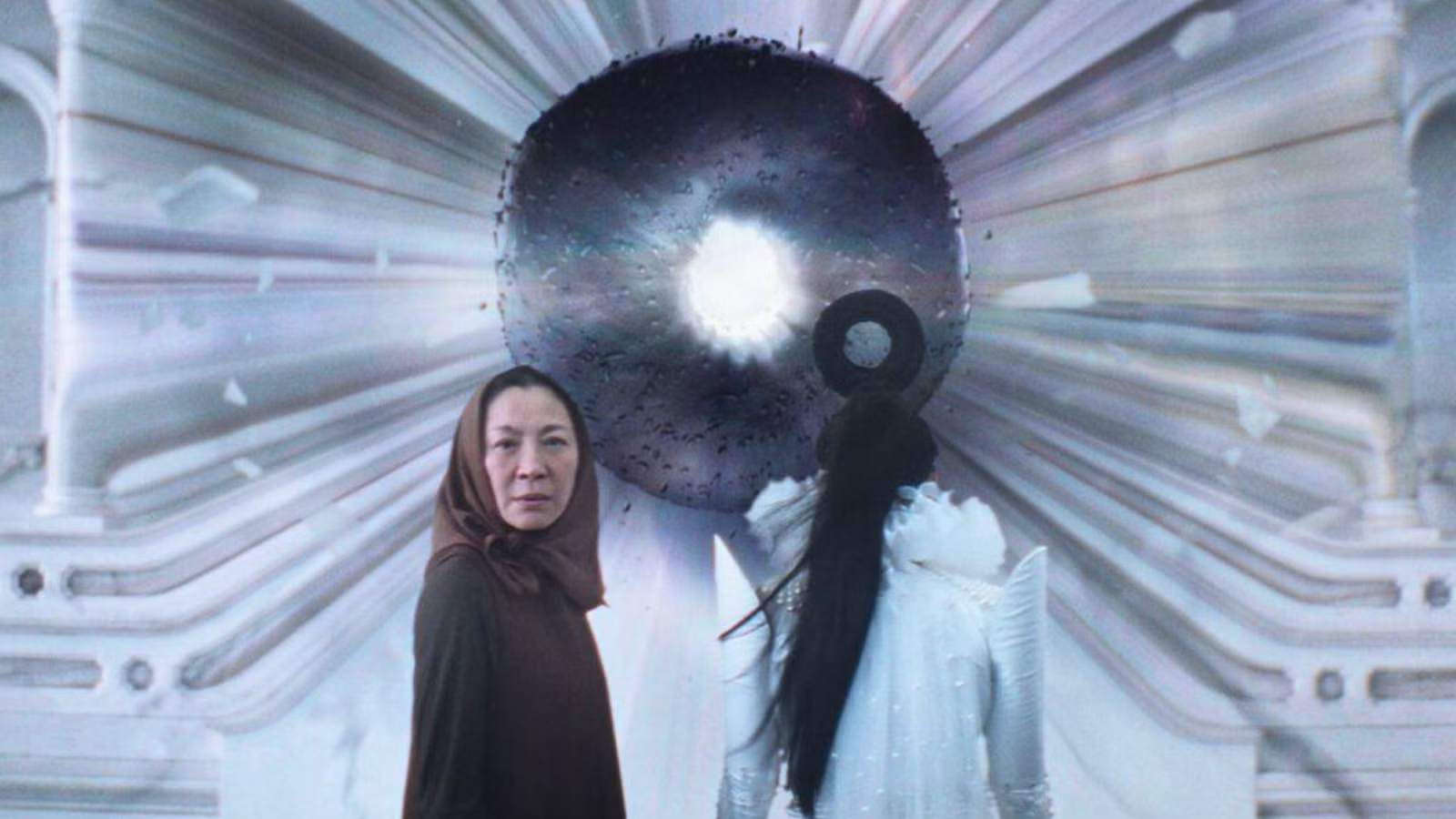
The multiverse used to feel limitless. There was seemingly infinite magic waiting to be mined from the far-out concept of infinite branching, parallel realities that could be used by storytellers to reinvent beloved narratives, give aging heroes one last curtain call after years away, or simply push visual effects into exciting new territory. The multiverse felt boundless — up until Hollywood abused it so heavily that infinite possibilities somehow became predictable.
Despite this, Marvel is still betting hundreds of millions of dollars and staking the future of its cinematic universe on this very concept. Avengers: Doomsday and Avengers: Secret Wars are poised to close the book on the franchise’s multiverse saga, but as anticipation builds, I can’t help thinking one Oscar-winning indie from 2022 already perfected the idea on a budget of roughly $20 million.

Everything Everywhere All at Once, which makes the jump from HBO Max to Tubi at the end of June, succeeds where most multiverse movies fail for one simple reason: the multiverse is never the point. Directors Daniel Kwan and Daniel Scheinert (collectively known as “The Daniels”) use this vast array of infinite realities to explore a single family’s trauma in clever ways. For The Daniels, the multiverse wasn’t a gimmick, but a gateway to real-world, human feelings like regret, grief, and nihilism.
“I don’t care about multiverse movies,” Kwan said in an interview with Fast Company. “Once the multiverse is introduced, nothing matters — there is no choice, and a character’s nothing without his choices.”
When struggling laundromat owner Evelyn Wang (Michelle Yeoh) discovers she can access the memories and abilities of alternate versions of herself, she’s thrust into a multiversal conflict that could determine the fate of every reality. But while this may sound like the setup to the latest superhero blockbuster, Everything Everywhere All at Once pivots in a million unexpected directions to tell the weirdest and most personal story the multiverse genre has ever seen.
It’s the kind of story Marvel rarely allows itself to tell because its stakes are ultimately personal rather than cosmic. In Everything Everywhere All at Once, every bizarre reality — from hot dog fingers to a universe where two sentient rocks silently overlook a canyon — exists because it reveals something interesting about its characters. Even the movie’s most ridiculous jokes reinforce the emotional core of the film. The absurdity isn’t there to distract from the story; it is the story.

The contrast in directorial vision is staggering. Marvel treats the multiverse as an intellectual property sandbox primarily used to cameo-bait audiences and tease the next decade of content. Every universe feels like another franchise waiting to be explored, constructed using massive CGI pipelines and yielding generic green-screen voids. Too often, those worlds exist to advertise the next crossover, rather than deepen the one we’re already watching, making the spectacle grow larger while never truly amplifying the emotional stakes.
The Daniels, on the other hand, knew just how to make a film look spectacular no matter the budget. Friends since they met as film students at Emerson College, the pair spent roughly 15 years creating low-budget projects together, which made them perfectly suited for something as bold as Everything Everywhere All at Once. It’s why, when The Daniels were told by most producers the movie would require a budget of around $50-$60 million, they leaned heavily on practical, DIY filmmaking hacks to make it all work for much less. (The actual budget came in under $25 million.)
Despite those constraints (or more likely because of them), Everything Everywhere is a deeply moving experience that hits you right in your core because the worlds occupied within the film feel truly lived-in, not fantastical. That tactility started with production designer Jason Kisvarday, who anchored the chaos of the multiverse in the ordinary. “Mundanity was absolutely the point in all these sets,” Kisvarday said in an interview with STIRworld. Rather than building clean, idealized sets or digital arenas, Kisvarday’s team used a massive, disused office building as a “big Swiss Army knife location,” converting a former cafeteria into the Wangs’ cluttered apartment. Even the movie’s laundromat was a real Los Angeles location the team had to actively “scuzz up” over a few days to make it look properly lived-in.

In hindsight, the film almost feels like a spiritual precursor to A24’s Backrooms, finding uncanny beauty in fluorescent-lit offices, endless cubicles, and anonymous government buildings instead of relying on sprawling CGI worlds. Cinematographer Larkin Seiple summed up the production best when he described it to Filmmaker Magazine as “a messy but fun way to make something very stupid but very beautiful.” That controlled silliness is exactly what gives Everything Everywhere All at Once its soul.
That’s also what separates the film from Marvel’s increasingly mechanical approach to the multiverse. The Daniels never viewed infinite realities as an excuse to make the universe bigger. Instead, they used them to make one family’s problems feel impossibly intimate. Every absurd world ultimately circles back to Evelyn’s choice between despair and compassion, embodied in the film’s unforgettable “Everything Bagel,” a nihilistic black hole that promises nothing matters because everything exists somewhere else.
That’s the dilemma Marvel has never quite solved. If every timeline is expendable, why should audiences care about any of them? Everything Everywhere All at Once answers that question with remarkable simplicity. Infinite possibilities don’t diminish our choices, but allow the ones we do make to matter even more. That’s why, years later, the Daniels’ $25-million multiverse flick still feels more meaningful than any CGI universe Marvel has built since.