dailynewsnblog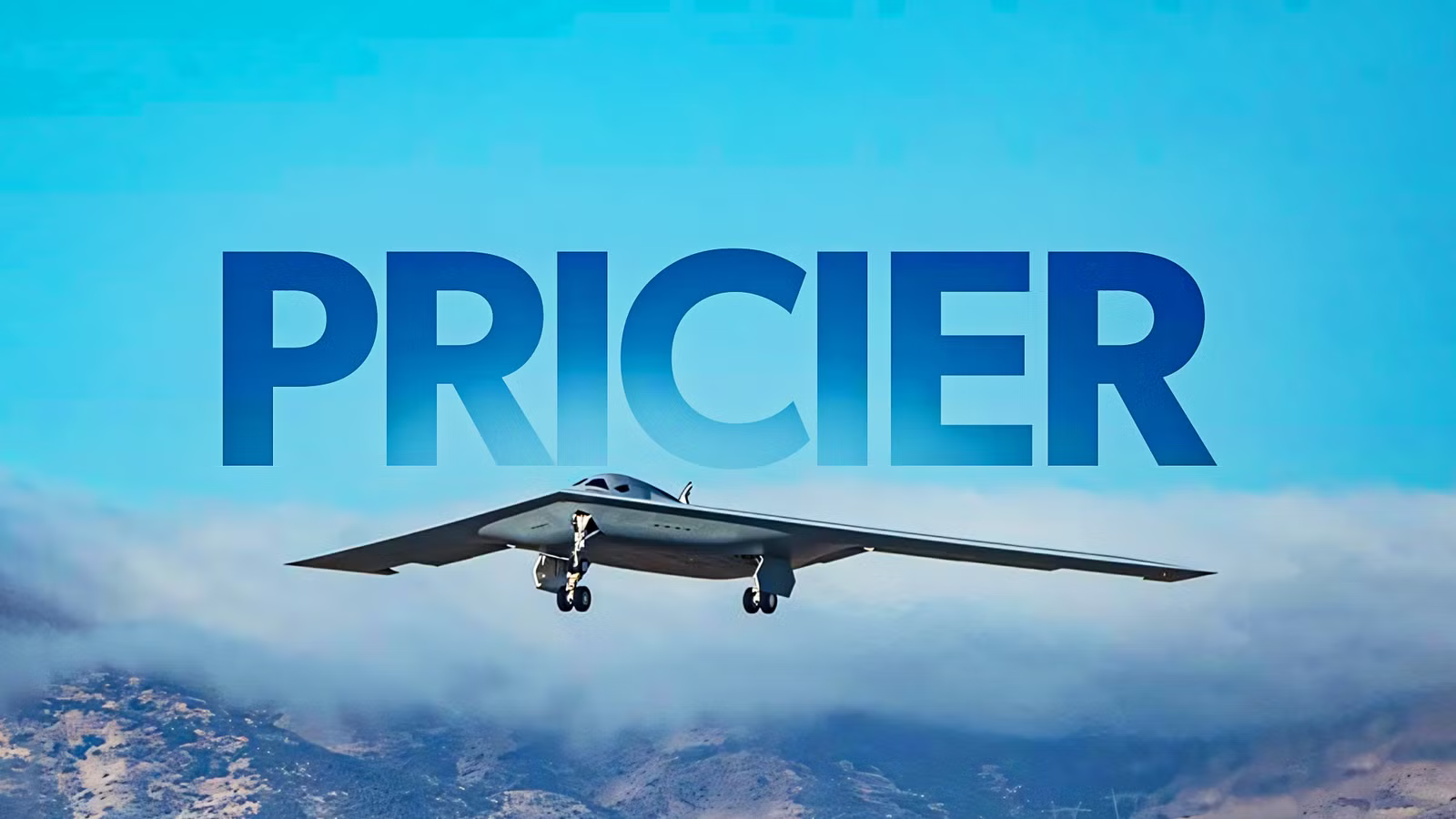
The US Air Force (USAF) is taking delivery of its first sixth-generation stealth bomber, the Northrop Grumman B-21 Raider. In addition to being stealthier, more rugged, and packed with more technology than its predecessor, the B-2 Spirit, the B-21s are also supposed to be much cheaper per flight hour. The Raider is slated to cost $65,000 per hour, half the price of its predecessor.
If the program hits that target, the B-21 would still cost more than twice as much to fly as the biggest commercial passenger jets. The comparison sounds almost unfair, a penetrating nuclear-capable bomber against a scheduled cargo hauler. Yet that is the number the Air Force itself chose to judge it against. That price tag is crucial to how the Next Gen stealth bomber will usher in a new era for the USAF in terms of autonomous air warfare and agile combat employment.
The B-21 will never be economical enough to replace a Boeing 787 or Airbus A380 on hub-to-hub hops. Still, its price performance will be a major boost to fleet readiness for the Air Force Global Strike Command.
What A Jumbo Jet Actually Costs To Fly

A typical air carrier operating a Boeing 747-400 or 747-8i is estimated to spend between $20,000 and $30,000 per block hour. That figure covers fuel, crew, maintenance reserves, insurance, and airport charges from gate departure to gate arrival. Charter and VIP missions push the number closer to $40,000 an hour since those flights have to recover fixed costs over far fewer hours of utilization.
Boeing’s ‘Queen of the Sky’ is, by commercial aviation standards, an expensive aircraft to operate. Just having four engines is a luxury in today’s airline industry. The large airframe is also supported by a shrinking pool of specialized 747 expertise, which pushes costs upward relative to twin-engine widebodies. Yet that number is also the baseline the Air Force’s own bomber cost figures dwarf.
What could make it cost that much more to fly than an aircraft built to move hundreds of passengers or a full main-deck of freight across an ocean? The answer is deeper than simply weapon systems, radar-absorbent paint, and high performance. Much of the cost that makes the B-2 Spirit astronomically expensive was embedded before it even left a production line. Similarly, while the B-21 has a more palatable price tag, the enormous investment in its development influences its flight-hour cost.

The B-2 Spirit costs somewhere between $130,000 and $200,000 per flight hour. That is five to eight times what an airline pays to fly a 747, and it is not a fuel problem. It is famously the most expensive military aircraft in history, and one of the most expensive defense industrial projects of all time. The staggering $2 billion flyaway cost per airframe has ensured the B-2 goes down in history as much for its ‘exquisite’ price as for its groundbreaking technology.
The source of the sky-high bill for the B-2 is not necessarily the materials and technologies in the plane itself, but inefficient defense contracting. The B-2 is one of only 21 airframes ever built, a production run so small that the Air Force never achieved the economies of scale that ordinarily bring per-unit and per-hour costs down as a fleet matures. The total fleet size was cut from over 130 to fewer than two dozen because of poor timing.
A low-observable design conceived in the 1980s, the jet was finally getting off the drawing board just as the Soviet Union was falling apart. The ultimate Cold War air warrior was nearly canceled, with not a single plane built. Once they were delivered, in the tiny numbers allowed, these jets arrived before the Air Force learned what stealth coatings actually cost to keep flying. The B-21 Raider program aims to address these issues through both engineering practices and production management planning.
The Anatomy Of A Maintenance-Hour Problem

A 1997 Government Accountability Office review of B-2 operational testing found that repairing low-observable materials accounted for 39% of the roughly 80 maintenance man-hours the aircraft demanded for every flight hour. Its radar-absorbent material is sensitive to moisture, ultraviolet exposure, and temperature swings, and even minor damage like a scratch, tape peeling at a seam, or a bird strike can measurably change the aircraft’s radar signature.
That fragility famously caused the only B-2 ever destroyed in a mishap. One B-2 crashed on takeoff at Andersen Air Force Base in Guam after being parked in monsoon rains overnight. That is also why the Air Force built the B-2’s entire operating concept around a single home station, Whiteman Air Force Base (SZL) in Missouri. It is the only facility with specialized climate-controlled hangars engineered to hold the precise temperature and humidity tolerances the coatings require.
That maintenance burden is precisely why the B-2 is reserved for what analysts covering the program call “silver bullet” missions rather than routine deterrence patrols. An aircraft that spends the overwhelming majority of its life in a hangar waiting for adhesive to cure is not a credible day-to-day presence, however lethal it is when it does take off. The B-21 explicitly aims to change that strategic and tactical trap the Air Force’s stealthiest bomber has been stuck in for decades.
Building A Bomber That Fights Its Own Coating Less

Northrop Grumman’s engineering solution to reduce the daily care burden centers on how it applies the radar-absorbent material in the first place. Rather than a hand-applied coating layered onto a finished airframe, the B-21’s low-observable material is integrated directly into the composite structure during manufacture. Northrop uses automated fiber-placement systems that lay carbon fiber in precise, seamless patterns.
That eliminates the fasteners, rivets, and tape seams that gave the B-2’s coating so many points of failure. Northrop states that the B-21’s coatings are designed for standard airfield service and to sustain multiple sorties per day. The Air Force is also pairing each aircraft with a digital twin, a live model of the physical airframe’s condition that lets maintenance crews track component wear and anticipate failures before they ground a jet.
Meanwhile, the Air Force has only just started building dedicated facilities for the B-21 at Ellsworth Air Force Base (RCA), Whiteman Air Force Base (SZL), and Dyess Air Force Base (DYS). The USAF claims those facilities are markedly cheaper to build and operate than the B-2’s while also reducing downtime in the future fleet’s repair and overhaul cycles. Still, how do those changes actually translate into a lower number the Air Force can put in writing?
The Number The Air Force Is Targeting

At least on paper, the Air Force has set a sustainment target of roughly $65,000 per flight hour. That figure has been repeated alongside broader sustainment goals. The USAF seeks to bring down annual costs per tail from $41 million to $25 million. At the same time, it is targeting a mission-capable rate above 80%, compared with the B-2’s roughly 60%. Unusually for a major Pentagon aircraft program, the B-21 has so far held up well to the cost and schedule expectations set from the outset.
That fact suggests a strong chance the B-21 will deliver, unlike some other problematic programs in recent Air Force history, like the Lockheed Martin F-35 Lightning II and Boeing KC-46 Pegasus. The standout track record lends credibility to the operating-cost target, and the aircraft’s performance in testing has inspired strong confidence among Department of Defense leaders.
The Air Force’s own top brass has been advocating larger numbers beyond the 100 planned B-21 fleet. US Navy Admiral Richard Correll, commander of US Strategic Command, has also championed the Raider, asking lawmakers to approve a 145-aircraft fleet. So far, the Pentagon has received approval for a 25% budget increase that will help Northrop ramp up production capacity faster. The final number of aircraft that will roll out of Plant 42 in Palmdale, California, remains undecided.
What The Comparison Actually Shows

Circling back to the USAF’s target of narrowing the cost gap with commercial aviation, the $65,000 target is still a far cry from economic parity. That is true even when comparing it against one of the most expensive jetliners, a 747, and the gap only widens with more modern airlines. Simply, that is because the B-21 is built not only to execute nuclear strikes and the most advanced integrated air defenses in the world, but to do it completely undetected while also serving as a reconnaissance platform and mothership for advanced drones.
That incredibly sophisticated and uncompromising mission set drives a price that no amount of manufacturing efficiency can wrangle down to the level of an ordinary passenger jet. The first operational Raiders are scheduled to reach Ellsworth AFB in 2027. Only once the fleet begins accumulating real flight hours does the Air Force’s $65,000 target stop being an engineering estimate and start becoming a number the service must validate.