dailynewsnblog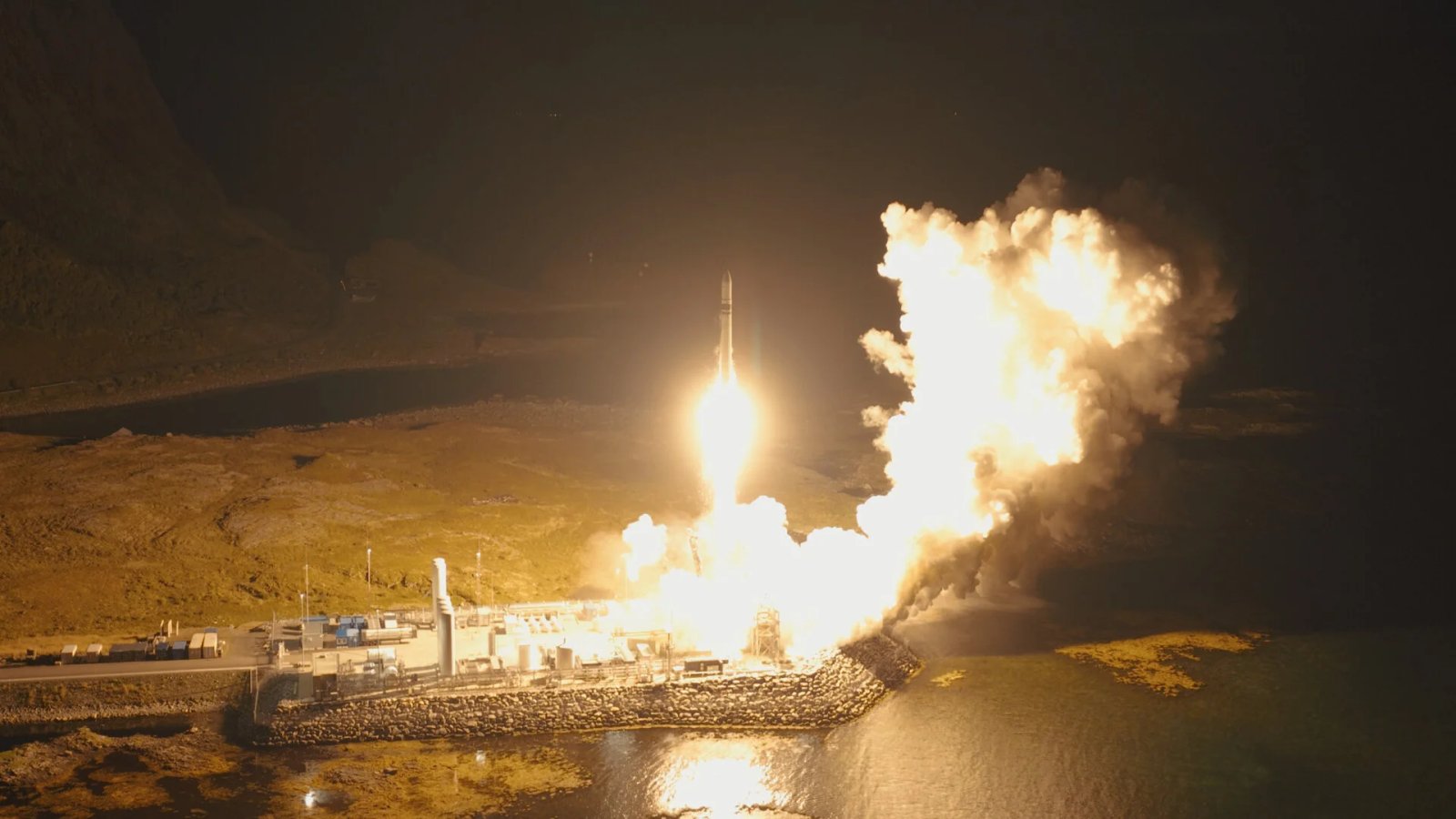
Europe has long had to choose between state-backed rocket maker Arianespace and a handful of foreign launch providers to get its satellites into space. Now, there’s a new option. Last weekend, German rocket startup Isar Aerospace became the first private company to reach orbit from the continent.
Amid increasing global tensions, policymakers around the world have become more focused on developing sovereign launch capabilities, and in Europe, reliance on foreign players like SpaceX has raised significant concerns. Earlier this year, the European Space Agency launched a major new funding program, the European Launcher Challenge, for launch startups to help plug the gaps.
One of the program’s awardees, Isar Aerospace, has already made a mark, after its rocket lifted off from Andøya Spaceport in Norway on Saturday. This was the vehicle’s second attempt. Its March 2025 debut ended when the rocket lost control and fell into the sea roughly 30 seconds after liftoff. This time, Isar’s launch vehicle reached orbit and successfully released its payload.
“Today, Isar Aerospace opened space from continental Europe,” CEO Daniel Metzler said in a company press release. “Launch continues to be the largest bottleneck for the global space industry and from today on, there is a true alternative for commercial and institutional customers.”
Standing 28 meters tall, the two-stage Spectrum rocket is designed to carry up to 1,000 kilograms to low Earth orbit, more than three times the capacity of the Electron launch vehicle produced by leading competitor Rocket Lab. Spectrum is smaller than SpaceX’s Falcon 9 rocket but more powerful than the company’s inaugural Falcon 1. For this mission, the vehicle carried five commercial and educational CubeSats plus a technology experiment, selected through a competition run by the German Aerospace Center.
“All launches are special, but what Isar Aerospace achieved today is historic: the first European company to reach orbit with their own launch vehicle,” Géraldine Naja, the European Space Agency’s (ESA) director of space transportation said in an ESA press release. “A huge congratulation to the teams involved.”
The company says it already has five more Spectrum vehicles in production and is nearing completion of a 40,000-square-meter factory near Munich that should eventually churn out up to 40 launch vehicles a year. It is also constructing a launch complex in Nova Scotia, Canada, which will enable it to reach orbits critical for Earth observation and communications satellites.
Isar’s chief commercial officer, Stella Guillen, told CNBC the company already has deals worth roughly €10 billion ($11.6 billion) in the pipeline, though it didn’t clarify what proportion represented firm contracts. “The demand is so big,” Guillen said, adding that the launch industry is “desperate” for more capacity.
Isar has raised roughly €870 million ($1 billion) to date. It has also received a €198 million ($230 million) contract from ESA’s European Launcher Challenge, which stipulated that it must achieve an orbital launch by 2027, a milestone it has now cleared. The challenge has also funded PLD Space and Rocket Factory Augsburg, so it may not be long before there are other private European launch providers hot on Isar’s heels.
And it’s not just homegrown companies in pursuit. The global private launch market has become increasingly competitive in recent years. A wave of new rockets from outside Europe are also targeting debut flights in the next year, including Rocket Lab’s Neutron, Relativity Space’s Terran R, Stoke Space’s Nova, Astra’s Rocket 4, and Firefly Aerospace and Northrop Grumman’s Eclipse.
Isar’s European pedigree will make it easier to command a large chunk of the continent’s launch requirements, but the company still needs to quickly convert this early win into a regular and reliable launch service. If it can manage that, Europe may finally have the homegrown launch capacity it has long sought.