dailynewsnblog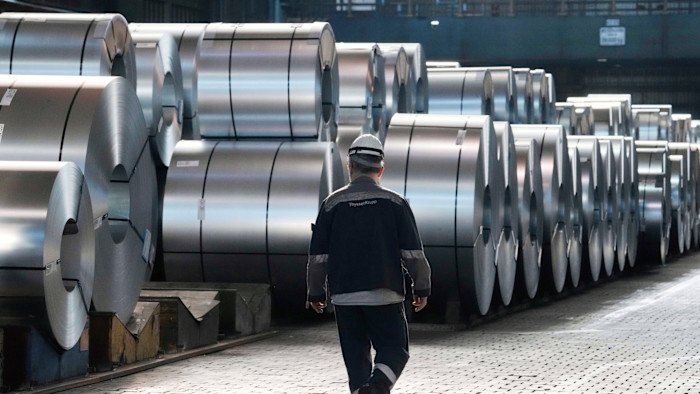
This article is an on-site version of our Europe Express newsletter. Premium subscribers can sign up here to get the newsletter delivered every weekday and fortnightly on Saturday morning. Standard subscribers can upgrade to Premium here, or explore all FT newsletters
Good morning. Today, my colleagues preview a meeting of EU industry ministers who are set to clash over differing views on how to boost Europe’s economy. And our industry correspondent hears from the steel industry why it should benefit from upcoming “Buy European” rules.
Competing views
The debate on the EU’s competitiveness is heating up as different countries are adding their flavour to the sauce ahead of today’s meeting of industry ministers, write Barbara Moens and Alice Hancock.
Context: Boosting the EU’s languishing economy is a key priority for Brussels, but the views on how to do that diverge. France is pushing to protect Europe’s industry via “Buy European” clauses, while more economically liberal countries would rather deepen the existing single market.
Another element of the debate is industrial subsidies and who should benefit from them.
Sweden, together with nine other countries including the Netherlands, France and Germany, is leading the charge to shape a proposed €409bn “European Competitiveness Fund”, a key element of the next EU budget starting in 2028.
In a document seen by the FT, the countries call for strict criteria for disbursing the funds in order to “deliver European added value and address market failures, while emphasising the promotion of innovation and productivity growth”.
Smaller and poorer EU countries, however, don’t want to attach too many strings to the funding and keep it general. They fear they will otherwise lose out to wealthier countries that already have cutting-edge research and start-ups.
In the document, the 10 countries push back against those arguments, saying that the goal of the fund is to ensure the EU remains a global player, while other policies and cohesion funds are there to strengthen the “Union’s overall competitiveness”.
Ministers will also discuss a separate note from Finland, Estonia, Ireland, Latvia, Slovenia, Romania and the Czech Republic on a “more effective competition policy”. In it, they oppose the broad loosening of merger rules to scale up European companies, something the Commission has envisaged.
“Size in itself should not be the primary objective,” the countries write.
Finnish economy minister Sakari Puisto told the FT that his country will highlight “the importance of an independent and effective EU competition policy” in today’s meeting. “Strengthening Europe’s competitiveness is more important than ever,” he added.
EU leaders are set to discuss the bloc’s economic competitiveness and how to improve it at their next meeting in March.
Chart du jour: Numbers game

Smaller opposition parties in Hungary are stepping aside to offer Prime Minister Viktor Orbán’s rival Péter Magyar a better chance to unseat him in April’s elections.
Seeking protection
Steel has been left out of the European Commission’s planned “Made in Europe” rules, prompting a furious response from its industry body which called the move “completely ridiculous”, writes Alice Hancock.
Context: Brussels is set to present a law to shore up its heavy industries, forcing certain public subsidies to go towards products made in Europe. The plans have divided both member states and sectors, with some warning against a protectionist turn, and have been delayed several times.
For primary producers such as the steel and aluminium industries, which face tough global competition from much cheaper rivals, forcing some funds to be spent in Europe would be a boost.
The latest draft of the law includes “Made in Europe” thresholds for concrete, aluminium and plastic glazing, but leaves out steel unless it is “low carbon”.
Axel Eggert, head of the steel industry body Eurofer, told the FT that this was “naive”. “Many other [countries] are heavily promoting or favouring their own industry in public procurement and public funding schemes. They have quotas.”
He said that if the Commission believed that Europe’s steel industry had received enough support, including through new trade measures coming in July, this was “completely ridiculous”.
Eggert also said that other industries needed to wake up to issues that the steel industry had been campaigning on for 15 years, including trade protection.
“They were one step behind because they were still profiting from their outsourced production in China and elsewhere. It’s the same as automotive, [they] did not yet wake up,” Eggert said.
The Commission declined to comment.
What to watch today
European Commission president Ursula von der Leyen receives Romanian Prime Minister Ilie Bolojan.
EU-Angola ministerial meeting.
EU ministers for internal market and industry meet.
Now read these
Recommended newsletters for you
Free Lunch — Your guide to the global economic policy debate. Sign up here
The AI Shift — John Burn-Murdoch and Sarah O’Connor dive into how AI is transforming the world of work. Sign up here
Are you enjoying Europe Express? Sign up here to have it delivered straight to your inbox every workday at 7am CET and on Saturdays at noon CET. Do tell us what you think, we love to hear from you: europe.express@ft.com. Keep up with the latest European stories @FT Europe