dailynewsnblog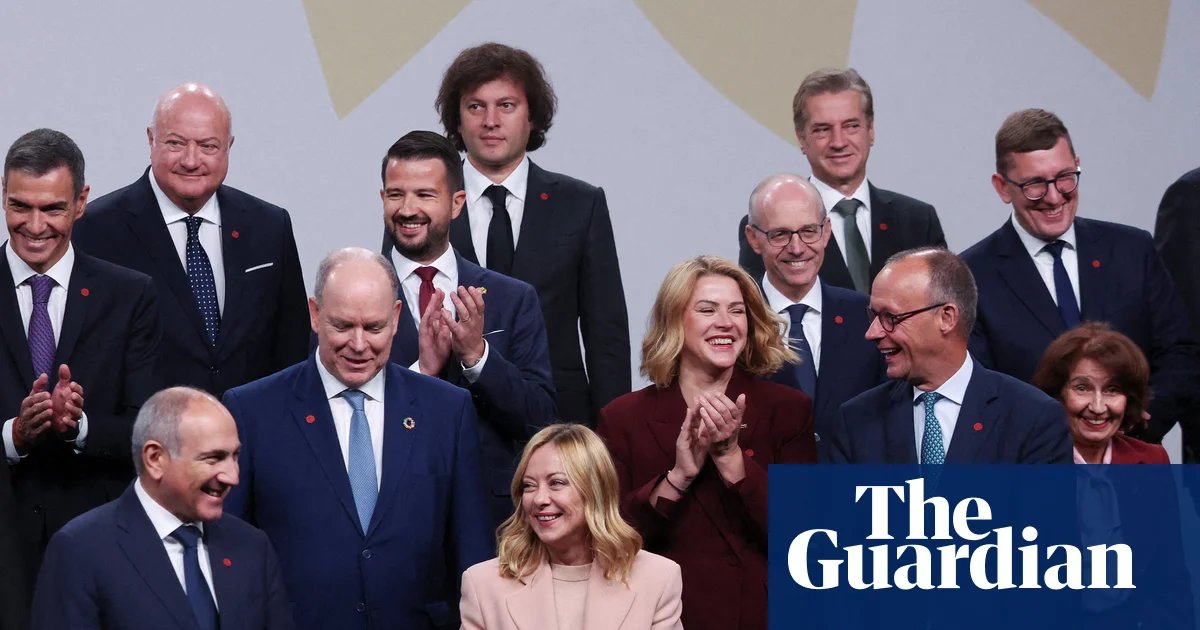
The EU is sending a team of experts specialised in combating Russian propaganda and interference to Armenia, as it increases its support to the former Soviet republic in a tense political period.
In a highly symbolic sequence of events, EU leaders will hold their first summit with Armenia on Tuesday, after a pan-European gathering of about 45 leaders at the European Political Community summit in Yerevan.
The EU has been deepening links with Armenia as Russian influence has waned since the full-scale invasion of Ukraine that is seen as having diverted Moscow’s attention other countries it regards as its “near abroad”.
On Tuesday, Armenia’s prime minister, Nikol Pashinyan, and the EU leaders, Ursula von der Leyen and António Costa, are expected to formally welcome the concept of an EU mission to counter foreign interference in Armenia at the summit in Yerevan, where they will also discuss energy, transport and economic support.
The EU is setting up a team of 20-30 civilian experts for a two-year mission based in Armenia aimed at improving the response to Russian cyber-attacks, information manipulation and interference, as well as countering illicit financial flows. The mission, which could be increased in headcount and duration, is expected to start work after parliamentary elections on 7 June.
Separately, the EU’s foreign service has announced “a hybrid rapid-response team” with the short-term goal of battling foreign interference before those elections, which are seen as pivotal in determining whether Armenia stays on a broadly pro-western path.
The EU foreign policy chief, Kaja Kallas, said last month: “Armenians are facing massive disinformation campaigns and cyber-attacks. When Armenians go to the polls in June, they alone should choose their country’s future.”
A senior EU official described the EU-Armenia summit as a “critical milestone in our relationship” and “a symbol of Armenia, gradually, slowly, geographically reorienting towards the west”. The EU is attempting to improve transport links and the green transition in Armenia and has embarked on talks that could eventually allow Armenians visa-free travel to the bloc for short stays.
Armenia was long Russia’s staunchest ally in the Caucasus, but disillusionment set in after Moscow failed to send military aid during the 2020 and 2023 Nagorno-Karabakh wars. Armenia’s 2018 velvet revolution, which emphasised democracy and the rule of law, also set the former Soviet republic on a different path to Russia, which slid deeper into authoritarianism.
Even before signing a peace agreement with Azerbaijan, Armenia had been seeking to move closer to the EU. Speaking to the European parliament in March, Pashinyan signalled an intention to adopt EU standards, while Armenia’s parliament passed a law last year declaring its intention to apply for EU membership.
But Armenia is under heavy pressure from Russia, still a significant trading and security partner, which has a base in the city of Gyumri. Moscow has imposed restrictions on the sale of imported Armenian mineral water and cognac, which recalls similar attempts to use economic leverage over its neighbours. Vladimir Putin has also warned Pashinyan that cheap Russian gas supplies are at stake if Armenia pursues deeper integration with Europe.
MEPs last week urged the EU to go beyond the symbolism of events in Armenia. In a non-binding resolution, the European parliament called for a robust international election observation mission, cybersecurity for electoral infrastructure and strong safeguards against vote buying.
The French centrist MEP Nathalie Loiseau, who was involved in drafting the text, said: “Faced with all those seeking to pressure Armenian voters, the country is looking to the European Union to help it hold free and fair elections.”