dailynewsnblog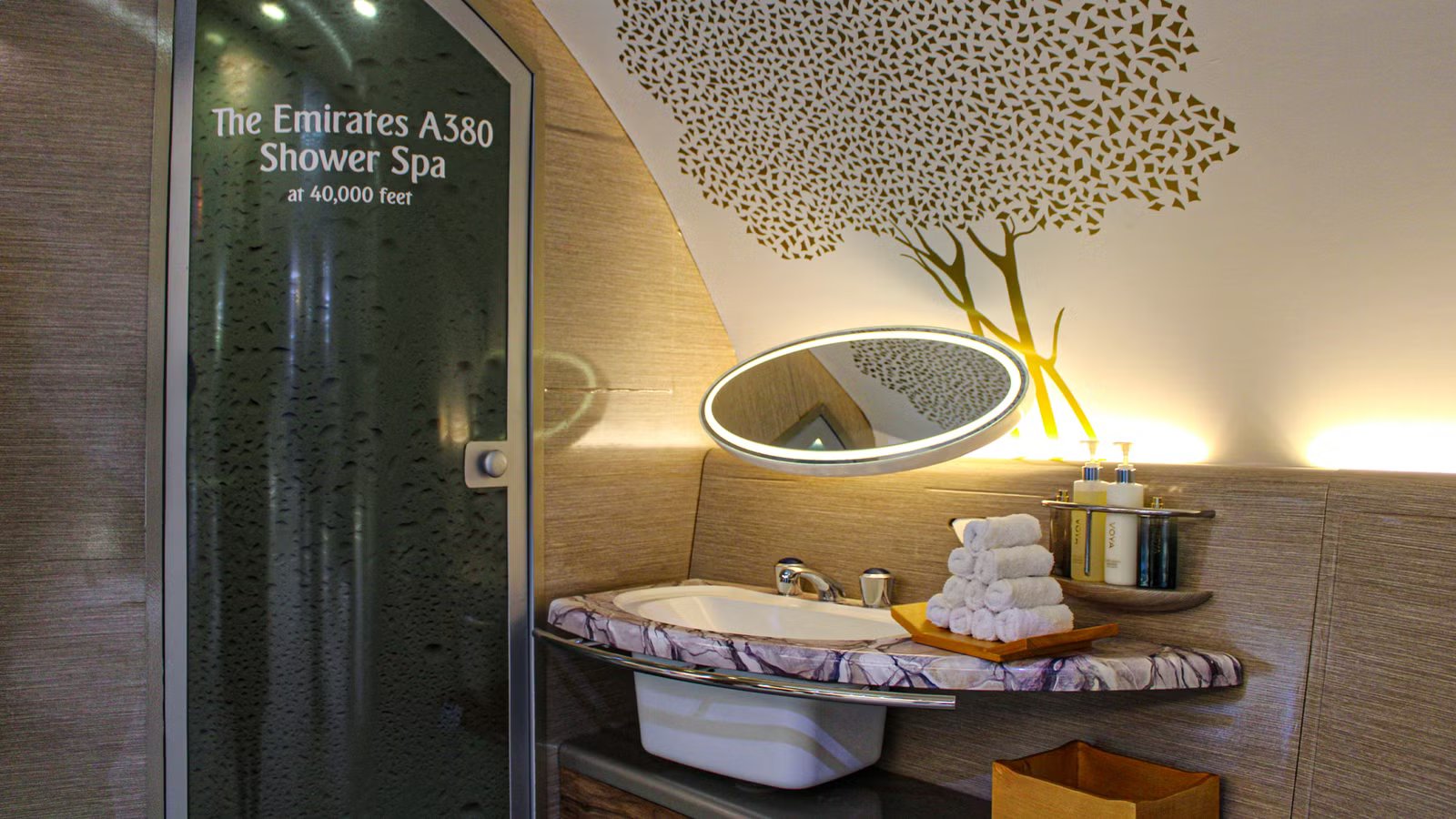
 Emirates always seeks to push the definition of luxury in aviation, with no better example than the on-board shower spa, but the underlying reality of how this can even exist is a mechanical labyrinth of fluid dynamics and weight management. Plumbing individual bathrooms into a pressurized fuselage that currently rations five minutes of water per traveler is a monumental task that goes beyond simple aesthetics. This guide explores the engineering obstacles that must be cleared to turn Sir Tim Clark’s vision into a certified reality, mapping the technical shift from shared amenities to total airborne seclusion.
The announcement at the 2026 CAPA Airline Leader Summit in Berlin has ignited a new front in the premium cabin wars. While the Airbus A380 currently features two shared shower spas, the push for total privacy in first class is forcing engineers to rethink how they distribute thousands of pounds of water across a long-range airframe. Challenges have already been faced with the existing shower spa, so is expanding upon this really something that can be executed with ease?
Filling In Dead Space

Current widebody aircraft are designed around centralized plumbing stacks to minimize weight and complexity. On the Airbus A380, the existing showers are strategically located at the very front of the upper deck, taking advantage of the dead space created by the extreme curvature of the fuselage. Moving this infrastructure into ten or 12 individual suites requires a radical redesign of the aircraft’s vacuum waste and potable water lines, which are typically buried deep within the floor joists.
Potable water weighs approximately 8.34 lbs (3.78 kg) per gallon, and the current A380 system only carries enough for 14 passengers to share two showers under strict time limits. To offer a private experience for every suite, an aircraft would likely need to increase its water capacity by at least 30%, which translates to hundreds of additional pounds of fuel burn over a 15-hour flight. The resulting weight penalty is a significant concern for airlines trying to balance luxury with the strict carbon emission targets of 2026.
Beyond the weight, engineers must address drainage in a pressurized cabin environment. Modern jetliners use a high-velocity vacuum system to pull waste into a central tank, and extending these suction lines to individual suites in the center of the cabin poses a significant risk for leaks. Any failure in a wet zone located directly above the sensitive avionics on the lower deck could cause a catastrophic electrical failure, making the certification process for these private rooms incredibly rigorous.
The Heavy Jet Getting Heavier

Carrying a private bathroom for each passenger is a weight-distribution nightmare. Every extra pound (0.45 kg) of equipment and water added to a long-range jet increases the fuel burn for the entire journey. For a carrier like Emirates, which operates long flights between Dubai and Los Angeles, for example, the cumulative weight of ten or 12 private bathrooms could significantly impact the aircraft’s range and payload capacity.
The current A380 setup relies on a shared pool of approximately 450 US gallons (1,700 liters) of potable water, and when scaled up to 14 private bathrooms, the aircraft would need an extremely advanced filtration and recycling system, further increasing weight. Recycling greywater for toilet flushing is common, but using it for a private shower requires a level of purification that is currently too heavy and bulky for commercial flight.
This weight penalty is particularly sensitive in 2026 as airlines transition toward sustainable aviation fuel, which often has a different energy density than traditional Jet A-1. Adding several tons of additional water and plumbing hardware forces a difficult conversation about how many passengers or cargo must be removed to keep the aircraft within its maximum takeoff weight (MTOW). Engineers are currently looking at ultra-lightweight composite piping and carbon-fiber shower basins to mitigate these gains, but the laws of physics remain a stubborn obstacle.
The Airline That Introduced Onboard Showers To Commercial Aviation
Discover the airline that revolutionized luxury travel with the introduction of onboard showers in commercial aviation.
What To Do WIth Defined Limits

The spatial geometry of the aircraft cabin dictates where these private bathrooms can physically exist. The Airbus A380 upper-deck dead zone at the very front is where the fuselage curves inward, making it unsuitable for seating but perfect for a large, shared bathroom. Moving that same bathroom to the middle of the cabin, where the walls are more vertical and valuable, creates a massive barrier to the airline’s revenue-generating space.
On the Boeing 777, often referred to as the Game Changer, the 1-1-1 suite configuration already pushes the limits of cabin width. To add a full en-suite bathroom to each of these six suites, the airline would either have to widen the fuselage, an impossibility, or reduce the number of suites to four or five. This trade-off is why we have seen fully enclosed suites without showers on the 777 fleet, as the physics of a single-deck aircraft simply does not offer the bonus space found on the A380.
The engineering challenge is even more pronounced when considering floor loading limits. A private bathroom, when occupied by a passenger and active plumbing, creates a concentrated load on the floor panels that can exceed the original design specifications of the aircraft. To support ten or 12 individual wet rooms, the floor structure beneath the first class cabin would likely require significant reinforcement with titanium or advanced alloy beams, further adding to the dry weight of the airframe.
Challenging The Global Luxury Standard

Space is the most expensive commodity in commercial aviation, and the floor-to-ceiling suites on the Boeing 777 already consume a significant volume of the cabin. Adding a bathroom to each individual berth would require an additional 18 square feet (1.67 square meters) to 20 square feet (1.85 square meters) per passenger, a footprint that would likely force the airline to reduce its first class capacity from six seats to just four. No aircraft can really come close to the space the A380 provides, so the far more common and efficient twinjets will likely have to make do without a shower, even with these ambitious plans.
The engineering trade-off is the primary reason why airlines carefully calculate the yield of every inch of floor space. For Emirates, this project is the catalyst for a new tier of revenue that could offset the loss of multiple premium berths. Catering to ultra-high-net-worth individuals who demand total isolation, the airline can charge a premium that transcends standard first class pricing models, challenging the ‘residence’ branding that other airlines like  Etihad Airways are famous for.
Sir Tim Clark noted that the ambition is to make this a standard for every traveler in the top cabin, stating
“I’m working on en-suite bathrooms in first-class suites… I want everyone to hear that, so everyone rushes out the door to find out how they can get bathrooms in first-class suites.”
This ambition suggests that the carrier is willing to sacrifice raw seat count for the prestige of being the only airline to offer a private toilet and shower for every single high-tier traveler, something that is quite likely given the airline’s previous business decisions.
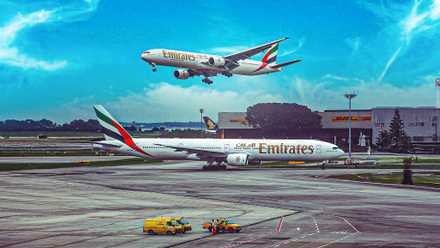
En-Suite: Emirates Eyes Private Bathrooms In First Class Suites
Emirates President Sir Tim Clark teases the idea of fully private bathrooms for first class suites, a game-changing move that would be unmatched.
Everyone Wants A Morning Shower

On a long-haul flight, the peak demand for hygiene typically occurs two hours before arrival, creating a massive spike in water and power consumption. If the system is not managed by sophisticated software, a sudden draw on the potable water tanks could cause a drop in pressure that affects the entire aircraft.
The current A380 software manages this by queuing sessions and strictly limiting the flow rate to five minutes per person. To prevent a drop in cabin pressure or a failure in the vacuum waste system, engineers must ensure the pressure differential remains constant even when multiple suction valves are open. If the system fails to maintain this equilibrium, the waste could theoretically back up into the suites, creating a maintenance and hygiene disaster that the world will find out about very quickly.
The solution may actually lie in smart plumbing that uses sensors to monitor tank levels and flow rates in real-time. If the system detects that the total potable water supply has dropped below a critical threshold, it could automatically reduce the water temperature or flow rate to ensure there is enough for the remaining passengers. This level of automation is necessary to manage a decentralized system that lacks the manual oversight provided by a dedicated shower attendant on today’s A380. Emirates has not indicated that this technology is under development, but it could be a useful small fix for potentially catastrophic uncertainty.
The Next Stage Of Privacy

Regulatory bodies are notoriously cautious about wet zones in an aircraft because of the risk of corrosive leaks or electrical shorts in the under-floor wiring. To clear these hurdles, every private bathroom would need to be encased in a secondary waterproof hull to ensure that even a major plumbing failure would not compromise the structural integrity or flight systems of the jet.
Clark’s announcement was more an announcement of intent rather than a grand unveiling, so the roadmap, as of now, is not yet drawn. We may see a phased rollout, perhaps starting with a hybrid suite that offers a private toilet but reserves the shower for a shared space, which could mitigate the weight of the water while still providing the level of privacy Clark envisions. For the engineering teams, the challenge remains to find a material that is light enough for flight but durable enough to withstand thousands of pressurization cycles without cracking or leaking.
As the project moves toward a potential prototype phase, the industry will be watching closely to see if Emirates can solve the weight-to-revenue ratio. If successful, it would set a new global benchmark that competitors would be forced to follow, potentially ushering in an era where the airborne bathroom is as private as the one in a five-star hotel.