dailynewsnblog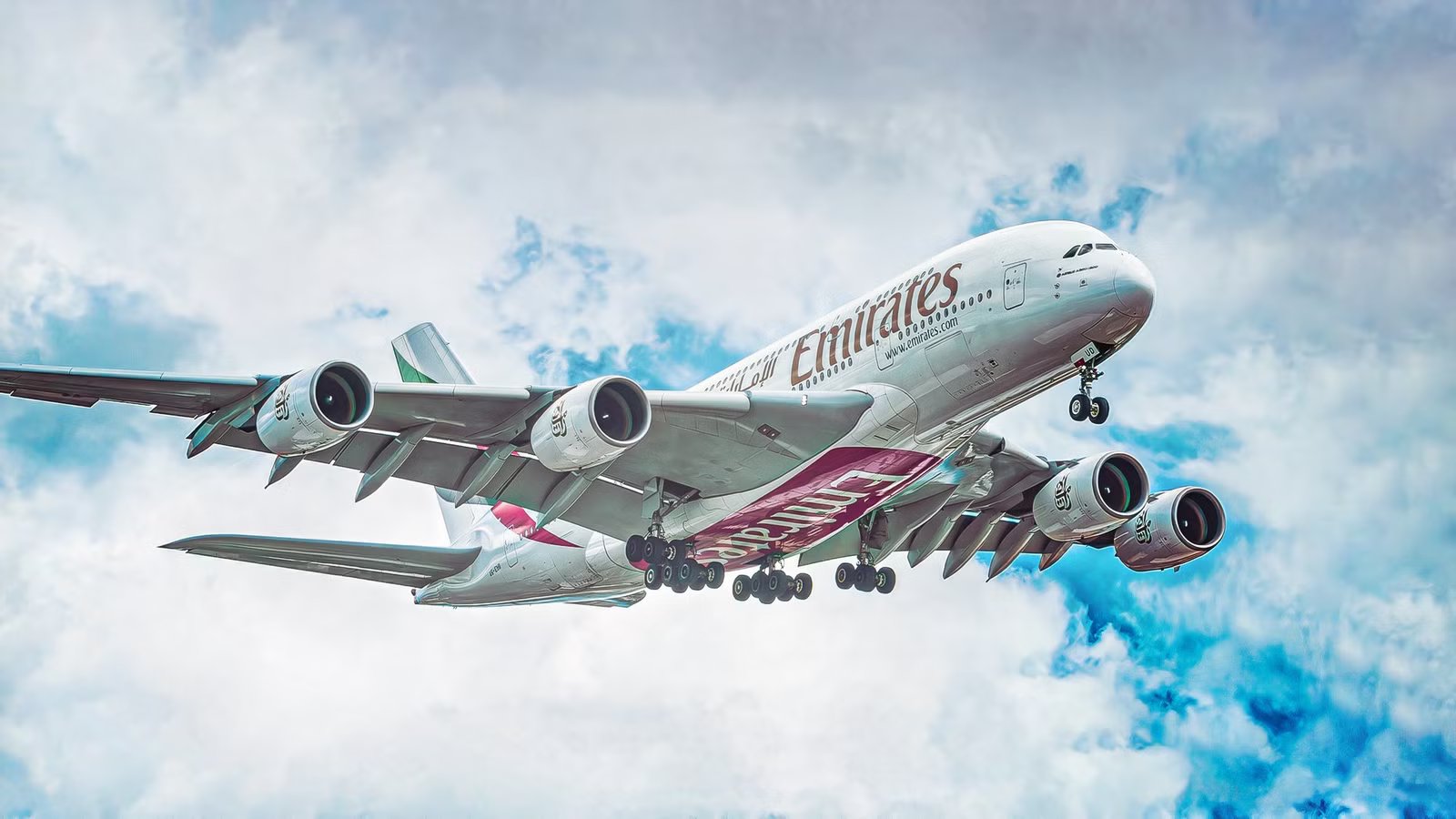
 Emirates has flown the Airbus A380 to the US since August 2008. Given the Gulf giant is overwhelmingly the world’s leading A380 operator, it is apt that it was the first commercial operator of the type in the country. Its initial superjumbo service was from Dubai to New York JFK, which still has three daily A380 flights today.
Since that peak summer month 17-and-a-half years ago, Emirates has ceased flying the A380 to four US airports. Regular flights on the type once existed to Boston and Dallas/Fort Worth. One-off service operated to both Chicago O’Hare and Orlando.
Emirates No Longer Uses The A380 To Boston

According to OAG data, the UAE carrier has flown to  Boston since March 2014. The first superjumbo service was in January 2017, which was to test the new infrastructure developed to handle the type. It was, therefore, the first time the Massachusetts airport had A380 service.
Funnily enough, Emirates was not the first operator to have regular double-decker flights there. British Airways was, in March 2017; it continues to fly the type to Boston. Emirates’ daily service on the A380 existed for a very short period. It initially operated from June to September 2019, covering the peak summer, and then from December 2019 to January 2020, to accommodate the higher demand around Christmas and the New Year. Then the pandemic happened.
According to the US Department of Transportation data for June to September 2019, 112,095 round-trip passengers were carried. Upgauging meant that traffic rose by 39% compared to the same months in 2018. But as capacity rose faster (+47%), the seat load factor fell to 89%. What isn’t known is how much the fares and yields were reduced to achieve this, including in the all-important premium cabins. Clearly, the airline was insufficiently happy with the performance, relative to where else it could fly the aircraft.
The long route remains part of Emirates’ network. It is served daily using the four-class, 328-seat 777-300ER, which is Emirates’ second-lowest-capacity configuration on the variant. As DOT data for the 12 months to October 2025 show just a 68% load factor (!), will the frequency be cut, especially in the off-season, or will the route be downgauged to the A350-900?
Emirates’ A380s Are No Longer Flown To Dallas/Fort Worth

Emirates has flown to  Dallas since February 2012. The A380 first appeared in October 2014, which was two months before Houston Intercontinental saw the type. But while the double-decker continues to be flown to Houston, its service to Dallas was short-lived. The daily service on the 489-seater only lasted until February 2016.
The fact that Houston continues to see the superjumbo while Dallas doesn’t must, to a certain degree, be about the total demand. But, probably more importantly, it’s about the nature of that demand.
Houston is far more likely to have higher fares and yields from stronger premium demand, probably related, in part, to the oil and broader energy industries. After all, booking data shows that Saudi Arabia was the third most-trafficked country, with Kuwait sixth. The equipment choice reflects the extent of the premium demand. In 2026, Houston’s A380 operation means 65,700 round-trip seats in first and business, against 35,032 for Dallas on the 777-300ER.

WestJet Cuts 11 US Routes In Major Network Shake-Up [Full List]
Find out all the routes that no longer exist, including some that won’t now have flights on any carrier.
Then There’s Chicago O’Hare & Orlando

The A380 between Dubai and Chicago and Orlando are particularly unusual, as they only had one round-trip service each. In Chicago’s case, it was on July 19, 2016, to test O’Hare’s infrastructure ahead of handling regular flights aboard this type. But Emirates has not used the type there since. In fact, only BA has ever flown the A380 there regularly, but no longer does so. Emirates continues to serve Chicago using the 777-300ER.
Then there’s Orlando. The Florida airport’s first and only A380 flight was on September 1, 2015. This one-off round-trip operation was simply to celebrate Emirates’ arrival in the Florida city. Since then, all flights have been on the Triple 7, with the 777-300ER currently deployed.