dailynewsnblog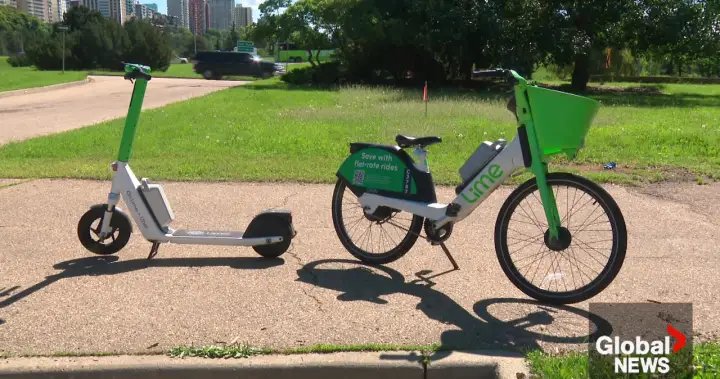
The city is taking a closer look at how and where e-scooters and e-bikes should operate in Edmonton.

Councillors heard Tuesday that safety and parking still remain a top concern for Edmontonians, so they’re looking at ways to address that.
Those concerns ring a bell for Kyrie Herman and her daughter, as they are part-time wheelchair users. The pair use a lot of shared paths and roadways in the city, but sometimes e-scooters block their way.
“We’ve run into a lot of situations where they’ve been parked on the sidewalk, and then they tip over, or even if they’re just like not tipped over, but parked the wrong way, then we can’t get our wheelchairs around them,” said Herman.
Herman and her daughter are able to get out of their wheelchairs and move them out of the way, but that’s not the case for everyone.
“There are some people that are by themselves, so they can’t get somebody to move it, or they’re not able to pick it up and move it or go around,” Herman said.
Herman is one of many who support changes to Edmonton’s shared micromobility program, covering e-bikes and e-scooters.
A new report from city staff says since the program was launched in 2019, use has nearly tripled to more than 1.4 million trips last year.
It also says that parking and ride behaviour remain among the biggest concerns for Edmontonians.

Get daily National news
Get daily Canada news delivered to your inbox so you’ll never miss the day’s top stories.
“I think this is the next natural evolution of that conversation, is how do we make sure that we’re best supporting folks who are, not only using micromobility, but the people who are moving about the districts where they are most popular,” said ward Métis councillor Ashley Salvador.
“We need to work to find ways that accommodate everyone, and that can be tricky in condensed zones and in condensed areas, so I think that’s where some of those intricacies come in, but at the end of the day we wanted people to provide options for everyone to safely get where they’re going.”

The city is considering permanent changes to where e-scooters and e-bikes can go, where they can park and how fast they can travel.
Staff say these tools give flexibility to respond to construction, festivals and other emerging issues without needing permanent infrastructure.
Vendors could also potentially include penalties for people who improperly park and incentives for those who follow the rules.
It’s first testing those options out in an expansion project in Mill Woods with designated parking zones. There are also slow zones and no-riding zones, where the devices automatically reduce their speed or shut down, especially around busy public spaces or special events.
That’s already been tested around Whyte Avenue and during the Edmonton Oilers’ 2025 playoff run.
But some councillors are concerned about too many restrictions.
“If you have to be parking two blocks away, I think that starts to take away from the benefit. So that’s important to me and figuring out how we implement that, so that it’s practical but also helps address the clutter that we see at times,” said ward O-day’min councillor Anne Stevenson.
No permanent changes were decided at committee Tuesday.
For Herman, she hopes whatever eventually changes, people follow suit. So shared paths can be accessible for people like her and her daughter.
“With everything, I think the more you do it, and the more we do it as a community, people will get used to it,” she said.

© 2026 Global News, a division of Corus Entertainment Inc.