dailynewsnblog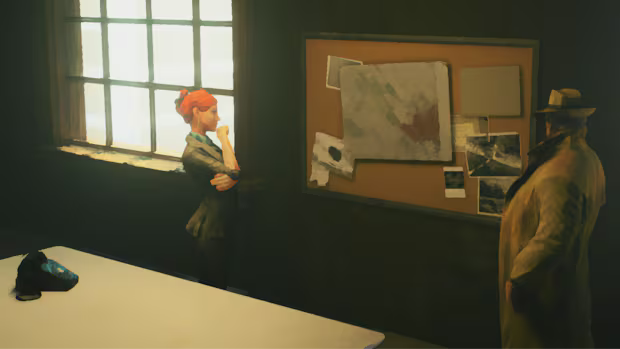
A new independent video game studio is the latest team to draw on previous experience in some of the world’s leading game companies to chart new courses in an increasingly fraught industry.
Studio Reset, based in Edmonton, is a three-person team whose members worked together at several places, including Bioware — makers of the popular Mass Effect and Dragon Age games.
Creative director Kaelin Lavallee left Bioware in 2015, working with a handful of other game companies before co-founding Studio Reset with Kris Schoneberg and Francis Lacuna earlier this year.
“It was just [about] exploring the creative and production side of game development for me,” Lavallee said.
Studio Reset fits a theme among its fellow creators of other recently announced or released independent Canadian games: they all have extensive experience working for larger studios.
There’s this summer’s Ambrosia Sky, whose Toronto-based Soft Rains studio includes veterans from Ubisoft and Bethesda. And there’s the upcoming “emails as turn-based combat” game Reply All, made by Toronto-based Peculiar Path whose founders have worked on series like Assassin’s Creed and Red Dead Redemption.
Small teams striking out on their own is never without risks in creative industries — particularly in video games, where they must compete against thousands of new releases every year. But as AAA-level studios become more risk averse chasing the next big hit, it could be the best way for developers to flex their creative muscles.
Mysteries in a ‘neon-noir’ Canadian setting
Studio Reset’s first game, The Eventide, will be a supernatural mystery game set in a “neon-noir” Canadian setting, according to a news release. It pays homage to classic TV series The X-Files as well as narrative-based puzzle games like Case of the Golden Idol.
Players will choose a pair of investigators from a pool of possible characters to examine a series of unsolved cases. Much like Mulder and Scully’s contrasting viewpoints in The X-Files, each investigator will have alternate interpretations of the cases, leaving the player to piece together the truth of the matter.
“Everybody sees the world differently. So having a cast of characters that each sees a mystery in a different light, and seeing their different perspectives and how they interpret clues and evidence — that was a really exciting opportunity for us to kind of explore that space,” Lavallee said.

The indie game gamble
Paul Fogolin, president of the Entertainment Software Association of Canada, which represents the video games industry in this country, says their most recent report from last year documented that out of the 821 games studios in Canada, 729 of them had 50 or fewer employees.
He said AAA and indie studios have a “symbiotic” relationship that together make for “a deeper and more resilient industry.”
“Large studios provide talent, investment, mentorship and a critical mass of expertise, while independent studios bring entrepreneurship, experimentation and new ideas to the ecosystem.”

For Philippe Morin, who co-founded Montreal-based Red Barrels in 2011 after over a decade at Ubisoft and Electronic Arts, going indie was about getting hands-on with the game-making process again.
“When you become more experienced, you end up spending a lot more time in meetings instead of working on the game. We wanted to get back to small teams and being in the engine and creating the content,” he said.
The gamble paid off.
In 2013, Red Barrels’ first game Outlast did well enough to sustain the studio’s future, helped in part by appearing on then-late-night host Conan O’Brien’s gaming segment.

They’ve since attracted over 50 million players over three games, and the studio has grown from three co-founders to over 80 employees — though still much smaller than the hundreds or thousands-strong companies like EA or Ubisoft (AAA or Triple-A, in gaming parlance).
Changing risk calculation
Morin notes, though, that 15 years ago he and his co-founders could be fairly confident that they could find a job if Red Barrels ultimately failed. That’s not an option now like it was then, he said.
Video game companies have shed tens of thousands of jobs in recent years, in a major contraction following a pandemic-era boom. The industry in the U.S. alone shrunk by one-third from 2024 to the end of 2025, according to a report by the Game Developers Conference earlier this year.
While Bioware is reportedly working on the next Mass Effect game, its parent company Electronic Arts was recently acquired in a $55 billion US, go-private deal led by Saudi Arabia’s Public Investment Fund (PIF).
The purchase required $20 billion US of debt borrowed from Morgan Stanley, leading industry watchers to predict major layoffs for the company’s various game studios and a retreat from making new games, other than its highest-grossing football and other sports titles.

At Studio Reset’s Edmonton studio, Lavallee is keenly aware of the risks of beginning anew.
When The Eventide launches, it will have to struggle to reach eyes without the multimillion dollar marketing campaigns of a Triple-A company.
“It is pretty risky,” he said.
“It used to be that those larger studios provided some sort of stability or safety. And that’s certainly not the case anymore, right? I think there’s a bit of anxiety around even larger studios with layoffs and funding.”
Lavallee, Morin and several other developers CBC News spoke to credited supporters like the Canada Media Fund — the public-private group which has funded a wide swath of Canadian arts and entertainment including Heated Rivalry — for helping with some of the early funding needed to get their studios or games off the ground.
“A lot of places don’t have those opportunities,” Lavallee said.
From the ashes
Some new indie studios are the direct result of recent job losses.
Jon Huffman was one of 71 employees at Ubisoft’s Halifax studio who were laid off when the Paris-based publisher shut the studio down — weeks after they voted to unionize.
Huffman and four other developers went from being laid off to forming a new studio called Phantom Rowboat. It’s one of four indie teams to rise from Ubisoft Halifax’s ashes, and Huffman says they’re all in regular contact with each other.
One of those teams, Besszong, announced its first project, a multiplayer game called Out of Office! set in a forest based on Kejimkujik National Park, as reported Thursday by The Coast.
Phantom Rowboat’s first game is in the early prototyping phase, and Huffman said they’re focused on building a company that “bucks the trend and instead is focused on long-term sustainability and stability.”
“Long-term, if we’re still here in five, 10 years from now, that’s a great success for us.”
That target could seem daunting given how many game makers are active around the world.

SteamDB, a site that tracks new releases on the most popular PC gaming store, reported over 20,000 new titles launched on Steam in 2025, with 2026 on track to exceed that.
For Studio Reset, success simply means enough people buying their games so they can keep making new ones.
“We are not looking to be a huge breakout success. Don’t get me wrong, that would be amazing if that happened. But that’s not our business model,” he said.
“We have a niche game for a niche audience, and we’re OK with that.”