dailynewsnblog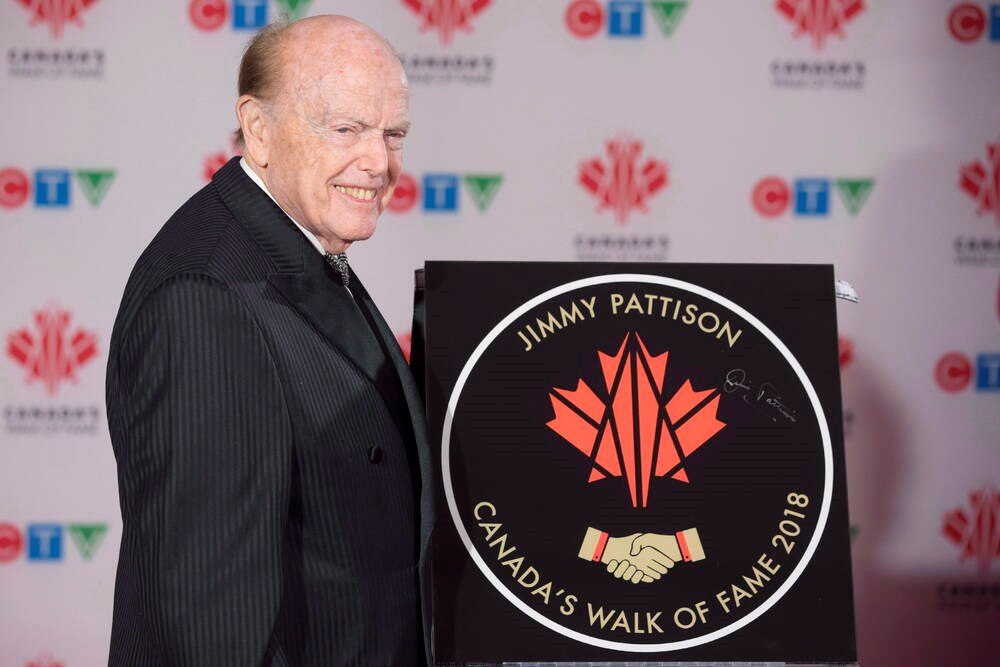

Making B.C.-based Save-On-Foods owner Jimmy Pattison the face of a gouging, anti-competitive grocery cabal is an odd choice.
NDP Leader David Eby picked a curious target when he took on grocery billionaires and followed up with the promise of a new tax for high-income earners.
Billionaires, particularly U.S. ones, have established a pretty miserable reputation for that income bracket in recent years. So it’s easy to understand a politician wanting to score points off them.
But Eby singled out Jimmy Pattison — founder and owner of Jim Pattison Group, which owns Save-On-Foods — during a tough-talking outline of his new plan to intervene in the food industry to curb profits.
Maybe there is no such thing as a popular billionaire, but Pattison is likely the least-offensive billionaire in the country.
Making him the face of a gouging, anti-competitive grocery cabal is an odd choice.
But there was the premier last week, standing deliberately with a Save-On store as a backdrop, announcing a plan to cap the profits of big grocery companies.
He promised a complicated new regulatory scheme to investigate price hikes on some staples and bar any increases that can’t be explained.
To make it clear whom he was talking about, he included a waspish aside: “Don’t worry about Save-On-Foods. Don’t worry about Jimmy. He’ll be OK — he’s going to land on his feet.”
The promised crackdown on grocery profits is an effort to make up for the fact that Eby’s major campaign promise during the previous election campaign two years ago of a $1,000 grocery rebate cheque to every family in B.C. disappeared after he won the election.
The thrust of the second effort to deal with grocery costs is at odds with another constant theme of Eby’s — the continued urging to buy B.C. wherever possible due to the U.S. trade war with Canada.
Save-On-Foods is one of the major locally owned grocery stores, with over 100 stores in B.C. It’s one of the choices for people trying to patriotically avoid U.S.-owned chains.
Eby’s buy B.C. stance implicitly endorses stores like Save-On. Now he is taking digs at them.
During the same announcement, he also mentioned in passing something that may be in the background of the grocery price issue. Eby referred to meeting Save-On-Foods CEO Jamie Nelson to talk about retail violence and repeat offending.
Nelson succeeded Darrell Jones, who ran briefly for the Conservative Party of B.C. leadership after years acting as the TV pitchman for the chain.
Eby said his government has launched programs to counter that street problem. But it’s noticeable to everyone that many retailers have massively increased private security in recent years as well.
That costs money, which is reflected at the checkouts. (Other costs can’t even be calculated, as the recent vicious assault on a Save-On manager in Victoria shows.)
Eby followed the grocery price guards with a new income tax promise on the weekend — hikes to the top brackets (over $190,000 a year) and a new higher tax rate on people earning over $1 million a year.
Governments generally announce tax hikes in budgets between elections. Promoting them in a campaign is a bit unusual.
B.C.’s overall income tax regime compares well to other provinces, particularly at lower income levels.
But the income tax hike comes on top of a new vacant condo tax announced earlier in the campaign.
Promising two tax hikes in a single campaign — so far — isn’t in many political playbooks.
Just So You Know: Jimmy Pattison is almost as well known for his philanthropy as his business success, if not more so. He’s made major donations to numerous hospitals in B.C.
Eby’s government “re-paced” seven health projects (indefinitely postponing the funding or construction contracts) in the February budget.
At least when Pattison promises money to a hospital, he follows through.
Eby addressed that contrast Monday by announcing the seven postponed projects will be restarted, and a new one will be added.
Campaigning in Victoria, he pledged that the long-dormant Oak Bay Lodge rebuild would get $90 million in funding.
The original reason for the re-pacing was that costs had skyrocketed to as much as $1.8 million per bed.
Eby said Monday that “standardizing” plans has driven prices down and made way for the restart.
It looks like the need to get re-elected had something to do with it as well.
[email protected]