dailynewsnblog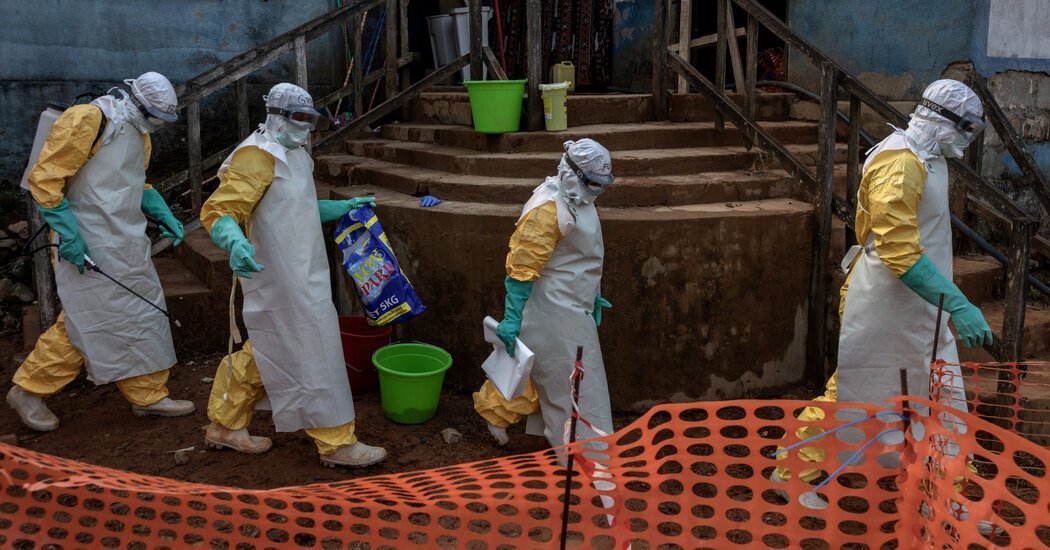
The Ebola outbreak in the Democratic Republic of Congo has already become the second-worst on record, and it is spreading much faster than previous outbreaks, the nation’s health ministry reported on Thursday.
The official death toll has jumped to 1,521 people in fewer than three months. Put another way, the species of Ebola behind the current outbreak, Bundibugyo, has killed more than five times as many people as previous outbreaks did in the same amount of time, officials from the Africa Centres for Disease Control and Prevention said at a press briefing on Thursday.
The last outbreak, which began in 2018 and was declared over in 2020, took more than 10 months to reach the same death toll.
“I’m not in a position to tell you we are in total control of this outbreak today,” said Dr. Jean Kaseya, the director general of the Africa C.D.C.
The virus ripping through eastern Congo is on pace to surpass the number of infections and deaths of the 2014-2016 Ebola crisis in West Africa, the worst outbreak ever that killed more than 11,000 people.
On Tuesday, Uganda, which borders Congo, declared an end to its related Bundibugyo outbreak after four weeks with no new cases. There were 20 cases and three deaths in Uganda.
Swift action and rigorous contact tracing in Uganda are credited with quickly controlling its outbreak. But across the border in Congo, the situation is rapidly deteriorating.
Since the current outbreak was first declared in May, Congo has confirmed 3,442 cases. As of Wednesday, the nation’s health ministry had counted 797 people who were hospitalized or in isolation. More than 80 percent of beds in treatment centers are occupied, and officials warn they could soon be overwhelmed.
Early surveillance and testing failed to spot the disease’s emergence, delaying the response. Tracing the virus was also made harder by fighting in eastern Congo that has displaced millions of people.
Africa C.D.C. officials said on Thursday that contact tracing efforts remained far off target. More than 80 percent of new cases in the epicenter of the disease were “not linked to known contacts,” officials said.
Every confirmed case from an urban area is expected to have 40 contacts, which means the current roster of exposed people being followed should be 134,400 people. Instead, it’s only 17,558 people, just 13 percent of what it should be.
And of those on the list, about a fifth are not being followed, either because there is a lack of health personnel to do the job or because armed conflict makes it impossible to check on them regularly.
Sixty percent of those who have died of the virus succumbed in a community, not in a health center, Dr. Kaseya said, in another indicator that the virus is spreading unchecked.
Efforts to save lives and slow the virus are nevertheless progressing.
While there are no vaccines or treatments for Bundibugyo, clinical trials of possible treatments, and of a drug that could prevent infection in people exposed to the virus have begun in Congo. More than 40 patients are testing a combination of therapeutics.
And in a separate trial, 19 people have been started on a 10-day course of an experimental anti-viral drug to prevent people exposed to the virus from getting sick. This trial aims to enroll 1,200 people. If data analysis after 600 patients show promising results, the goal will be to extend access to the drug to all contacts.
“This is the hope we have,” Dr. Kaseya said.
In addition, a clinical trial of a first-ever vaccine for Bundibugyo began at Oxford University this month, where the first of 50 adult volunteers was immunized and will be monitored for vaccine safety.
On Thursday, the Coalition for Epidemic Preparedness Innovations announced that it would fund a Singapore-based research firm, Hilleman Laboratories, to develop another potential vaccine and make doses for testing. The goal is to get it into swift clinical trials in Congo. This vaccine uses the technology behind one made by Merck, already approved by regulatory agencies to prevent another species of Ebola.