dailynewsnblog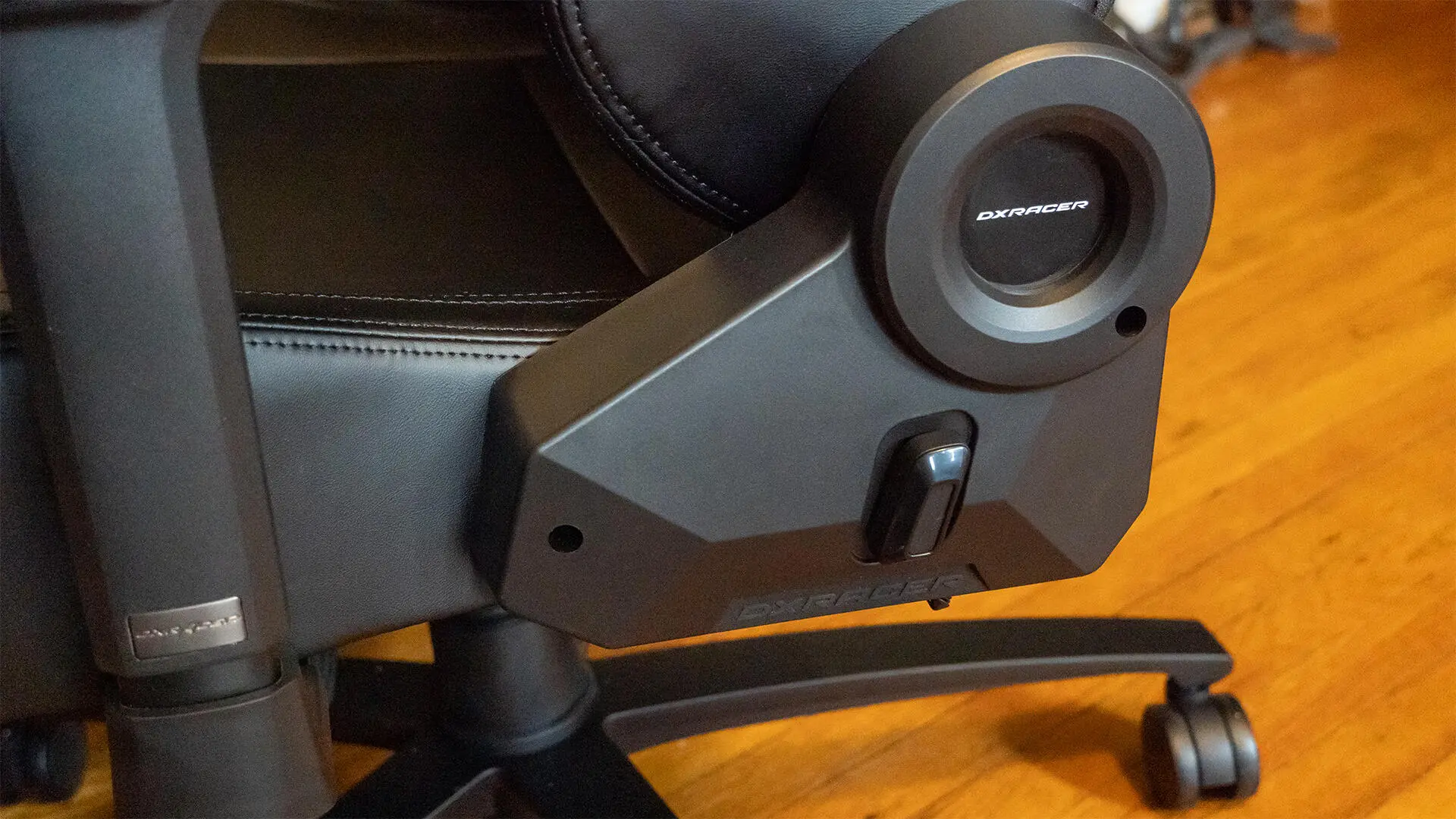

Pros & Cons
-
Large, sturdy build -
Wide, mostly flat seat -
Recline supports fine adjustments
-
Pricey -
Heavy -
Narrow lumbar support -
Wide armrest spacing
The DXRacer Martian looks and feels like a pretty typical gaming chair. It has a racer aesthetic, though it doesn’t push the bolsters too aggressively. It feels well-built and nicely cushioned, which is a plus. But at first glance, it doesn’t explain why it costs $699, even though there are similar options for less. The secret is its lumbar support that uses a mechanical airbag system, plus a motorized recliner, both of which are powered off a battery that tucks into the base of the seat.
These features make the Martian unique, but fail to make it an exceptional gaming chair. The microadjustments possible with the lumbar support and backrest seem nice on paper, but the latter is slow, and the former has airbags that are too narrow for full, comfortable support. With the rest of the chair being otherwise pretty average, the Martian fails to make a mark. It’s not a bad chair by any measure, but it’s a touch too expensive for what it is, so it’s not knocking off any of our picks for the best gaming chairs.
DXRacer Martian
| Price as reviewed | $699 |
| Sizes | Regular: <5-feet,11-inches, <275lbs || Plus: >5-feet, 11-inches, <275lbs |
| Seat height | Regular: 17.7-20.1 inches || Plus: 19.3-22 inches |
| Upholstery options | EPU leatherette, woven fabric |
| Armrests | 4D |
| Recline angle | 135 degrees |
| Rocking | Yes |
| Lumbar support | Yes |
| Tilt lock | Yes |
| Colors | Black, Black/Gray, Black/Red, Black/Yellow, Red Triangle Martian Pro |
The DXRacer Martian gaming chair comes in two sizes, two different material finishes and a handful of different colors. While the Regular size was initially priced at $699 and the Plus size at $799, they are now priced the same at $699. Selecting between the EPU leatherette and the woven fabric finishes also doesn’t impact the price. The woven finish comes only in black, though. The leatherette finish comes in four main colors plus a special Red Triangle Martian Pro color that raises the price to $899, evidently due to more elaborate stitching.

The backrest control.
Mark Knapp/CNET
A quick note on the sizes: I am 6-feet-3-inches tall and elected to test the Plus model, as it claims to be designed for users 5-feet-11-inches and taller. At the chair’s lowest setting, I find I’m just tall enough to sit comfortably with my knees bent at 90 degrees. I’d recommend shorter folks stick with the regular size unless you have particularly long legs.
Assembly is a bit more involved than most
The chair took just over 36 minutes to assemble. The process was made a little bit easier by using my own tools, as the included Allen key/screwdriver combo was too short to avoid constantly bumping into the base and would have required me to frequently reinsert it into each bolt to tighten them.

Depending on your strength, the assembly might be better as a two-person job, particularly as attaching the backrest to the base of the chair can take a bit of force to line up the four bolt holes. Wiring the chair is also a little confusing since the instructions are a bit hard to read, and the instructions included on the chair itself are immediately covered up by the battery pack in the very first step.
The DXRacer Martian doesn’t stand out from the gaming chair crowd in any aesthetic way. Like a hundred other contemporaries, it comes with a black faux-leather wrapping on a metal frame, with foam inside. It has a modestly aggressive racing style, but not as aggressive or ostentatious as some. The wide seat base flares up at the sides, but not sharply. This helps keep it comfortable for folks with wider hips.

The seat is flanked by run-of-the-mill 4D armrests. They sit quite wide and don’t offer much padding. While they’re well-spaced for keyboard and mouse gaming, they’re not ideal for ergonomic typing or controller gameplay. While magnetic armrest covers seem to have come into vogue for gaming chairs, including the Martian, there seems to be little actual reason for it, beyond making eventual replacement easier.
What sets the Martian apart from its competition is hidden away. Rather than relying on a level to adjust recline or just a simple lumbar pillow, the Martian has its own twist on these features. The first is the backrest, which reclines using a motor that’s controlled with a lever on the left side of the chair. This is a bit slow, but it allows for finer adjustment than most other chairs. It did, however, struggle to lift back up when I was reclined in the chair.

The other notable feature is a pair of small lumbar airbags that inflate and deflate via controls on the right side of the chair. The lumbar airbags are an interesting feature and offer fine adjustment. I found them a lot simpler to control than the fly-by-wire setup in chairs like the DXRacer Master Module and AndaSeat Kaiser 3 that I reviewed for CNET’s sibling site IGN. However, the airbags are rather narrow, leaving the outer edges of the lumbar less supported and putting more pressure on the spine. Because of this, I never found them quite that comfortable. On the plus side, you can just deflate them and slip in your favorite lumbar pillow.

Another downside is that both these features mean you have a chair that relies on a battery for key operations. It hasn’t died in the time I’ve tested it, but it certainly will for anyone who uses it long enough. That could lead to some awkward situations, like ending up with the chair stuck in a recline until you recharge it. At least the magnetic neck pillow is a nice touch, offering a comfy cushion with easy position adjustments (even if the one included with the chair isn’t the one advertised).
All this means the DXRacer Martian offers some interesting features, but that doesn’t mean it’s an exceptional gaming chair.