dailynewsnblog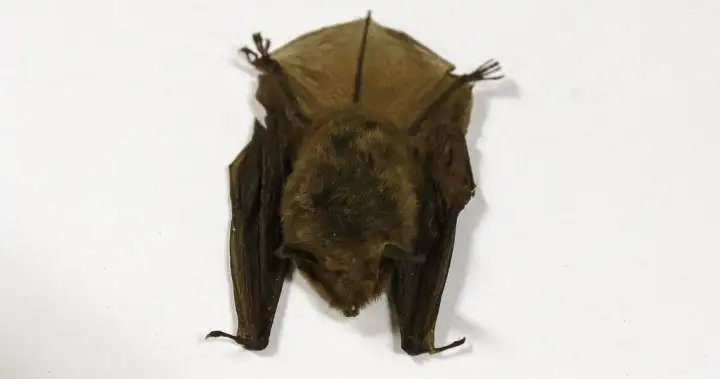
Doctors are urging people to seek medical attention if they have any contact with bats to prevent potential rabies infection.

In Monday’s issue of the Canadian Medical Association Journal, infectious disease physicians described the case of a child who died of rabies almost two years ago.
“It was important to us and to the family to take the opportunity to find learning experiences and lessons that we could take from his case to try and help spread awareness and understanding of rabies infection and risks,” said Dr. Brian Hummel, the case report’s senior author and a pediatric infectious disease physician at McMaster Children’s Hospital in Hamilton.
The 11-year-old boy was at a cottage in northern Ontario in the summer of 2024 and was awoken by a bat lying on his nose and mouth, the case report said.
He swatted the bat away and his father caught it in a pot and released it outside.
The parents didn’t see any scratches or bites on their son’s face and didn’t think the bat had been behaving oddly so they didn’t think of rabies or take him to a doctor at that time.
Almost three weeks later, the boy developed tingling, numbness and swelling on the right side of his face.
A health-care provider at an urgent care clinic thought he might have Bell’s palsy — temporary paralysis on one side of the face that can be caused by viral infections — and prescribed an antiviral drug.
A few days later, he went to the emergency department at McMaster Children’s Hospital with vomiting and pain while swallowing. He later developed more facial weakness on his right side, as well as slurred speech.

He was admitted to the pediatric intensive care unit and his neurological condition continued to deteriorate. By his fifth day in hospital, he had no reflexes in his brain stem — the part of the brain that regulates breathing, heart rate and other essential bodily functions.
He was eventually taken off life support and “died peacefully with his family at his bedside,” the case report said.

Get weekly health news
Receive the latest medical news and health information delivered to you every Sunday.
Once symptoms of rabies start, there is no treatment or cure, Hummel said in an interview with The Canadian Press.
But the virus has a relatively long incubation period — usually weeks — before symptoms of illness start to show.
That means that In the days after exposure, a series of vaccines and a dose of antibodies can stop the infection.
“If you get symptomatic rabies infection, it is near universally fatal. But if you get the prevention before symptoms develop, it is near universally successful,” Hummel said.
The rabies virus infects the nerves around the site where it entered the body and then makes its way into the spinal cord and brain, ultimately leading to death.
It’s “an extraordinarily rare infection” for humans in Canada, with only 28 cases reported since 1924, he said.
The most recent rabies case before the 11-year-old boy was a man who died after exposure to a bat in British Columbia in 2019. There hadn’t been a case reported in Ontario since 1967.
When humans do get exposed in Canada, it’s usually through contact with a bat, Hummel said, although rabies can also be carried by skunks, raccoons and foxes.
But bats are the primary concern, so any physical contact with them is considered high risk.

Bats have tiny teeth, so people can be bitten and not even realize it. Even without a bite or scratch, a bat’s saliva can get on someone’s skin and find its way into a cut or into the eyes, nose or mouth.
“Any time a bat has touched the human skin, that would be a reason to go and see your health-care provider right away,” Hummel said.
Primary-care providers often work with public health to determine if post-exposure prophylaxis — the series of vaccines and the antibody injection — is warranted.
The first rabies vaccine shot is given immediately, followed by shots on days three, seven and 14.
Vaccination helps the body mount an immune response to the rabies virus, Hummel said.
But it takes time for that response to happen, so the patient also gets an injection of immunoglobulin, a ready-made antibody that starts fighting the virus right away.
Side effects of the vaccine are usually mild and temporary. They can include fever, chills, sweats and feeling unwell, he said.
Like any vaccine, there is a very rare risk of anaphylaxis, which is why patients have a short waiting period before they leave their health-care provider after the shot.
Older versions of the rabies vaccine had a very small risk of Guillain-Barré syndrome — a rare condition where the body’s immune system attacks its own nerves. There is no known causal association between the syndrome and modern rabies vaccines, the case report said.
“Given the near certainty of death with rabies infection, the benefits almost always outweigh the risks,” Hummel said.
© 2026 The Canadian Press