dailynewsnblog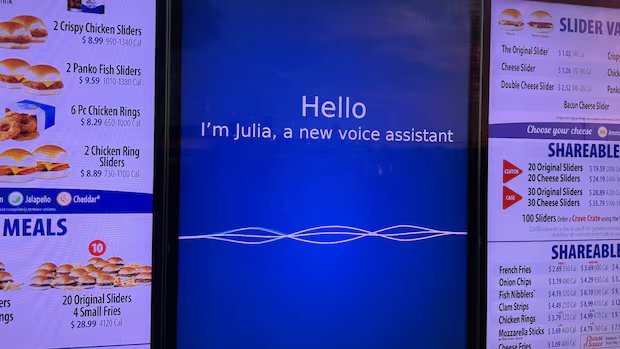
A busy drive-thru in suburban Detroit looks like any other — until you inch close enough to hear the voice taking the order. It’s not human. It’s artificial intelligence.
Across the United States, fast-food chains are turning to AI to run their drive-thru counters — and Canada could be next. Companies say the technology is now more accurate than human employees, while some labour organizers worry it could displace fast-food workers.
AI drive-thrus first appeared as early as 2021, though many of the pilot projects were anything but smooth. Some customers tried to trip up the AI on purpose, asking for 100 cups of water or an item that wasn’t on the menu. Others became frustrated when the chatbot made a mistake or repeatedly tried to upsell them. Many of the mix-ups went viral, prompting companies to return to humans taking the orders.
In recent months, voice AI technology has improved rapidly, and many fast-food companies are rolling out chatbots at U.S. locations. McDonald’s is testing a Google-powered AI drive-thru system, while Taco Bell has partnered with Nvidia for its chatbots.
Two U.S. companies that develop custom voice AI agents, Presto and SoundHound, say chatbots could arrive at Canadian drive-thrus within months — though several fast-food companies would not confirm any plans to CBC News.
Digital coworker
U.S. burger chain White Castle worked with SoundHound on an AI chatbot called Julia. The AI listens to the customer and answers questions. Inside the restaurant, the order appears for staff to prepare. If there’s a problem, an employee takes over and completes the order.

“At first we had a few hiccups, but we straightened them all out and it’s been doing good,” said White Castle store manager Denise Harley. “It just helps us get the orders in and out faster.”
Some newer staff members don’t remember a time when AI wasn’t part of the team.
“I thought it was gonna be hard to work with, but it actually kind of makes everything easier,” said Aniyah Golden, who appreciates that the chatbot never calls in sick. “That’s the best thing about her. She don’t be calling off on us. We have a worker full time.”
Better than humans?
Outside the White Castle in Detroit, customer reviews of the AI drive-thru were mixed. Some called it “interesting” and “no hassle,” while others thought it didn’t work very well.
“I think they got our order correct and everything,” said customer Kim Gilmer. “I just hate that this is what the world is coming to. That just means less jobs for humans.”
The technology isn’t perfect yet, but it uses generative AI, which means it can learn and improve over time. Jamie Richardson, White Castle’s chief marketing officer, said the data shows the AI actually gets most orders right.
“It’s well above the 90 per cent range. We found that ordering with Julia is better order accuracy than we experienced prior to Julia,” he said.

Major U.S. fast food chains are turning to artificial intelligence to run their drive-thrus and Canada may not be far behind. For The National, CBC’s Nisha Patel hits a Detroit White Castle to learn more about its system, and what staff and customers think about the shift.
White Castle has Julia up and running at about 40 locations. The company said the chatbot reduces drive-thru wait times and frees up employees to take on other tasks, such as preparing food and bringing it to customers.
“We haven’t used it as a way to reduce employment. We’ve used it as a way to be, hopefully, more productive,” Richardson said.
Near a tipping point
Fast-food businesses have faced serious labour challenges in recent years, from rising costs to high worker turnover, and the sector is betting on AI to fill the gaps.
California-based SoundHound developed Julia, the custom voice AI chatbot used by White Castle. The company says the technology can help fast-food chains increase revenue by upselling customers.
“We come in with better accuracy, more timely greeting and acceptance to really help the whole operation run smoother,” said Ben Bellettini, SoundHound’s senior vice-president of sales.
According to the U.S. National Restaurants Association, more than a quarter of restaurant operators surveyed are using AI-related tools.
Krishna Gupta, CEO of Presto, another voice AI company, is bullish on the opportunity.
“I have very high conviction that over the next couple of years we are going to see that every drive-thru will be voice enabled.”

Worker fallout
Over the next five years, the World Economic Forum forecasts positions such as cashiers will be among the fastest-declining jobs because of automation. Some labour organizers worry the rapid technological change will have an outsized impact on young people looking for entry-level jobs.
“These are like stepping stone jobs for a lot of people. Some people make their career in it, but it’s like it’s a way into the market,” said Siobhán Vipond, executive vice-president of the Canadian Labour Congress.
Vipond wants governments, workers and unions to be involved in discussions about how AI systems are designed and introduced in workplaces.
“Employers do have a responsibility to workers and our communities,” she said.