dailynewsnblog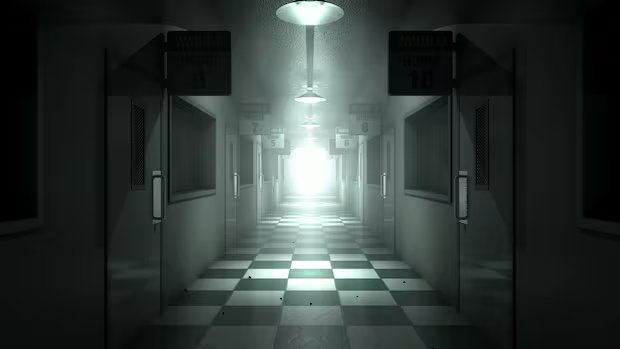

Listen to this article
Estimated 4 minutes
The audio version of this article is generated by AI-based technology. Mispronunciations can occur. We are working with our partners to continually review and improve the results.
Quirks and Quarks8:45Infrasound, not ghosts, may be why old buildings give us the heebie-jeebies
Anyone who believes in the paranormal may chalk up the spooky feelings brought on by visiting an abandoned house to a supernatural encounter. But new research suggests a simpler explanation may be at play: infrasound.
In a recent study, researchers found that volunteers unknowingly exposed to infrasound — low-frequency sound waves — were more irritable and showed increases in the stress hormone cortisol. The findings were published in Frontiers in Behavioral Neuroscience.
If you’ve been told a place is haunted, you might feel tense and get goosebumps. “I think we might have at least a partial explanation for why that might be, and it’s not ghosts,” said Rodney Schmaltz, a psychology professor at MacEwan University in Edmonton, in an interview with Quirks & Quarks’ Bob McDonald.
Schmaltz is interested in why some people believe in the paranormal. He and his colleagues have been studying the effect of infrasound on the human body and mind.
Paranormal, or just normal?
While humans cannot hear infrasound, which registers below 20 Hertz, they can feel it. Storms, as well as traffic or old infrastructure, such as pipes, ventilation systems and industrial machinery, can all create infrasound.
In the study, 36 volunteers listened either to the kind of ambient scary music that’s played during a horror movie or calming meditative music. Half of the participants were also unknowingly exposed to infrasound for five minutes.
Schmaltz’s team took a saliva sample from each participant before and after the experiment to measure their cortisol levels.

The researchers found that the volunteers couldn’t tell if they’d been exposed to infrasound, but when they were, they felt more irritated and annoyed, and reported the music as sadder, regardless of what type was played. They also had higher levels of cortisol in their saliva.
Schmaltz says he believes this physical and psychological reaction to infrasound could explain some of the feelings associated with reported paranormal experiences.
“Most people don’t know what infrasound is. So, imagine you go into an old building, it’s kind of scary. Maybe you’ve been told there’s a ghost and again the hair on the back of your neck goes up and you feel something. Well, it’s quite reasonable then to think that that has to be a ghost,” said Schmaltz.
Body and mind interactions
Previously, the researchers had found that zebrafish exposed to infrasound for short periods at or below 20 Hz showed increased anxiety and aversion to the infrasound.
The researchers had also run after-hours experiments at the local commercial haunted house, Deadmonton, to see if playing infrasound made people more scared. Although Schmaltz said that study didn’t offer physical proof of the effect of infrasound, he noted that people exposed to it did move faster through the haunted house.
Chris French, an emeritus professor of psychology at Goldsmiths College, University of London, who wasn’t involved in the study, told The Guardian it was “plausible” that infrasound might leave people with the notion that a place was haunted.
Kale Scatterty, a PhD student in science psychology at the University of Alberta, designed the music tracks for the most recent experiment. He said the study offered a “really good look at how the body and mind interact.”
Scatterty said he is interested in seeing if positive influences, such as “exciting and upbeat music,” change the impact of infrasound on cortisol levels.
He is also interested in examining the effects of infrasound on fish and other marine animals.
“The ocean is a perfect example because we already know that marine traffic or offshore diesel engines or sites like oil rigs and stuff like that can produce [infrasound] and they do disrupt marine migration patterns and behaviours,” said Scatterty.