dailynewsnblog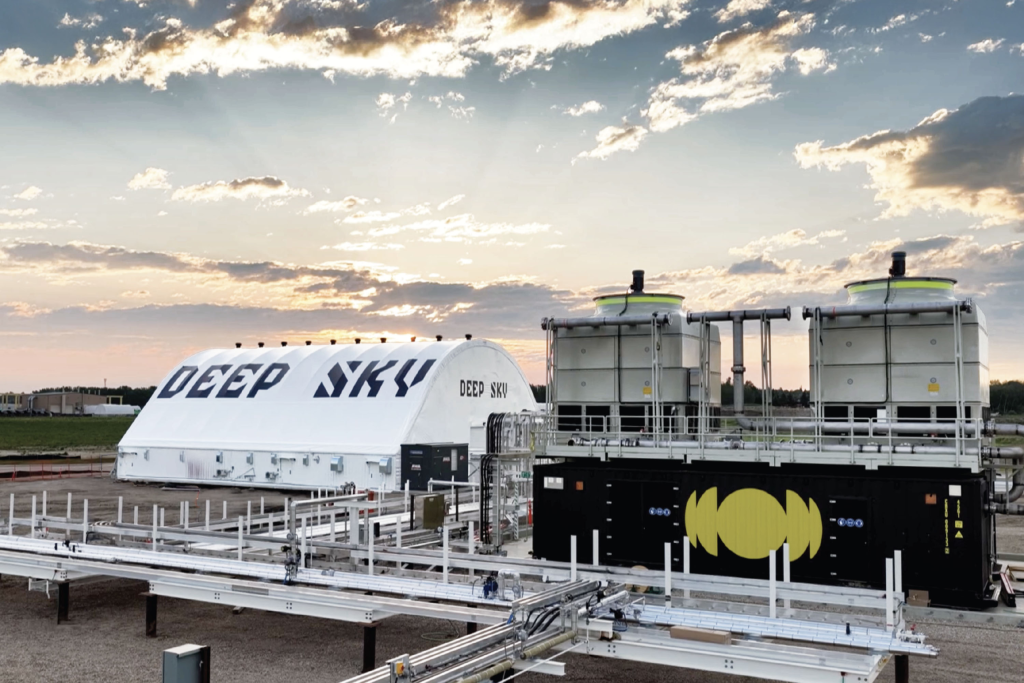
The federal government is exploring a policy framework that would let Canadian companies sell verified carbon credits into foreign carbon markets.
On Thursday, Environment and Climate Change Canada announced that Ottawa is exploring rules to trade Internationally Transferred Mitigation Outcomes, or ITMOs, the mechanism set out under Article 6 of the Paris Agreement that lets countries cooperate on their climate targets by trading verified emissions reductions and removals across borders.
Deep Sky, a Montreal-based carbon removal project developer behind an ambitious direct air capture facility in Innisfail, is celebrating the news.
“We’ve been working on this for over a year, getting Canada to move forward with a framework,” said the company’s government affairs specialist, Mathieu Bouchard.
The nearest-term opportunity for the firm is CORSIA, the Carbon Offsetting and Reduction Scheme for International Aviation run by the International Civil Aviation Organization in Montreal.
The mandatory phase for that program kicks off in January 2027, requiring airlines flying certain international routes to use sustainable aviation fuel or offset emissions growth with carbon credits.
READ MORE: After carbon price rollback, Alberta carbon capture pitches clean fuel market as potential lifeline
CORSIA requires that a credit be only counted once, meaning Canada needs a framework before credits can be recognized under the scheme.
Bouchard says he doesn’t expect Ottawa’s framework would be finalized by January, but doesn’t see it as a major setback since credits can be accounted for retroactively.
“As long as there’s a framework in place within the next year, we should be fine,” he said. “But we need to keep pushing.”
Beyond CORSIA, he pointed to a growing web of bilateral carbon trading deals around the world.
Countries such as Switzerland, Norway, Singapore, Peru, Ghana, Thailand, Morocco have signed on to such deals.
Bouchard says firms like his will be closely watching the trade negotiations between Canada and the EU, since the Bloc’s emissions trading system has recently announced it will open the door to carbon removal credits.
Domestic market still active, executive says
Asked whether the push into international markets reflects fading interest at home marked by a softer federal industrial price, Bouchard said no, pointing to growing interest from voluntary carbon credit buyers in the technology and finance sectors.
On the domestic regulatory side, Matthew said it’s still too early to gauge the impact of the industrial carbon-pricing agreement Ottawa reached with Alberta earlier this year, which set a slower price trajectory for the province’s Technology Innovation and Emissions Reduction (TIER) system than the federal government’s original benchmark.
He said the deal doesn’t change Deep Sky’s near-term business, but will matter over time as the company’s production costs fall and the regulated carbon price rises.
“The regulated carbon price needs to go up, and at some point we get into a world where it is cheaper for us to produce those credits and sell them to a buyer than it is to pay to purchase [in the system].”