dailynewsnblog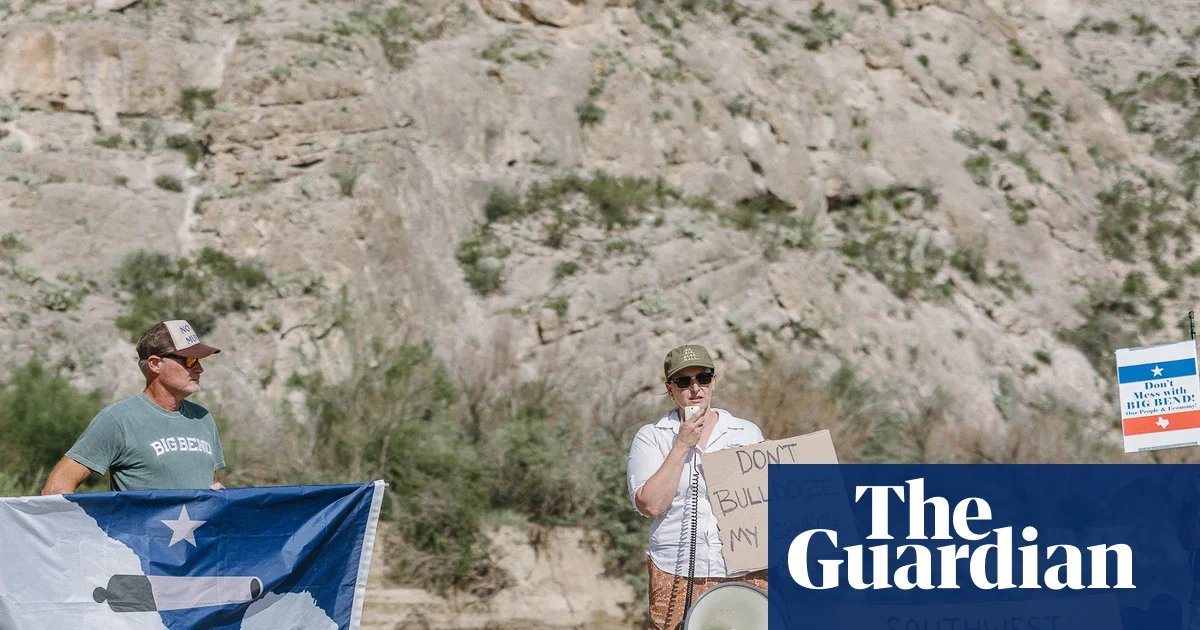
Bulldozers have begun plowing up ground at the mouth of Big Bend national park’s famed Santa Elena Canyon as part of the Trump administration’s multibillion-dollar “smart wall” expansion on the US-Mexico border, according to new footage taken by activists who have been monitoring the site.
Tensions have run high since the Trump administration announced plans to erect new border security infrastructure in the roughly 500-mile Big Bend region of south-west Texas, which includes the Lone Star State’s largest and most-visited national park.
Since last week, activists have shared video footage that appeared to show heavy machinery laying the groundwork for new border infrastructure that US Customs and Border Protection (CBP) did not announce and initially denied was happening. By Thursday, photographer Natalie Newman captured video footage of bulldozers plowing earth at the mouth of the Santa Elena Canyon, an iconic and frequently visited stretch of the Rio Grande flanked by 1,500-foot cliffs.
“It’s just devastating,” said Laiken Jordahl, a public lands advocate with the Center for Biological Diversity. “They’re bulldozing a brand new road through the most beloved stretch of the park.”
Big Bend national park is a vast, 800,000-acre (325,000-hectare) expanse of Chihuahuan desert punctuated by the Chisos mountain range and bordered by the Rio Grande River. Local businesses, river guides and political leaders from both parties have decried the administration’s plans to mar the wilderness in the name of border security – not least because the region sees so few unlawful crossings.
Immigration authorities made between 100 and 125 arrests annually in 2023 and 2024 within the park’s boundaries, according to the park’s former superintendent, Bob Krumenaker, who now leads the advocacy group Keep Big Bend Wild. Those numbers almost certainly dropped last year, as unlawful crossings plunged across the US-Mexico border after Trump re-took office and began a broad immigration crackdown in January of 2025.
But CBP has looked to the park as a site for new security installations ever since the Republican-dominated Congress threw a whopping $46.5bn for border wall expansion into the “big, beautiful” spending bill that Trump signed into law on 4 July of last year.
Over the following months, the Trump administration’s plans for Big Bend constantly shifted. CBP first signaled in February that it planned to erect a 30-ft steel bollard wall across an area that is naturally obstructed by steep cliffs. Facing a sharp backlash from park users and locals, CBP walked those plans back, eventually publishing a more limited plan of about 200 miles of new patrol roads and four sections of non-contiguous vehicle barriers measuring about 6-ft tall and totaling 17 miles. The Department of Homeland Security (DHS) waived dozens of federal environmental and cultural protection laws to speed construction along.
Opponents first began filming bulldozers clearing dirt and plowing into trees and brush last week, marking what they described as the beginning of construction of a new road and likely one of the four vehicle barriers that CBP has contracted to build. Big Bend national park’s press office did not immediately respond to a request for comment.
At first, CBP publicly denied that the bulldozers had anything to do with its construction plans, issuing a statement last week that instead said the agency was re-grading roads damaged by heavy rains. John Mennell, a CBP spokesperson, later backtracked, telling SF Gate the bulldozers were turning up ground to assess the soil for construction. This week, Rodney Scott, the CBP commissioner, said more barriers and roads were needed to keep the park “free from fear of cartel activity”. Scott said the bulldozers were doing prep work for planned roads and vehicle barriers, but that construction had not started.
“What people are seeing right now is survey and design work – NOT construction of a wall through the park,” Scott said. “We are working to preserve the landscape and protect the access visitors and local businesses depend on.”
But opponents of the Big Bend border wall expansion say the bulldozers are clearly breaking new ground.
“They are obscuring what they are doing,” said Krumenaker, the park’s former superintendent. “They refuse to tell people what the complete plan is.”
The construction activity has continued to draw broad condemnation from local politicians of both parties. Democrats in Congress have repeatedly lambasted plans to degrade the wilderness of Big Bend in the name of border security, citing the low number of unlawful crossings and widespread public opposition.
But despite the unpopularity of the border barrier expansion through the state’s public land crown jewel, the most prominent Texas Republicans have largely kept their mouths shut. Governor Greg Abbott’s press secretary Andrew Mahaleris said back in March that rugged regions such as Big Bend are “great opportunities to deploy technology to aid in securing the border”, but has shied away from commenting on CBP’s more controversial construction plans. Ken Paxton, the attorney general, who is currently running for a US Senate seat, has also kept silent.
John Cornyn, an outgoing US senator, however, penned a letter to Markwayne Mullin, the US homeland security secretary, last week asking him to halt construction in order to spend more time hearing from locals and community leaders.
Southwest Valley Contractors of New Mexico secured a $1.7bn contract in May to construct border security infrastructure in the area that includes the park.
The Friends of the Ruidosa Church, Billy Miller, a river guide, and the Center for Biological Diversity are currently suing DHS, the parent agency of CBP, contending that waiving dozens of federal laws to expedite construction violated due process and other constitutional rights. DHS had agreed in June to provide at least 30 days notice before “commencement of any ground disturbing activities in Big Bend Ranch State Park or Big Bend National Park”.
“They’ve shown time and time again that we have absolutely no reason to trust them,” Jordahl said. He remains concerned that CBP’s plans will not stop at vehicle barriers.
“They issued this contract back when they were still planning to build a wall,” Jordahl said. “They have the money they need to build a whole border wall through the national park.”
This article was co-published with Public Domain, an investigative newsroom covering public lands, the interior department and wildlife.