dailynewsnblog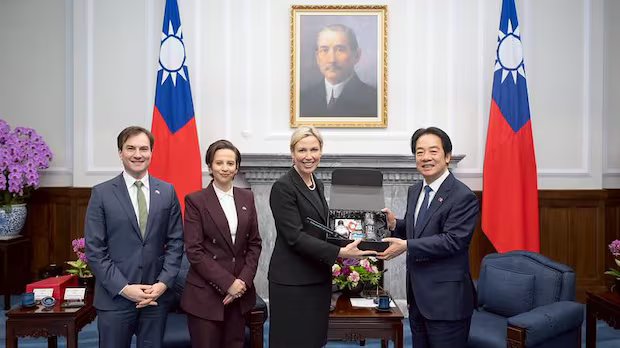
A small change to Canada’s lobbying rules has led to a big drop in free trips for members of Parliament, a CBC News analysis found — however many MPs continue to head to destinations like Taiwan, China and India courtesy of foreign governments and groups not registered to lobby.
Duff Conacher, co-founder of Democracy Watch, praised the change but said it should go further.
“The gift of sponsored travel is a form of legalized bribery and it should be banned outright because it corrupts decision-making by politicians,” he said.
CBC’s analysis comes as the House of Commons ethics committee is reviewing the Lobbying Act.
Currently, there is no restriction on MPs accepting sponsored travel beyond the requirement to report the trip and its cost to the ethics commissioner.
Some have racked up thousands of dollars in trips. And while some critics condemn the trips as lavish junkets, MPs often argue it provides a chance to learn about an issue, improve international relations or see what’s happening in another country.
In 2023, MPs accepted $875,528 worth of sponsored travel to destinations around the world. That same year, Lobbying Commissioner Nancy Bélanger — unable to get Parliament to update the Lobbying Act — changed the code of conduct to prohibit registered lobbyists from giving MPs gifts worth more than $40, including sponsored travel.

However, even Bélanger’s change carries no penalties beyond a report tabled in Parliament because it was made under the code — rather than to the law.
“In my view, lobbyists should not be giving gifts to people that they lobby, period,” Bélanger said. “It creates a sense of obligation.”
If MPs need to travel internationally for their jobs, they should have a budget, she said.
In 2023, groups registered to lobby spent $409,641 to send MPs around the world. In 2025 it had dropped to $11,091. In 2026 to date, no MP has reported taking a trip paid for by a group registered to lobby.
No sanctions for sponsored travel
Meanwhile, groups not registered to lobby spent $465,887 in 2023. That dropped to $218,189 in 2024, $71,391 in 2025 but has edged up so far this year to $95,595.
More than half of that was spent in January by the Taipei Economic and Cultural Office in Canada, which describes itself as an overseas unit of the Taiwanese government, to send five MPs to Taiwan — a fraction of the $343,489 it’s spent since 2023 to send 34 MPs to Taiwan.
Bélanger’s mandate doesn’t extend to groups that don’t meet the criteria to register to lobby or foreign governments.
Earlier this year, Parliament moved forward with a plan to appoint a watchdog to monitor foreign influence and set up a foreign registry, approving Anton Boegman as the country’s first foreign influence transparency commissioner. But regulatory red tape has delayed his appointment — something a Public Safety spokesperson said should be addressed this spring.
Some groups still sponsoring travel
CBC’s analysis shows that despite the change in the rules, there have been cases of lobbying groups sponsoring travel then contacting an MP who received the trip. However, Manon Dion, spokesperson for the Bélanger’s office, said no investigation reports have been issued for breaches of the new provision since it went into effect.
She also wouldn’t say whether any investigations were in progress.
Bélanger made an exception to the new rule for the Centre for Israel and Jewish Affairs (CIJA) because a $134,304 trip for seven MPs scheduled for July 2023 was planned before the rule changed. Instead, she imposed a two-year cooling off period during which CIJA was barred from lobbying any of those MPs.
However, in January 2024, one of those MPs, Conservative Scott Aitchison, attended a CIJA presentation to MPs.
“They were forthright in letting me know that they had made a mistake and would not do that again,” Bélanger told the House of Commons ethics committee in April 2024. “It was an oversight that the MP had been invited, and I accepted that explanation.”
While CIJA spent $335,296 on sponsored trips to Israel for MPs from January to July 2023, it has not sponsored travel for MPs since. Earlier this year, it said the Middle East conflict prevented it from sending MPs to Israel.
The group declined an interview request for this story and didn’t respond to questions about the role the lobbying change may have played, saying its lead person on the file was out of the country.
Other groups sponsored a trip, then contacted the MP
In October 2023, Saab Canada paid $941 on transportation, accommodations, meals, museum tickets and a gift for Conservative MP Cheryl Gallant to take a side trip to tour its Kockum shipyard in Sweden. In September 2025, Saab reported lobbying Gallant on defence, economic development and government procurement.
Saab Canada had hired professional lobbyists at the time of the trip, but it says the company itself was not yet registered to lobby.
When asked about that case and others, the lobbying commissioner’s office said, “compliance activities are conducted in private, as required under the Lobbying Act.”
Human Concern International, which says in its lobbyist registration it is “Canada’s first and oldest Muslim charity,” spent $11,090 in November 2025 to send Liberal MPs Sameer Zuberi and Salma Zahid to Bangladesh to visit Rohingya refugee camps and Canadian relief efforts.
It has not reported lobbying any MPs and did not respond to CBC interview requests.

The Canadian-Muslim Vote, which isn’t registered to lobby, spent $38,989 sending nine MPs to destinations like Jordan and the West Bank in 2024 and 2025. On its website, it says its mission is to encourage Canadian Muslims to become more politically active. It did not respond to CBC interview requests.
Some lobby groups shifted gears
The rule change prompted some groups, like Canadian Foodgrains Bank, to stop sponsoring travel.
The group, which works to reduce global hunger, spent $13,187 to send three MPs to Kenya in 2023 to see Canadian-funded projects, which adviser Barbra Chimhandamba said worked well.
“Most of the MPs come back changed. … They come back with a completely different view of what they thought was happening out there.”
But forced to choose, her group chose lobbying.
“We couldn’t do the work that we do without engaging with policymakers,” she explained.
Now, it’s pivoted to hosting film events.
“We’ve had to be innovative about how we engage with MPs and how we educate MPs,” said Chimhandamba.