dailynewsnblog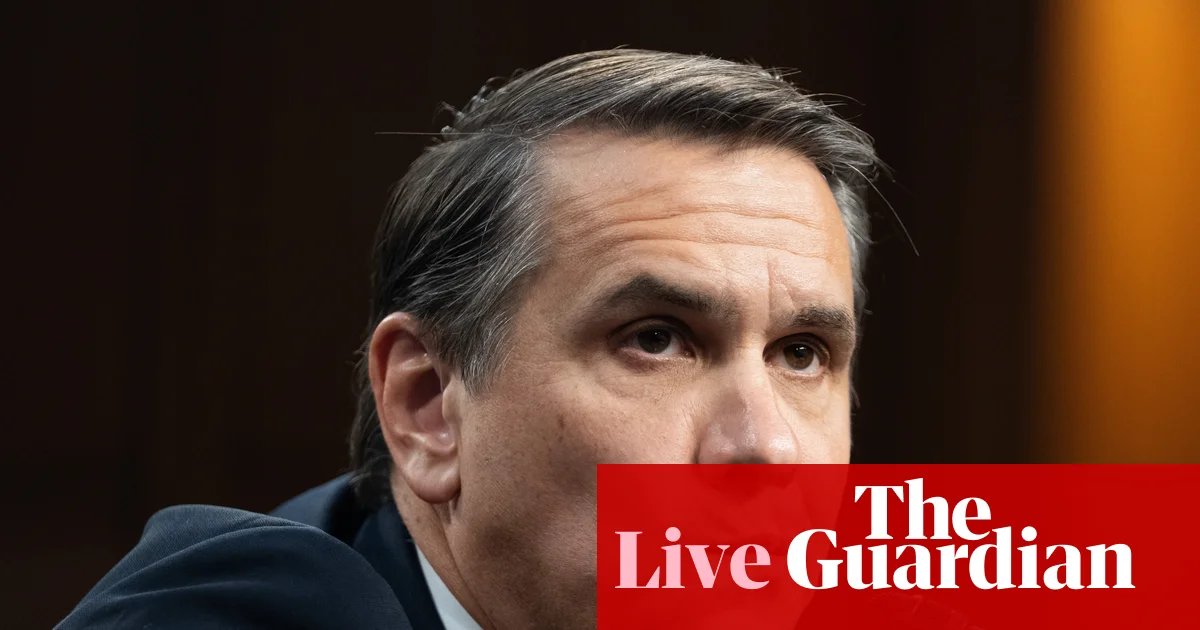
Here’s a recap of Todd Blanche’s confirmation hearing
Throughout today’s confirmation hearing, Democratic and Republican lawmakers have questioned whether the $1.8bn “anti-weaponization” fund created to compensate the president’s allies – namely January 6 defendents – has been definitively abandoned by the Trump administration. Blanche sought to underscore that the slush fund is “dead”, as he fielded questions from senators on both sides of the aisle. “The settlement fund is just not moving forward,” Blanche told Cornyn. “No money went from the treasury to any other account.”
At various points, Blanche sparred with Democratic senators repeatedly with Democrats over allegations about FBI director Kash Patel’s conduct. Patel has denied, under oath, claims of heavy drinking and unexplained absences, calling them “baseless.” At one point, Senator Sheldon Whitehouse pressed Blanche: “Are you confident he’s not drinking on the job? Are you sure none of his travel is a pretext for vacation activities like snorkeling Olympics and visiting girlfriends?” Blanche shot back: “That’s an extraordinarily obnoxious question, senator. And I have full faith in director Patel and the work he’s doing every day.”
Blanche insisted that he does not merely do the president’s bidding and that he would resign if ever asked to do anything illegal or unethical, when questioned by senators today. He also said he had disagreed at times with Trump and said he did not believe the president was eligible to run for a third term. “President Trump trusts me to give him counsel,” Blanche said at one point. “Counsel does not mean I’m a yes man.”
However, Trump’s pick to lead the justice department evaded questions about the presence of federal agents at polling locations. Blanche simply said that he would “commit to following the law”, when asked by Senator Amy Klobuchar, a Democrat from Minnesota, whether he would ensure that ballot sites were free of federal officers. Trump has said publicly that he favors elections being “nationalized” – which has drawn widespread backlash from legal experts and lawmakers alike.
Blanche repeatedly defended the Justice Department’s handling of the Jeffrey Epstein files, while conceding that the release included “mistakes” – notably redaction errors that exposed identifying details of some survivors. He said those errors were fixed quickly and that only “1%” of the documents required changes. In a particularly heated exchange, Senator Dick Durbin pressed Blanche to meet personally with survivors, several of whom were in the room. Blanche said he was barred from doing so. Durbin, unsatisfied, accused him of “dancing on the head of a pin” to avoid responsibility.
Key events

Anna Betts
Annie Farmer, a survivor of Jeffrey Epstein’s abuse, has released a statement on Blanche’s Senate confirmation hearing today.
“Todd Blanche has failed survivors at every turn” Farmer said. “He is overseeing an investigation that has repeatedly re-traumatized survivors, and has sought to bury the case even as questions remain unanswered about Jeffrey Epstein and Ghislaine Maxwell’s vast network of enablers and supporters. His suggestions that survivors reach out to the Department of Justice to re-report the crimes committed against them – in addition to his inconsistent claims about meeting with survivors – are beyond insulting.”
“Last summer, after then Deputy AG Blanche’s troubling decision to meet with Maxwell, I sent him a letter expressing my concerns and objecting to any pardoning or commutation of her sentence. In return, I received silence.”
“My sister Maria was the first survivor to contact the FBI in 1996 about her abuse and trafficking at the hands of Epstein and Maxwell, and she continues to be ignored to this day. Blanche cannot rewrite history or pretend this investigation is over when the evidence shows otherwise. The Senate must not reward this record of failure, deception, and disregard for survivors. We urge the Senate not to confirm him.”
Here’s a recap of Todd Blanche’s confirmation hearing
Throughout today’s confirmation hearing, Democratic and Republican lawmakers have questioned whether the $1.8bn “anti-weaponization” fund created to compensate the president’s allies – namely January 6 defendents – has been definitively abandoned by the Trump administration. Blanche sought to underscore that the slush fund is “dead”, as he fielded questions from senators on both sides of the aisle. “The settlement fund is just not moving forward,” Blanche told Cornyn. “No money went from the treasury to any other account.”
At various points, Blanche sparred with Democratic senators repeatedly with Democrats over allegations about FBI director Kash Patel’s conduct. Patel has denied, under oath, claims of heavy drinking and unexplained absences, calling them “baseless.” At one point, Senator Sheldon Whitehouse pressed Blanche: “Are you confident he’s not drinking on the job? Are you sure none of his travel is a pretext for vacation activities like snorkeling Olympics and visiting girlfriends?” Blanche shot back: “That’s an extraordinarily obnoxious question, senator. And I have full faith in director Patel and the work he’s doing every day.”
Blanche insisted that he does not merely do the president’s bidding and that he would resign if ever asked to do anything illegal or unethical, when questioned by senators today. He also said he had disagreed at times with Trump and said he did not believe the president was eligible to run for a third term. “President Trump trusts me to give him counsel,” Blanche said at one point. “Counsel does not mean I’m a yes man.”
However, Trump’s pick to lead the justice department evaded questions about the presence of federal agents at polling locations. Blanche simply said that he would “commit to following the law”, when asked by Senator Amy Klobuchar, a Democrat from Minnesota, whether he would ensure that ballot sites were free of federal officers. Trump has said publicly that he favors elections being “nationalized” – which has drawn widespread backlash from legal experts and lawmakers alike.
Blanche repeatedly defended the Justice Department’s handling of the Jeffrey Epstein files, while conceding that the release included “mistakes” – notably redaction errors that exposed identifying details of some survivors. He said those errors were fixed quickly and that only “1%” of the documents required changes. In a particularly heated exchange, Senator Dick Durbin pressed Blanche to meet personally with survivors, several of whom were in the room. Blanche said he was barred from doing so. Durbin, unsatisfied, accused him of “dancing on the head of a pin” to avoid responsibility.
Cornyn tells reporters that he is ‘undecided’ about whether he can vote to confirm Blanche
Earlier, Senator John Cornyn, the outgoing Republican from Texas, confirmed to reporters outside the Senate judiciary committee hearing room that he was still undecided about his support for Todd Blanche’s confirmation as attorney general.
One of Cornyn’s main concerns is the $1.8bn so-called “anti-weaponization” slush fund, derived from Donald Trump’s settlement with the IRS, and whether it is officially non-existent.
“I think it’s really important to correct the record, which I tried to do, and I think he was straightforward in answering my questions. But they don’t they don’t lead inevitably to the conclusion that it’s that it’s dead. It could be revived at a future date,” he told reporters.
Cornyn added that he would not make any decisions at this point. “I’m going to wait until we actually vote on the confirmation in a week or so,” he said.
A reminder that Blanche can afford very few Republican defections in order to secure his nomination.
After almost five hours, Todd Blanche’s confirmation hearing to be the next attorney general has ended. The next step will be a Senate vote, which is yet to be scheduled.
Thom Tills, the outgoing Republican senator from North Carolina, who has been critical of the Trump administration’s pursuit of the president’s perceived political enemies, said that he wants leadership at the justice department “that says we’re going to ratchet things down and not make the heinous mistakes that the Biden administration did”.
Tillis implored Blanche, if confirmed, to “be better than them, not better at prosecuting people that maybe we shouldn’t, or take a little bit more time before we indict them – but let’s let’s just be better than them.”
While the senator said that he was concerned that the “Binance CEO got pardoned,” he also noted that as he was leaving office, Joe Biden issued a number of pardons. “The point that I’m trying to make, folks, is you’re all victims of political physics,” Tillis added.
The lawmaker has, in the past, been vocally critical of Trump’s blanket pardon of January 6 rioters – noting that those who attacked law enforcement “should go to prison for as long as the law allows”. Tillis did, however, seem to be satisfied when Blanche said he would walk the lawmaker through the pardon process, and finished his questioning by telling the acting attorney general he “did a great job today”.
While Blanche was testifying before lawmakers today, Kathryn Ruemmler, a former White House counsel under Barack Obama, answered questions in a closed-door deposition from the House oversight committee about her ties to Jeffrey Epstein as part of the panel’s investigation into the convicted sex offender.
Afterwards, James Comer, the committee’s Republican chair, said that he hopes Blanche can sit for an interview “as soon as his confirmation is completed”.
Trump rails against New York state’s data center moratorium
Donald Trump lambasted New York Governor Kathy Hochul Wednesday for pausing the construction of large new datacenters, the gargantuan, resource-intensive facilities that power artificial intelligence.
“New York state has made a terrible decision,” he wrote on Truth Social, the social network he owns.
Trump said that Hochul had implemented the one-year ban for purely political reasons and should scrap the policy “IMMEDIATELY”.
“One of the biggest Driving Forces in the Future for Jobs, are Data Centers. They are big, strong, bold, and Money Machines for the State in which they are built,” Trump wrote.
New York became the first US state to enact a moratorium on new datacenters on Tuesday. Hochul issued an executive order mandating a one-year statewide pause on the large facilities.
“This pause will remain in place for up to one year while New York establishes the strongest possible framework to protect our community’s guardrails to reduce the risk to our energy grid, minimize land disruption, noise pollution and protect our national resources, especially our water supply,” Hochul said at a press conference.
The president has pursued a deregulatory agenda with regards to AI during his second term, though he said Wednesday that datacenters should pay for their own water and power rather than accepting tax breaks, as have been offered in the past.
“Both the Taxes and the Jobs amount to LIQUID GOLD! All of this Income, and other Benefits, will be going to Red States, and some Blue, where Data Centers are sought as Cash Cows, with Lower Taxes and Record Setting Jobs,” he wrote, adding that data centers constituted “tremendous WINS” for “states that were lucky enough to get them.” He said the “radical left democrats” would cause the US to “lose Data Centers and AI” to China.
The appetite for datacenter moratoriums is growing nationally as anger grows over the facilities’ effects on energy prices and local environments. Almost three-quarters of Americans oppose a datacenter project being built near their homes, according to a new Heatmap poll.
More than a dozen states have considered moratoria in response to residents’ fears about the potential costs of living next to datacenters, especially higher utility bills and negative environmental effects. Seattle approved a one-year ban on datacenter development in June, becoming the largest city to do so.
Earlier today, while we brought you the latest from Todd Blanche’s confirmation hearing, another nominee for one of the cabinet’s top jobs was facing questions from Senate lawmakers.
Jay Clayton, the US attorney for the southern district of New York, refused to say that Joe Biden won the 2020 election during his confirmation hearing to become the nation’s next intelligence chief.
As my colleague Cate Brown reports, Clayton opted instead to say that Biden was “certified” as president. Clayton also skirted questions about his previous election integrity claims and whether or not a White House official asked him to subpoena a group of New York Times journalists as part of an alleged national security investigation.
Richard Blumenthal then asks Todd Blanche if he would agree that agents of the United States should not fire their weapons into cars unless there is an imminent threat.
Blanche is told by the chair to give a short answer, and he does:
There’s a well-established standard as to when an agent can discharge their firearm and I think that that’s something that should be followed in every case.
Blumenthal presses him, saying that that includes not firing weapons into cars.
Asked if he would like to respond, Blanche adds:
There’s not really a response. It requires federal agents to follow the rules.
It comes as the White House this morning overturned a day-old DHS memo that said they would be halting traffic stops in the wake of recent stops that left two men killed in the space of a week, hours after Donald Trump insisted ICE keep making them.
The directive came after ICE agents fatally shot Lorenzo Salgado Araujo in Houston on 7 July and Joan Sebastián Durán Guerrero in Maine on Monday. Both men were unarmed, neither was the intended target of the operation that killed him, and in both cases the agents involved wore no body camera to record what happened.
As my colleague Joseph Gedeon notes, five of the 11 people shot dead by federal immigration officers since Trump’s second term began were in their vehicles at the time, and the DHS’s standard justification – that occupants had “weaponized” their vehicles against agents – has repeatedly been undercut by witness video.
Blanche apologizes for mistakes made by DOJ ‘in about 1% of the documents’ related to Epstein
Richard Blumenthal then invites Todd Blanche to apologize to survivors of Jeffrey Epstein, some of whom are in the room, for how the DOJ mishandled the release of the files in its investigation and the mistakes that were made.
A reminder that at a House judiciary committee hearing in February, his predecessor Pam Bondi refused to directly apologize to survivors in the room for how her department handled the case.
Blanche at first goes down a similar path, giving a vague expression of regret that this happened to them.
My heart breaks for every victim of any sexual crime, whether it’s involving Mr Epstein or somebody else. And so if you’re asking me to apologize that this happened to them, of course, absolutely.
Pressed by Blumenthal on whether he would apologize to them for “the mishandling and the mistakes” by the justice department, Blanche adds:
I will absolutely say that any mistake that we made should not have been made … Any mistake that was made was not appropriate. And so, yes, I am sorry that in about 1% of the documents mistakes were made.
But what I will say on top of that is we put tons of resources to rectifying those mistakes immediately, including pulling down documents within minutes of being informed that there potential mistakes made.
After a 15-minute recess, the hearing has resumed. Todd Blanche has been refusing to answer questions from Democrat Richard Blumenthal regarding the clemency Donald Trump granted to private equity executive David Gentile, who had just begun a seven-year prison sentence for what prosecutors described as a $1.6bn fraud scheme, last year.
The founder and former Chief Executive Officer (CEO) of GPB Capital, Gentile had been convicted and sentenced to seven years in prison for his role in defrauding thousands of individual investors.
Blanche repeatedly declined to discuss whether he had any knowledge about or involvement in the commutation of Gentile’s sentence. He also refused to comment on “leaks” or the existence of investigations, when Blumenthal asked him about once such investigation into Gentile that was stopped. That is despite – as Blumenthal pointed out – Blanche commenting on several other investigations this morning.
In response to a question from Coons, the acting attorney general also confirmed that he does “not believe” that Trump would be able to run for another term as president.
A reminder that under the 22nd amendment of the US constitution, a president is only able to serve two non-consecutive terms in office.
Blanche repeats that Trump ‘anti-weaponization’ fund in ‘dead’
Throughout today’s confirmation hearing, Democratic and Republican lawmakers have questioned whether the $1.8bn fund created to compensate the president’s allies has been definitively abandoned by the Trump administration.
Last month, Blanche insisted that the justice department would not moving forward with the fund while answering questions from the House oversight committee. Today, he sought to underscore his position as he fielded questions from senators on both sides of the aisle.
“I’m under oath today, and I’ve said it’s dead repeatedly,” Blanche in response to Senator Chris Coons, a Democrat.
Earlier, outgoing Republican John Cornyn, a senator from Texas who lost his primary bid this year, also grilled Blanche about the status of the fund.
“The settlement fund is just not moving forward,” Blanche told Cornyn. “No money went from the treasury to any other account.”
Blanche went on to clash with Whitehouse further, after the Democratic senator accused him of hiring Jared Wise, a rioter at the January 6 insurrection, to be a part of the justice department staff. Whitehouse also said that Blanche “bragged that bringing justice for violent rioters meant that every one of them was either pardoned or had their sentence commuted”.
The acting attorney general said that “almost everything” that Whitehouse said was “absolutely false”.
Blanche also insisted that he did “not hire the person referenced” and noted that while Trump has the “absolute right” to pardon anyone who he sees fit, including all of those who took part in the Capitiol riots, he has not celebrated that decision.
Blanche spars with Democratic senator over Kash Patel’s alleged behavior as FBI director
Democratic senator Sheldon Whitehouse probed Blanche over the alleged behavior of FBI director Kash Patel while on the job.
Patel has denied, under oath, recent allegations of excessive drinking and unexplained absences on the job, dismissing them as “baseless”.
The reports were first covered by the Atlantic mid-April, and the embattled FBI director sued the magazine – filing a defamation lawsuit against the magazine for publishing the claims and seeking $250m in damages.
During Blanche’s hearing, Whitehouse questioned whether the nominee for attorney general was happy with Patel’s performance. “Are you good with his airplane jaunts? Are you confident he’s not drinking on the job? Are you sure none of his travel is a pretext for vacation activities like snorkeling Olympics and visiting girlfriends? Are you sure he knows what he’s doing? Do you vouch for him? Are you willing to look at whether he lied to this committee?” the Democratic senator asked.
Blanche quickly snapped back: “That’s an extraordinarily obnoxious question, senator. And I have full faith in director Patel and the work that he’s doing every day.”
Blanche says he will ‘follow the law’ when pushed about federal agents at polling sites
When asked by Klobuchar whether he would ensure that federal agents are not deployed to polling sites during the November midterm elections, Blanche simply said that he would “commit to following the law”.
A reminder that the US constitution defers control of elections to each state. Donald Trump, however, has said publicly that he favors elections being “nationalized” – which has drawn widespread backlash.
“Do you understand why voters, US citizens, are concerned about armed agents at polling places?” Klobuchar asked.
“I’m not aware of armed agents being at polling places,” Blanche responded. “So I don’t. I’m not aware of that concern. But I will tell you, we will follow the law, senator.”
Blanche didn’t give a clear answer when asked by Senator Amy Klobuchar, a Democrat, whether federal officials will work with local law enforcement in Texas and Maine, following the recent fatal shootings by Immigration and Customs Enforcement (ICE) agents.
“I expect that these investigations should be run as every investigation of similar kinds, and so that necessarily includes working with state and locals in the appropriate way,” Blanche said.
This comes after the federal government refused to cooperate with Minnesota investigators from accessing the scene of Alex Pretti’s death in Minneapolis, despite having the requisite judicial warrant.
Anna Betts
Blanche defended the justice department’s handling of the Epstein files during his testimony on Wednesday, while also acknowledging that there were “mistakes that were made” when it came to some of the redactions, including redaction errors that exposed sensitive personal information about some Epstein survivors. Blanche said that the department corrected those errors as soon as they became aware of them.
“Whenever we learned that any victim’s name had been improperly not redacted, we immediately took the document down and fixed it as soon as we could,” he said. “That doesn’t excuse the mistakes, of which I take responsibility, but it does mean that we tried to fix them.”
Blanche maintained that the department complied with the Epstein Files Transparency Act.
“When it comes to the victims of this horrible man, we will never, never, not talk to victims” Blanche said. “We will never, not do everything we can to prosecute anybody that committed any crimes against any of these women. There are no closed investigations.”
During a heated exchange, Durbin later asked whether Blanche would commit to meeting personally with some of the Epstein survivors within the next 30 days.
Blanche responded that if the survivors are represented by attorneys, he is prohibited from “directly meeting with them” but, he said that members of his staff would meet with them.
“You’re dancing on the head of a pin here,” Durbin said. “If you’re truly committed to extraordinary transparency and you’re willing to meet with these victims, I hope you will do it immediately, or we’re going to hold you to it.”