dailynewsnblog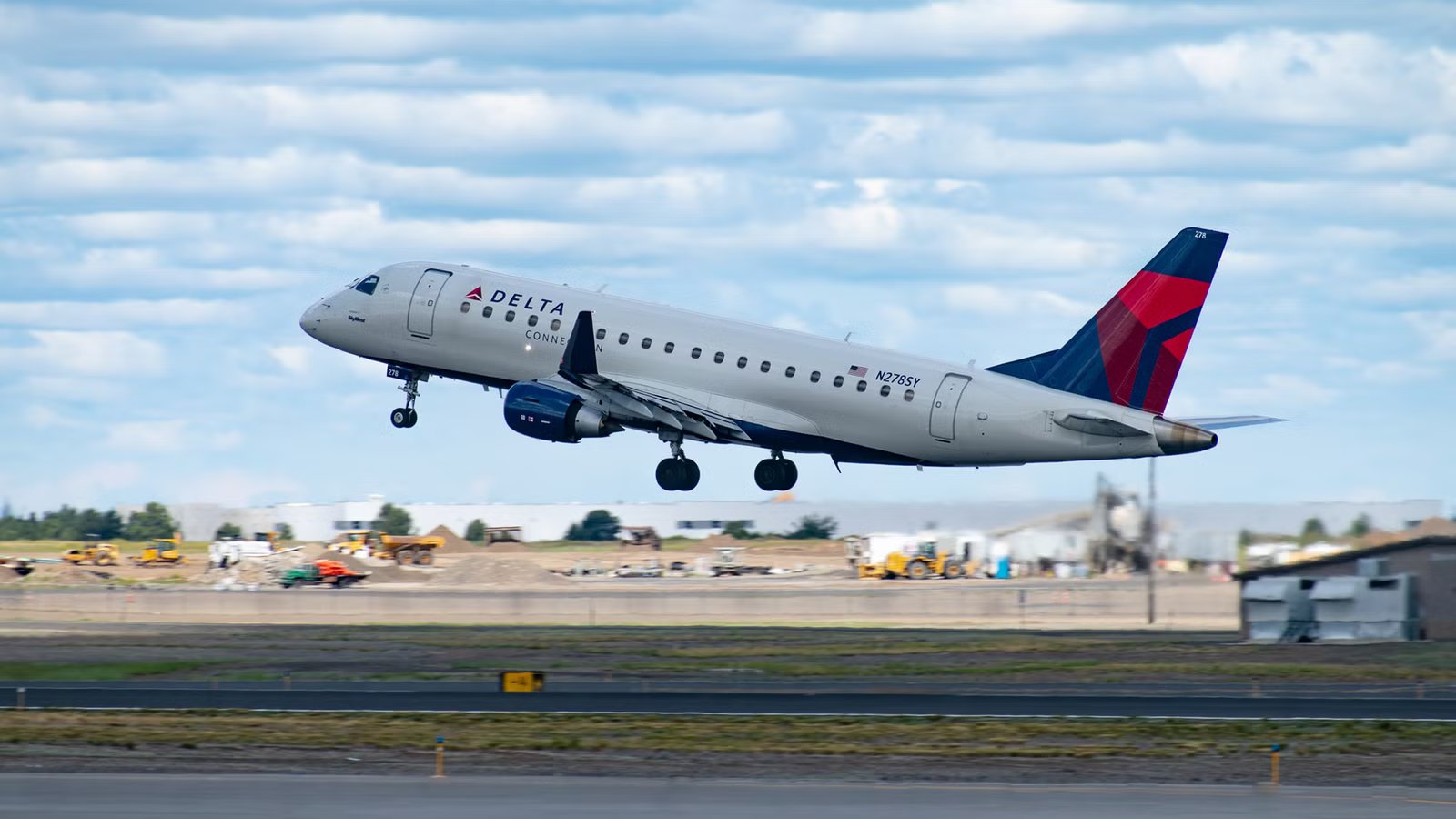
 Delta Air Lines is ending service on four domestic routes from New York and Las Vegas by the end of 2026. According to its latest schedule updates, the carrier will end flights between
  LaGuardia Airport (LGA) and Tulsa International Airport (TUL) on November 6, followed two days later with the end of services from
  Harry Reid International Airport (LAS) to both John Wayne Airport (SNA) and
  San Diego International Airport (SAN) on November 8.
More than a month later, it will operate its final flight between  New York JFK Airport (JFK) to Milwaukee Mitchell International Airport (MKE) on December 18. All four routes are operated by smaller regional jets as Delta Connection services, with one or two flights per day.
New York And Las Vegas Domestic Routes Dropped By Delta This Winter

As first reported by Ishrion Aviation, the first route to go will be its 1,235-mile (1,988 kilometers) connection between LaGuardia and Tulsa on November 6, which it currently flies once daily with a Bombardier CRJ900. Launching in November 2024, this route will have flown for less than two years by the time it ends, although travelers can still fly on this pairing with American Airlines.
Route | Current Frequency | Aircraft | Ends |
|---|---|---|---|
New York (LGA) – Tulsa (TUL) | 1x daily | Bombardier CRJ900 | November 6, 2026 |
Las Vegas (LAS) – Orange County (SNA) | 2x daily | Embraer E175 | November 8, 2026 |
Las Vegas (LAS) – San Diego (SAN) | 1x daily | Embraer E175 | November 8, 2026 |
New York (JFK) – Milwaukee (MKE) | 1x daily | Bombardier CRJ900 | December 18, 2026 |
Then, on November 8, Delta’s final services between Las Vegas and California’s Orange County and San Diego — both of which are under 300 miles and served by SkyWest Airlines’ Embraer E175 fleet — will conclude. Delta reinstated its Vegas-Orange County pairing in early 2025, while flights between Vegas and San Diego had already dropped from two to one daily flight earlier this year.
Finally, the carrier’s daily 747-mile (1,202 kilometers) flight between New York JFK and Milwaukee will end on December 18. Delta is the only airline flying this route since JetBlue ended its service in October 2025.
Delta’s New York JFK Cuts This Summer

Delta has already dropped a number of services at New York JFK this year, confirming in July that flights to Memphis International Airport (MEM), St. Louis Lambert International Airport (STL) and Houston George Bush Intercontinental Airport (IAH) would not return after being suspended in June.
These three JFK routes had only launched in September 2025, lasting less than a year before their suspension. With all of those airports, plus Milwaukee and Tulsa, falling within LaGuardia’s 1,500-mile perimeter, the cuts will allow the carrier to consolidate short-haul services at LGA while freeing up slots at JFK, which is better suited to Delta’s international and longer-distance flying.
Travelers can still fly Delta to Houston, Memphis, Milwaukee and St. Louis from LaGuardia, although Tulsa will no longer have a direct Delta connection with New York come this winter.
Las Vegas Traffic Decline Adds Pressure

Data shows that Harry Reid International Airport has been losing passengers throughout 2026. The airport handled 4.4 million travelers in July, representing a 7.6% reduction year-on-year. While international traffic rose by 6%, the overall decline was driven by domestic traffic falling by 8.7%. Across the first seven months of 2026, the airport handled 30.2 million passengers, a 6.9% decline on the same period in 2025.
Delta has been making strategic cutbacks to its short-haul Las Vegas operation, too. The airline ended service to Sacramento and San Jose in January, while its San Diego service was reduced from two daily flights to one before its cut this winter. The latter route faces stiff competition from both Southwest Airlines and Alaska Airlines, which both offer substantially more flights than Delta.
The ongoing fuel cost crunch has also been a significant factor in Delta’s wider network cuts. The carrier’s second-quarter fuel bill reached a record $4.4 billion, which is a staggering 77% higher than last year. Shorter domestic routes are among the first to be cut during cost-saving moves, as they are typically along the least-profitable routes in an airline’s network.