dailynewsnblog
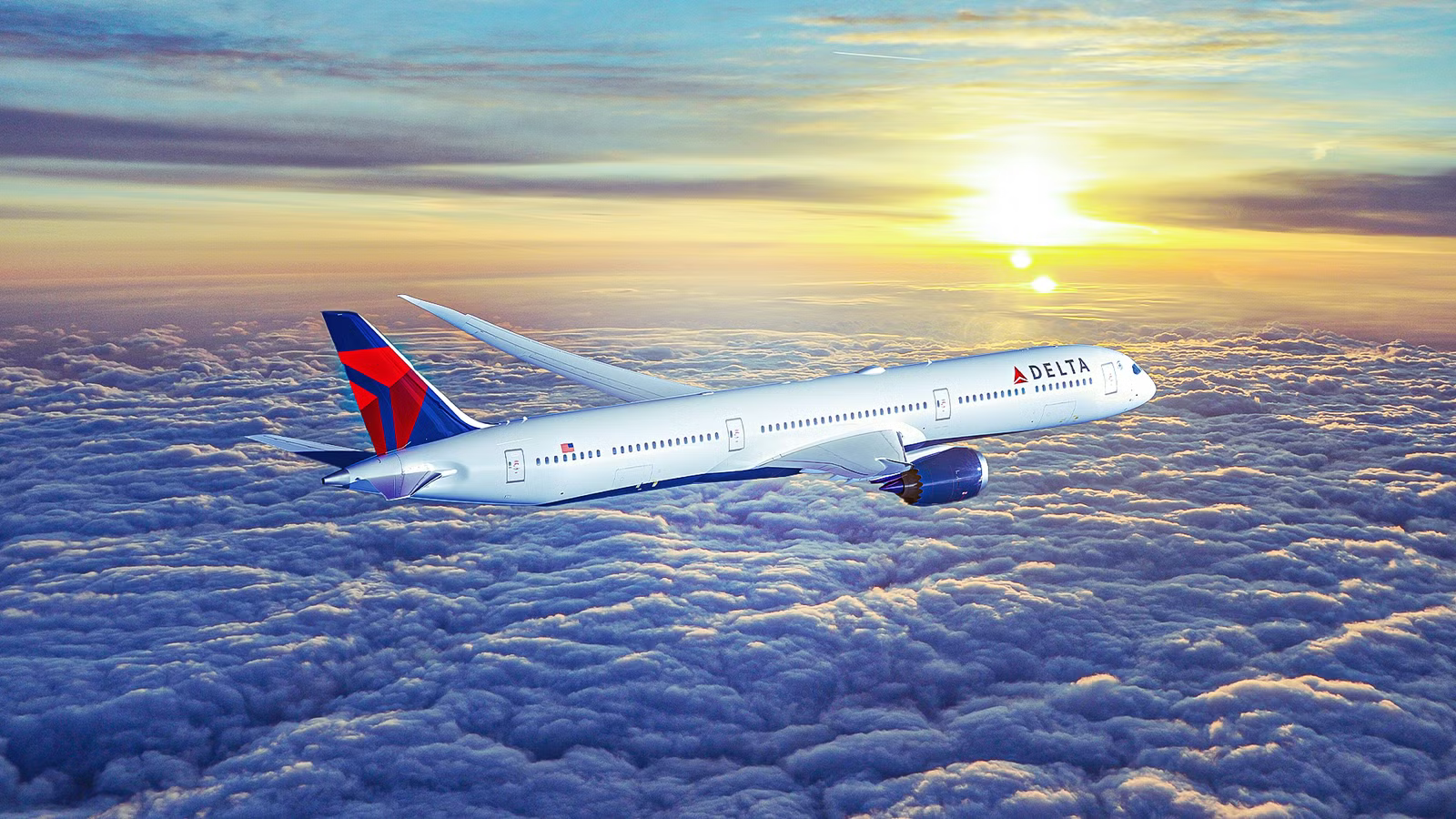
 Delta Air Lines has finally bought the Boeing 787 Dreamliner but the order is unlikely to solve its most immediate widebody replacement problem. On January 13, 2026, the Atlanta-based carrier committed to 30 787–10s, with options for 30 more, according to Boeing’s investor release. The first aircraft is not due until 2031, leaving several years in which Delta must rely on other deliveries and the older aircraft already in its fleet.
That gap makes the order more complicated than a straightforward fleet renewal. Why commit to a new aircraft family that cannot arrive for five years, when Airbus widebodies are scheduled to reach Delta first? The answer involves the airline’s delivery calendar, its aging Boeing 767s, the cabin it chooses for the Boeing 787–10, and a new engine supplier. Simple Flying’s coverage of the order explains the announcement; the harder question is what the delivery date means for Delta’s fleet plan.
Delta’s Boeing 787-10 Order Comes With A Five-Year Wait

The 787–10 order is a long-term fleet decision, not a solution for next summer’s schedule. It is the first time Delta has placed a direct order for the 787 family. The airline inherited an 18 Dreamliner order through its merger with Northwest Airlines, but, as Simple Flying reported, Delta canceled that deal in 2016 and spent the following decade building an Airbus-heavy widebody order book.
Delta’s own announcement gives the decision a clear financial frame. In its newsroom statement, the airline said the 787–10 offers 25% better fuel efficiency per seat than the previous-generation widebody it replaces. CFO Dan Janki also described the purchase as a way to diversify the widebody order book while building a cost-efficient scale across the fleet.  Boeing confirmed 30 firm aircraft and 30 options, with Delta identifying transatlantic and South American flying as target markets. Neither company disclosed financial terms.
Delta already has 100 Boeing 737–10s on order, although that narrowbody remains subject to FAA certification. Adding 30 firm 787–10s brings the firm Boeing commitments discussed in these announcements to 130 aircraft, with another 30 Dreamliners available if Delta exercises the options. As the largest and most seat-dense member of the Dreamliner family, the 787–10 offers Delta additional capacity alongside improved efficiency. Its delivery schedule, however, makes the Airbus order book the first comparison to examine.
Delta’s Airbus A350s And A330s Will Arrive Before The 787-10

Delta will receive a substantial number of new Airbus widebodies before its first Dreamliner. According to Delta’s Airbus announcement, published two weeks after the Boeing deal, the airline added 31 widebodies: 16 Airbus A330-900s and 15 Airbus A350-900s, with options for 20 more. Deliveries are due to begin in 2029, two years before the first 787-10. Airbus confirmed the order, including the combination of new orders and converted options.
The Airbus A350-1000 gives Airbus an even larger head start. Delta’s 20 A350-1000s are expected to begin arriving in early 2027, more than four years before the first 787-10. Airline Geeks noted that, once the new orders are delivered, Delta’s A330-900 fleet will reach 55 aircraft and its A350 fleet 79. Delta has also said it has 232 narrowbodies and 85 widebodies on order; the 30 firm Dreamliners account for roughly 35% of that widebody total.
Delta will have its largest-ever twin-aisle aircraft in service for around four years before the first Dreamliner arrives. If Airbus can cover growth during that period, the 787-10’s purpose may be less about immediate capacity and more about replacing aircraft that cannot remain in service indefinitely. Which aircraft fit that role?
Delta’s Boeing 787-10 Targets An Aging 767 Fleet

The 787-10 can help replace Delta’s 767s, but its delivery date does not match the retirement plan for every variant. Simple Flying has reported that Delta leadership confirmed, during its Q4 2023 earnings call, plans to retire the Boeing 767-300ER fleet by 2030, with international long-haul service winding down by 2028. A first 787-10 delivery in 2031 comes too late to serve as a direct replacement for most of those aircraft. The larger 767-400ER, expected to remain in service into the 2030s, is a more plausible target.
Our previous analysis says the operational objective is to replace both 767 variants, but the aircraft do not line up as one-for-one substitutes. Boeing’s published figures put the 767-400ER at about 201 feet (61.4 meters) long, with a range of roughly 6,470 miles (10,415 km). The 787-10 is around 224 feet (68.3 meters) long and has a range of 7,400 miles (11,910 km). Air Data News expects Delta’s 787-10 to seat 301 passengers, including 85 premium seats, while Aviation Outlook suggests premium seating could exceed 50% in some layouts, compared with roughly 30% on the 767s being retired.
According to planespotters.net, Delta operates 57 Boeing 767s, including about 36 767-300ERs and 21 767-400ERs; the oldest aircraft are approaching three decades in service. Thirty 787-10s cannot replace that fleet one for one, but their higher capacity could allow Delta to carry more passengers on fewer departures. Delta plans to deploy the 787-10 on major transatlantic routes and services to South America, rather than the ultra-long-haul markets served by its A350-900s and A350-1000s, CEO Ed Bastian explained in a February 2026 interview with Corriere della Sera. The final cabin configuration will therefore be central to the business case. Another consideration is the engine supplier.
Delta’s 787-10 Order Introduces GE Engines Alongside Rolls-Royce

The 787-10 will use GE Aerospace GEnx engines, according to Delta’s newsroom, creating a break with the Rolls-Royce engines powering Delta’s other new widebodies. Its A330-900s use the Trent 7000, which Delta says has accumulated more than four million flight hours, including one million at Delta. The A350-900s will use the Trent XWB-84 EP, and Delta has also signed a long-term maintenance agreement with Rolls-Royce for those engines.
Supporting the GEnx will add complexity to Delta’s operations. Commonality can simplify spare-parts planning, maintenance staffing, training, and technical support, whereas a separate engine family requires its own supply chain and maintenance expertise. With 30 firm 787-10s, that additional infrastructure will initially support a smaller fleet than Delta’s expanding Airbus widebody groups. Exercising all 30 options would make the Dreamliner a more substantial part of the operation.
The decision will ultimately be judged by maintenance costs and operational performance. If the GEnx proves economical on Delta’s routes, the additional support system may be justified; otherwise, some of the Dreamliner’s efficiency gains could be offset by the expense of maintaining a separate engine fleet. Delta’s other aircraft purchases provide further context for the decision.
Delta Expands Its Airbus Fleet Despite The Boeing 787 Order

Two weeks after the Dreamliner announcement, Delta disclosed its Airbus widebody deal, and on February 27 it exercised options for another 34 Airbus A321neos. According to Delta’s narrowbody announcement, that brought its A321neo commitment to 189 aircraft, which Delta calls the largest-scale fleet type in its history. About 92 were already in service, deliveries from this batch are due to begin in 2029, and options for 36 more remain.
Outside coverage also presented the A321neo deal as a growth and efficiency move. Bloomberg described it as another 34 Airbus jets ordered to drive growth, while Aviation News EU emphasized fuel efficiency. These purchases reinforce Delta’s focus on expanding capacity while improving fleet economics, even as it adds Boeing to its widebody order book. The 787-10 is therefore a new element in the strategy, not a replacement for the airline’s established Airbus relationship.
The scale and timing of the commitments help explain that distinction. Delta ordered 30 firm 787-10s, compared with 31 additional Airbus widebodies and 34 A321neos, all scheduled to arrive before or alongside the Dreamliner program’s longer-term expansion. Airbus will supply much of the capacity Delta needs during the remainder of this decade, while Boeing offers another option for widebody renewal in the 2030s. Whether that diversification pays off will depend on the 787-10’s cabin configuration, operating costs, and ability to replace aging aircraft when they leave the fleet.
Catch what other flight trackers miss
Emergency squawks, holds, NOTAMs — live signals, no signup.
Open tracker
Catch what other flight trackers miss
Emergency squawks, holds, NOTAMs — live signals, no signup.
Open tracker
Delta’s 787-10 Strategy Will Be Tested Before 2031

Delta’s decision to add the Boeing 787-10 alongside its expanding Airbus fleet will ultimately be judged by how well the aircraft fit the airline’s replacement schedule, not simply by their advertised fuel efficiency. The five-year wait creates a period in which Delta must balance growth, older aircraft retirements, and the costs of supporting a new engine family. The challenge is to ensure that the Dreamliner arrives when Delta needs its capacity, rather than after other aircraft have already addressed the routes it was intended to serve.
The clearest test will be the transition from the Boeing 767-400ER to the 787-10. The first Dreamliners are due in 2031, while Delta’s Airbus deliveries are scheduled to begin earlier. Delta must determine whether those Airbus aircraft can cover its needs until Boeing deliveries begin, and whether the 787-10’s eventual cabin configuration will generate enough revenue to justify its operating costs. Exercising the 30 options would increase the Dreamliner commitment to 60 aircraft, making Delta’s decision on the additional jets another important indicator of the program’s long-term role.
The engine choice adds another variable. Supporting GE Aerospace GEnx engines alongside the Rolls-Royce units used on Delta’s other new widebodies will require a separate maintenance and supply chain, although the GEnx’s established global support network could help contain the burden. The key developments to watch are Delta’s final cabin layout, its decisions on the 787–10 options, and the pace of its 767 retirements. Together, they will show whether the Dreamliner becomes a central part of Delta’s long-haul fleet or remains a smaller addition to an operation still built primarily around Airbus widebodies.