dailynewsnblog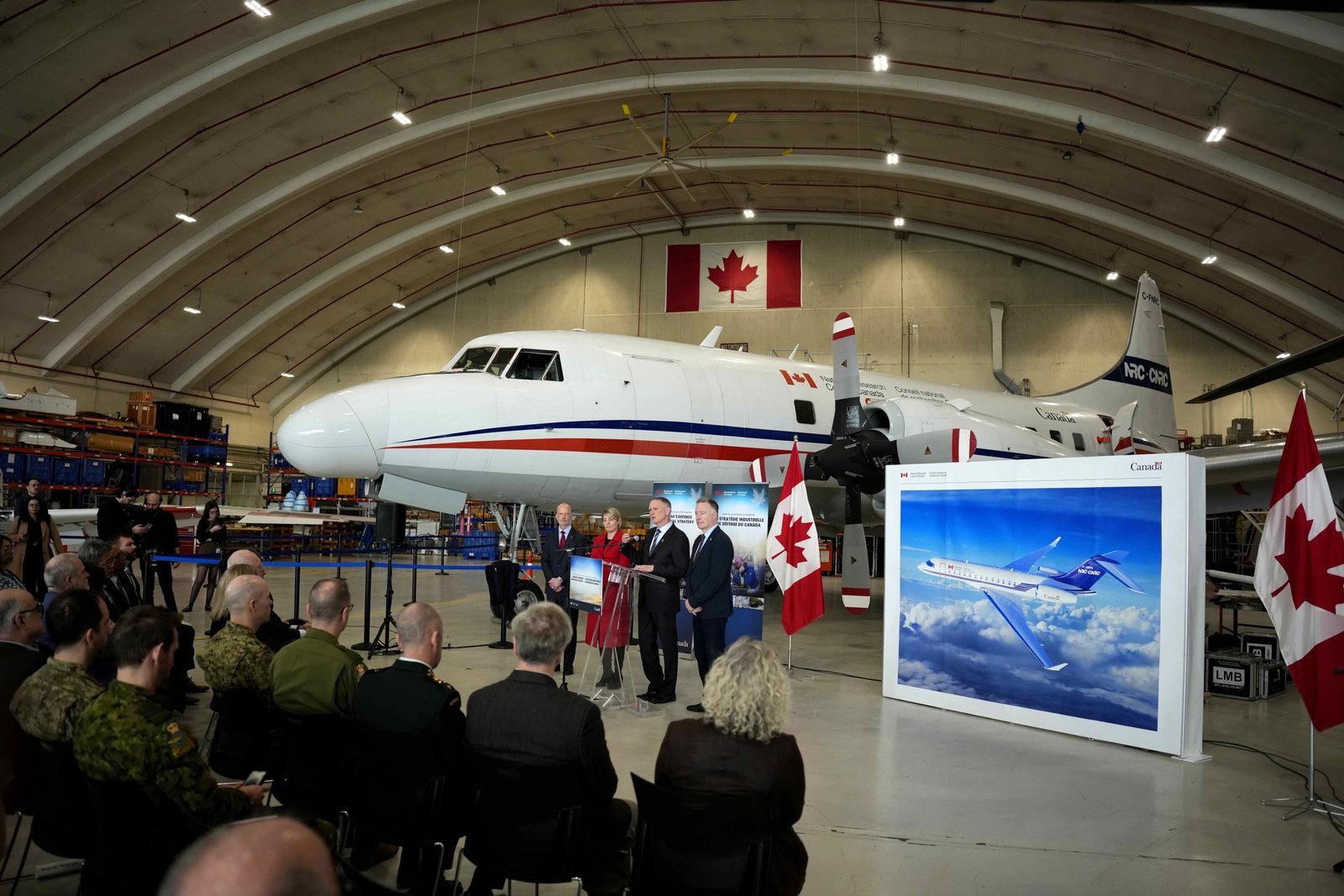
Good evening, readers.
As a part of Canada’s defence strategy plan, the federal government announced that over $900 million will go into bolstering the country’s defence innovation, including acquiring a new bombardier defence aircraft and creating a new drone innovation hub.
Industry Minister Mélanie Joly made the announcement today at the National Research Centre, alongside National Defence Minister David McGuinty and Secretary of State Stephen Fuhr.
The funding comes as a part of Canada’s Defence Industrial Strategy, a long-term plan that will carry a “build, partner, buy” model to build military gear domestically, that was unveiled in February. It pledged $6.6 billion over five years to prioritize homegrown production and seeks to partner with other nations on procurement.
“The NRC investments announced today will advance cutting-edge dual-use technologies and deliver world-class capabilities for the Canadian Armed Forces,” Joly said.
“Our government is meeting the moment so Canadians benefit from a stronger, more resilient defence economy.”
Sydney Ko has more.

Vast reserves of critical minerals mean little for sovereignty without domestic capacity to process and refine them.
That’s one of the main messages relayed by experts from different sectors in a House committee study on critical minerals and national defence.
“Having minerals in the ground does not secure our future; only producing them does,” said Jeff Gaulin, Vice-President at Vale Metals.
“Everything else flows from that: refining, manufacturing, trade and security.”
Similarly, Canadian businessman Jim Balsillie, founder of the Centre for International Governance Innovation, told the committee Canada won’t be able to use its critical minerals strategically unless it develops processing capabilities.
“Owning critical minerals…is the beginning of leverage but in and of itself, it is not leverage,” he said.
“We have no sovereignty to turn these minerals into products. It’s an abdication that no other country in the world has done. We must reorient,” he said.
Aya Dufour’s got this one.

The Liberal government has nominated a senior official from the national financial intelligence agency as Ottawa’s next fiscal watchdog.
Wayne Long, secretary of state for financial institutions, tabled a nomination Monday asking MPs to approve Annette Ryan to take on the currently vacant role of parliamentary budget officer.
The nomination is for a seven-year term.
Ryan has worked in the public service for more than a decade and currently serves as a deputy director at the Financial Transactions and Reports Analysis Centre, better known as Fintrac.
The Office of the Parliamentary Budget Officer scrutinizes federal spending decisions and helps to cost out campaign proposals during elections.
Interim PBO Jason Jacques’ term expired on March 2 without a successor in place.
The office is not able to publish new reports or take on new requests from parliamentarians without a parliamentary budget officer.
The Canadian Press has more.
In Other Headlines:
Internationally
Elsewhere, Iran’s killed supreme leader will be replaced by one of his sons, Mojtaba Khamenei, a mid-ranking cleric who has until now wielded his power exclusively behind the scenes.
Iran’s Assembly of Experts — the clerical body tasked with selecting the country’s supreme leader — said on Sunday that a majority of its members voted to appoint Khamenei as the Islamic Republic’s third supreme leader since its founding in 1979.
The announcement appeared in state media just over a week after the former supreme leader, Ayatollah Ali Khamenei, was killed in a joint U.S.-Israeli attack. His nearly four-decade rule was marked by staunch opposition to both countries as well as any efforts to reform or modernize Iran. Questions loom about Iran’s future as it responds with continued strikes on Israel and Gulf states.
The younger Khamenei’s appointment answers some of those questions. The 56-year-old has close ties to Iran’s paramilitary Revolutionary Guard Corps (IRGC), signaling a continuation of his father’s hard-line theocratic rule.
“[Of] all the candidates that were put out there, he was the one that was closest to the IRGC. He was also very well-connected in his father’s own office,” Iran specialist Afshon Ostovar told NPR last week, as Khamenei emerged as one of the most likely successors. Ostovar said his selection would mean “the regime wants to preserve as much of the status quo as possible.”
Read more about it from NPR.
Meanwhile, protests against British military site are stirring in Cyprus.
Chants of “British bases out” have rung out in recent days in Limassol, as protesters call for the removal of UK military bases from Cyprus’s sun-drenched south coast island.
Demonstrations erupted after a suspected Iranian-made drone struck RAF Akrotiri earlier this week, two days after US-Israeli attacks on Iran began.
Prime Minister Keir Starmer has also allowed the US to use British bases for “defensive strikes” on Iranian missile sites, a move that has intensified debate in Cyprus over the presence of the British military on the island.
Al Jazeera has more.
In Other International Headlines
The Kicker
If you feel like this Monday is extra exhausting — you’re not alone. We lost an hour, thanks to daylight saving… but for folks living out in British Columbia, it may be the last time they have to spring forward.