dailynewsnblog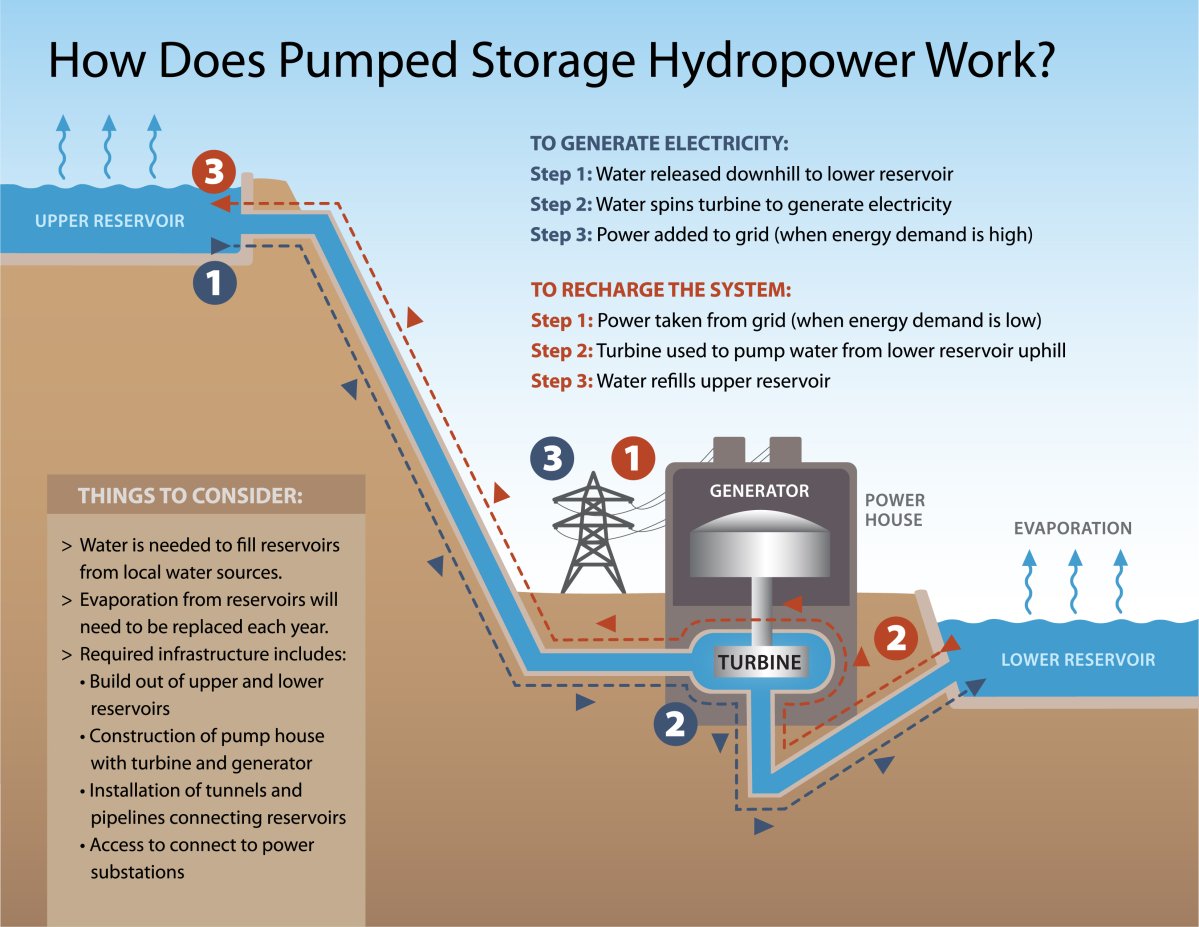
Decarbonizing the economy requires a massive expansion of renewable electricity. The LDES Council argues that timely investment in long-duration energy storage would allow power systems to operate reliably even when a large share of electricity comes from variable renewable sources.
Global management consulting company McKinsey says commitments to LDES could reach C$4.3 trillion by 2040, and the investments will be profitable.
Long Duration Energy Storage (LDES) is a technology that stores energy and then dispatches it as power, heat or cooling for extended periods of time, ranging from 8 hours to days, weeks or seasons. It takes various forms, including chemical, thermal, mechanical and electrochemical storage. LDES is critical for operating a secure, reliable, affordable and clean energy system.
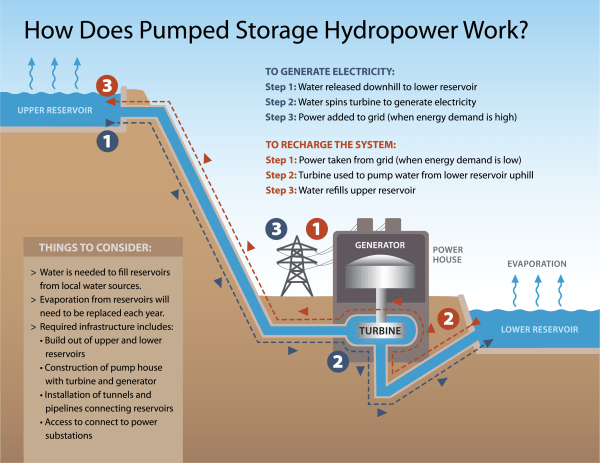
British company RheEnergise is claiming success with their implementation of an interesting technology. The company reports that its first project is operating consistently at its predicted output. The system uses a fluid 2.5 times denser than water, allowing it to generate power with less than half of the elevation required by conventional pumped hydro.
By making ordinary hills suitable for energy storage, the technology could greatly expand the number of viable pumped-hydro sites. RheEnergise says its system is cost-competitive and can be integrated with existing grid infrastructure. Combined with wind or solar generation, it could also provide reliable electricity supplies in remote communities that are not connected to a major power grid.
.