dailynewsnblog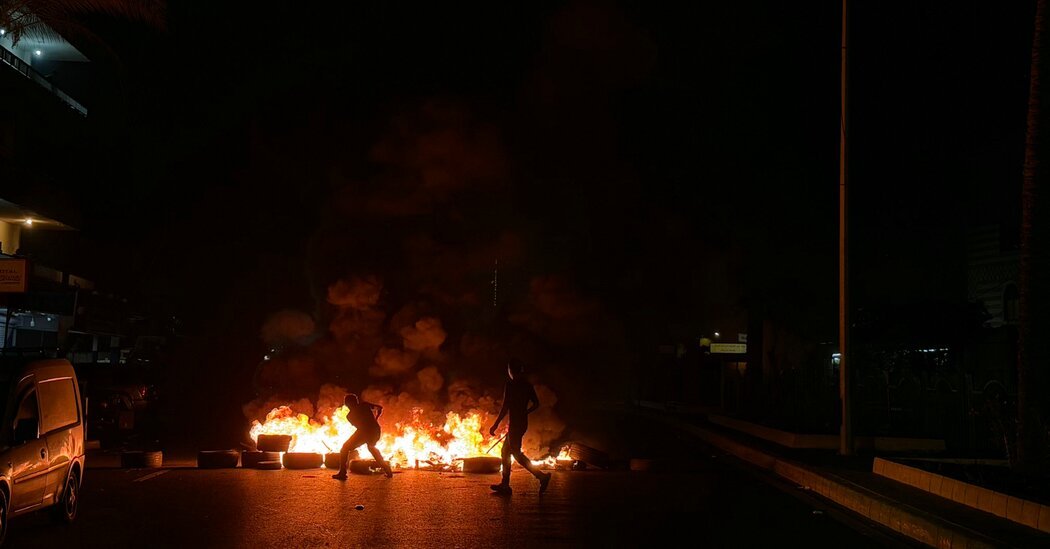
After Israel and Lebanon signed a preliminary agreement in Washington on Friday aimed at establishing a lasting peace between them, the reaction in Lebanon was immediate and sharply divided.
Supporters of the U.S.-brokered deal said it was a move to curtail Iranian influence in Lebanon, setting out a pathway for the disarmament of the Iran-backed militant group Hezbollah, which Israel is at war with. They also said it asserts Lebanese sovereignty over the country’s internal security.
Others, not least Hezbollah, rejected the framework, calling it a capitulation to Israeli and American demands that could deepen divisions inside Lebanon.
At the core of the deal is a phased security arrangement in which the Lebanese Armed Forces would gradually assume control over all Lebanese territory as nonstate armed groups, like Hezbollah, are disarmed and their military infrastructure is dismantled.
In parallel with that, Israeli forces would carry out a staged withdrawal from the territory, more than six miles into Lebanon, which they have occupied since early March.
On Friday night, hours after the deal was announced, protesters, mostly aligned with Hezbollah, took to the streets of the capital, Beirut, waving the militant group’s yellow flags and denouncing the government.
Footage broadcast on social media and carried by Lebanon’s National News Agency showed dozens of youngsters riding motorcycles and mopeds, blocking roads, burning tires and gathering near the seat of the Lebanese government.
“We certainly condemn and denounce this shameful agreement,” said Abbas Kassem, 30, who is from Blida, a town in southern Lebanon that Israel has occupied for months.
One criticism of the preliminary deal is that the timeline for Israel’s withdrawal is not fixed, instead being based on how quickly Hezbollah can be disarmed. “The enemy is being granted freedom of movement and the ability to make whatever decisions it wants in the south,” Mr. Kassem said.
The scenes in Beirut reflected the intensity of Lebanon’s internal divides, at a moment when the country remains entangled in more than three months of cross-border conflict between Israel and Hezbollah.
The fighting — which has deepened Lebanon’s economic and political crises, and displaced more than a million people — has raised fears among regional observers that the Lebanese military’s efforts to disarm Hezbollah could further destabilize the country or even lead to civil war.
Prime Minister Nawaf Salam said in a statement that the framework built on existing Lebanese agreements and United Nations resolutions, and that its end goal was “to achieve Israel’s withdrawal from all Lebanese territory, restore state sovereignty over it and enable its residents to return.”
The situation remains precarious, highlighting the challenge of translating diplomacy into calm on the ground. Less than 24 hours after the agreement was announced, Lebanon’s state agency reported that an Israeli drone struck an intersection in south Lebanon.
Friday’s “Trilateral Framework” was reached after multiple rounds of negotiations between the two countries that began in April, mediated by the United States.
The war in Lebanon has threatened to derail broader negotiations between Iran and the United States, given that the cease-fire deal between Tehran and Washington also included an end to the fighting in Lebanon.
Two initial “pilot zones” have been designated for Israeli withdrawal, according to Friday’s deal, with further areas to be selected later through joint agreement. Israel and Lebanon have also agreed to establish a military coordination group, overseen by the United States.
Hezbollah’s leader, Naim Qassem, strongly criticized the deal on Saturday.
In a statement published on social media, Mr. Qassem called the deal “humiliating, shameful and a surrender of sovereignty,” and declared it “null and void.” He also said that linking Israeli withdrawal to the disarmament of Hezbollah was “a very dangerous proposal that crosses all red lines.”
The group has long resisted disarmament, saying its weapons are essential to its deterrence against Israel.
“No one has the right to deprive the Lebanese of the right to self-defense and to defend the land against the occupier of our land and the killer of our people,” he added.
The United States said that, as part of the agreement, it would rally international support to help rebuild Lebanon and restore its economy. Secretary of State Marco Rubio said in a statement on Friday that the United States would provide an immediate $100 million in humanitarian assistance to Lebanon in coordination with the United Nations.
After the signing, Lebanon’s president, Joseph Aoun, offered a firm endorsement of the agreement, describing it as a first step toward restoring full sovereignty and enabling the return of displaced communities to the south.
“This is what every free, responsible and honorable Lebanese agrees upon,” he said in a statement on social media. “This is our promise to them and our duty toward them.”
Not all Lebanese shared that optimism. Some said they trusted neither side, arguing that the deal only delays a return to fighting in their country and risks deeper internal conflict.
“This deal is not feasible,” said Elias Yaghi, 60, a businessman in Beirut. “All parties are buying time. Nothing has changed.”
Sarah Chaayto and Hwaida Saad contributed reporting from Beirut, Lebanon.